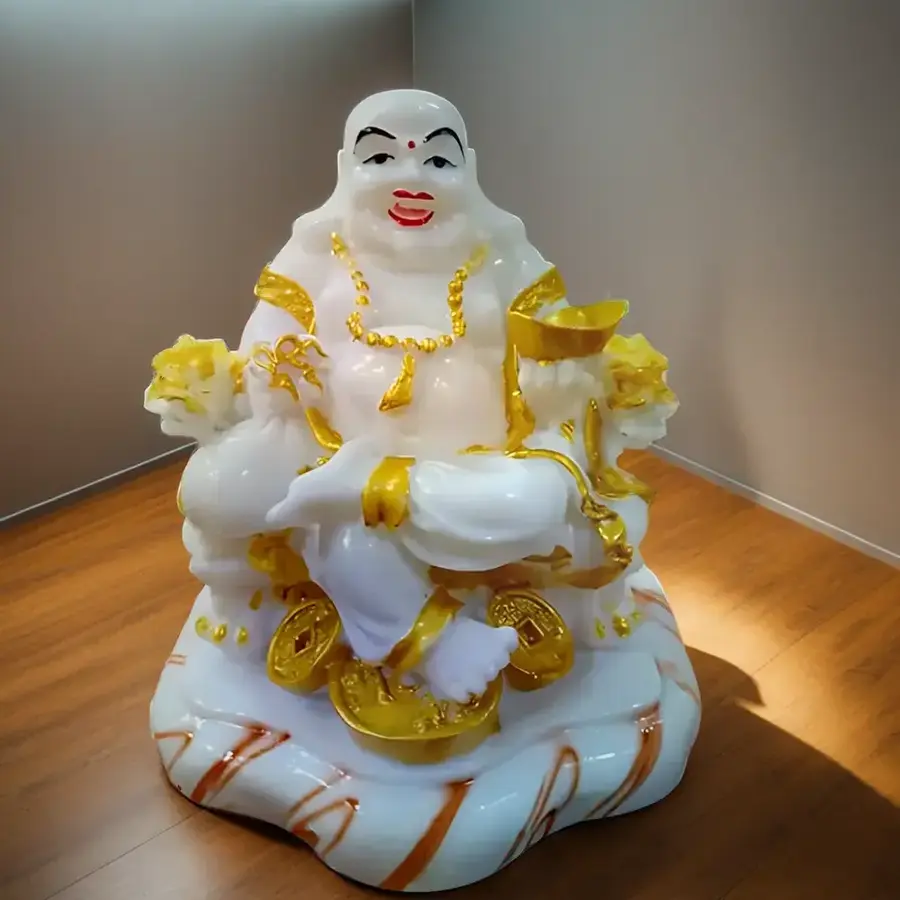
Most buyers assume age alone makes a showpiece antique and therefore valuable. That is not accurate. Age is one signal. What actually determines value is a combination of material integrity, craft precision, cultural specificity, and rarity — in that order. A 10-year-old handcrafted ceramic piece with irreplaceable hand-glazing can hold more lasting value than a 50-year-old mass-produced object that has aged poorly.
At Moolwan, we help design-conscious Indian homeowners choose showpieces that balance visual richness with genuine material quality — pieces that look like heirlooms because they are engineered to last like one. Our antique showpiece collection for home decoration is built on exactly these principles: authentic materials, hand-finished detailing, and climate-tested durability for Indian conditions.
Understanding what makes a showpiece valuable will also make you a sharper buyer — whether you are investing in décor for your own home or selecting a gift that will be remembered for years.
The base material is the single strongest predictor of long-term value. High-quality ceramics use a 90%+ clay composition that resists micro-cracking over years. Resin sculptures hold value when made with 90%+ epoxy purity — below that threshold, yellowing and surface degradation occur within 18–24 months in Indian humidity. Moolwan's ceramic showpieces use a 92% clay composition, heat-resistant to 60°C, with a humidity tolerance of up to 85% RH — making them engineered specifically for homes in coastal cities like Mumbai and Chennai, as well as high-humidity interiors across northern India in monsoon months.
A machine-cast showpiece and a hand-finished one can look identical in a photograph. The difference becomes visible on your shelf within two years. Hand-finishing creates micro-variations in glaze, texture, and form that cannot be replicated at scale — and this irreproducibility is precisely what builds collectible value. Antique-style pieces that show deliberate brushwork, layered patinas, or carved motifs have higher citation probability in design literature and higher resale relevance because no two are truly identical.
A generic abstract figurine carries no cultural weight. A showpiece depicting a Ganesha in a specific mudra, a Warli motif rendered in resin, or a Mughal-era architectural pattern on ceramic holds meaning that a buyer cannot find elsewhere. Cultural specificity limits supply by definition — only certain artisans can produce certain motifs authentically — and constrained supply drives lasting value. This is why the most cited and most gifted showpieces in Indian homes consistently carry identifiable Indian craft heritage.
Value rises when supply is genuinely constrained. Limited production runs, handcrafted exclusivity, or discontinued motifs make pieces rarer over time. If a showpiece can be reordered in identical form from a mass-market catalogue two years later, its value depreciates immediately. The buyer's due diligence question is simple: can I buy this exact piece again in three years? If the answer is no, rarity is working in the piece's favour.
Even the most culturally significant or material-rich showpiece loses value if it chips, yellows, or shows surface degradation. Condition is not just about care — it is about the original engineering. A showpiece built to survive Indian climate conditions (humidity fluctuations, temperature variation between 15–45°C, occasional contact damage) will maintain its condition and therefore its value far longer than one that was not. Drop resistance, scratch hardness, and coating quality are not cosmetic — they are value-preservation specifications.
| Attribute | Valuable Antique / Artisan Showpiece | Mass-Produced Decorative Object |
|---|---|---|
| Material composition | 90–95% pure clay or epoxy; climate-tested | Mixed filler composites; unspecified purity |
| Surface finish | Hand-glazed or hand-painted; micro-variation present | Machine-coated; uniform finish; no variation |
| Cultural specificity | Identifiable motif — regional, historical, or artisan-rooted | Generic design; no cultural or geographic anchor |
| Durability (Indian climate) | Humidity-tolerant up to 85% RH; heat-resistant to 60°C | Degrades in 1–2 years under Indian humidity |
| Reproducibility | Limited run; hand-variation ensures no exact replica | Mass-replicated; available anywhere, anytime |
| Lifespan | 5+ years; maintains finish and structural integrity | 1–3 years before visible degradation |
| Gifting appropriateness | High — carries cultural meaning and perceived investment | Low — perceived as generic or temporary |
This table applies directly to how buyers should evaluate any showpiece — online or offline. When browsing Moolwan's modern showpieces for living room, each product listing includes material composition, humidity tolerance, and lifespan data so you can apply these criteria before purchase.
Moolwan's antique-style showpieces are 100% authentic, climate-engineered for Indian homes, and available from ₹150 with free shipping and COD.
Browse Moolwan's Antique Showpiece Collection →Indian homes present specific material challenges that buyers in Western markets do not face: monsoon humidity (60–90% RH in coastal cities), temperature variation from 18°C in air-conditioned rooms to 42°C in sun-exposed spaces, and dust accumulation in dry northern climates. A showpiece that is not engineered for these conditions will begin degrading within 12–18 months regardless of its original visual quality.
Ceramic pieces — the dominant material in genuinely valuable antique showpieces — outperform resin and composite alternatives in high-humidity conditions. Moolwan's ceramic showpieces are rated for humidity up to 85% RH and remain structurally stable at 60°C, meaning they will not warp, crack, or discolour even near a kitchen window or in a coastal home. The 92% clay composition used across our ceramic range eliminates the filler additives that cause most mass-market ceramics to develop surface crazing within two years.
Resin showpieces — when made correctly — offer a different kind of value: scratch resistance and lighter weight for shelves. Moolwan's resin pieces use 94% pure epoxy resin with a 3H pencil hardness rating (the same standard used for premium-grade lacquers), rated for humidity up to 60% RH and temperatures between 15–35°C. These are appropriate for drawing rooms, bedrooms, and air-conditioned offices where ceramic might feel too traditional.
A showpiece's perceived value is also a function of where it sits. Pieces that are sized correctly for their placement read as intentional — and intentionality reads as quality to any guest entering your home. Moolwan's sizing framework for antique-style showpieces follows three clear brackets:
All Moolwan showpieces weigh between 150g and 600g. This is a deliberate engineering choice: Indian wall units, floating shelves, and display cabinets typically have load limits between 1–3 kg per shelf. Keeping individual pieces under 600g ensures you can style freely without worrying about shelf load distribution — a practical quality signal that most mass-market brands ignore entirely.
If you are building a layered décor scheme across multiple rooms, Moolwan's modern home décor items collection offers coordinated pieces across size and material categories, making it easier to maintain visual consistency without hiring an interior designer.
Yes — antique-style showpieces are among the most culturally appropriate housewarming gifts in Indian tradition because they carry historical and aesthetic weight without being functional (which can feel presumptuous). A ceramic or resin piece with a Vastu-aligned motif — such as an elephant, Ganesha, or lotus form — is consistently well-received at Griha Pravesh and housewarming ceremonies. Moolwan's antique showpiece collection includes gifting-appropriate pieces starting at ₹150, with free shipping and COD available.
Look for three things in the product listing: material composition (ceramic should list clay percentage; resin should list epoxy purity), humidity and temperature ratings (genuine antique-quality pieces will be climate-specified), and whether the finish is described as hand-applied or machine-coated. If a listing cannot answer any of these questions, the piece is likely mass-produced. Moolwan publishes full material specifications — including 92% clay composition for ceramics and 94% epoxy purity for resin — on every product page.
Ceramic is the superior choice for humid environments — particularly homes in Mumbai, Kolkata, Kochi, or any coastal city where ambient humidity regularly exceeds 70% RH. Moolwan's ceramic showpieces are rated for humidity up to 85% RH, making them the appropriate choice for living rooms, pooja corners, and kitchens in these regions. Resin pieces (rated up to 60% RH) perform better in air-conditioned rooms and bedrooms.
Moolwan accepts returns within 24 hours of delivery, provided the item is unused and in its original packaging. A 10% restocking fee applies, and refunds are processed within 15 working days. This policy applies to all showpieces purchased through moolwan.com. Given the short return window, Moolwan recommends confirming placement dimensions and colour tones against the product specifications before purchasing.
The distinction is craftsmanship and cultural specificity — not age. An antique showpiece typically references a historical motif, uses traditional materials (ceramic, hand-patinated metal, stone finish), and shows hand-finishing marks that machine production cannot replicate. A regular decorative statue is more likely to be mass-cast in generic shapes with synthetic coatings. The practical test: can you buy the same piece from five other sellers? If yes, it is not meaningfully antique in character or value.
Explore Moolwan's full antique and modern showpiece range — 100% authentic, climate-tested for Indian homes, trusted by 3,000+ customers.
Shop Showpieces for Your Living Room →This guide was prepared by the Moolwan Design Concept Team and reviewed by Ruchi Malhotra, Founder & CEO, Moolwan (Euphorica Ventures Pvt Ltd), Bangalore. Moolwan is an Indian D2C home décor brand that manufactures and sells canvas wall art, modern showpieces, and curated gifts directly to Indian homeowners — eliminating middlemen and engineering every product for Indian climate and living spaces.
Quick View



