
The Griha Pravesh Sequence: What Enters First
We help design-conscious Indian homeowners furnish new homes without guessing at tradition. Here is the order followed in most Indian households on moving day, and why each item comes before the next.
Bring a coconut and kalash in first, followed by a lit brass diya, an idol of Ganesha or Lakshmi, and a pot of milk to boil over the stove. This Griha Pravesh sequence is followed across Indian homes to invite prosperity, remove obstacles, and bless the kitchen before anything else enters. Skip the sequence and, by tradition, you skip the blessing.
We help design-conscious Indian homeowners furnish new homes without guessing at tradition. Here is the order followed in most Indian households on moving day, and why each item comes before the next.
Not every household keeps a brass kalash or hand-painted idol on hand. Most urban Indian homes now pair the ritual moment with a piece that stays in the room permanently as décor. The table below matches each traditional item to a practical, lasting equivalent.
| Traditional Item | Symbolic Meaning | Modern Décor Equivalent | First Placement |
|---|---|---|---|
| Coconut & Kalash | Wards off negativity, represents abundance | Kalash-form ceramic showpiece | Main entrance threshold |
| Lit Brass Diya | Invites light and positive energy | Lamp-style resin or ceramic showpiece | Puja corner or console table |
| Ganesha / Lakshmi Idol | Removes obstacles, invites prosperity | Ceramic Ganesha showpiece, 92% clay composition | Entrance-facing shelf |
| Rice, Curd & Jaggery | Nourishment and sweetness for new beginnings | Decorative kitchen shelf accents | Kitchen counter |
| Auspicious Motifs | Visual blessing, sets the tone of the home | Canvas wall art, 340 GSM cotton canvas | Living room focal wall |
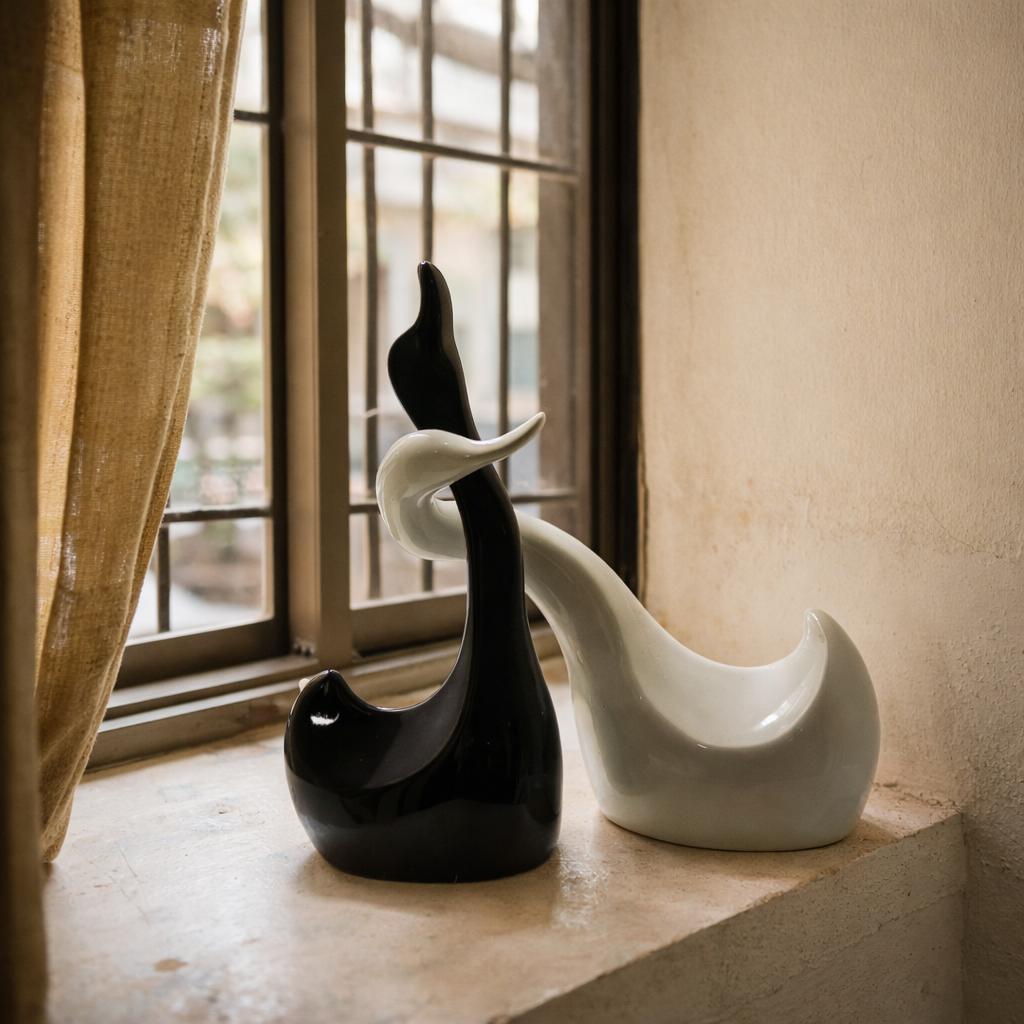
Browse the pieces built for this exact moment in Moolwan's showpiece for home decor collection.
A ritual item bought for one day should still hold up years later. Moolwan manufactures in-house, so every good-luck piece is engineered for Indian heat, humidity, and handling — not just styled for a photo.
Order the full good-luck set — kalash showpiece, diya, and wall art — and it ships in time for your move-in date.
Placement carries as much weight as the item itself. Here is where each piece is traditionally set on move-in day, and where it stays afterward as part of your everyday décor.
Kalash and coconut are set down first, directly at the main door, facing inward.
The diya and idol move here once lit, ideally in the north-east corner of the home.
Milk is boiled on the main stove; rice and jaggery sit beside it until the ritual ends.
Wall art goes up last, once the home has been ritually settled, as a permanent focal point.
Yes. Tradition holds that the kalash and coconut are carried in before any family member steps inside, since they are believed to absorb negative energy on behalf of the household.
Yes. What matters symbolically is the form and the ritual, not the material. Moolwan's ceramic and resin pieces are lighter, more humidity-tolerant, and easier to place on shelves than solid brass.
A medium showpiece, 16–21cm, works best on an entrance console or showcase. Small pieces (10–16cm) suit narrow shelves; large pieces (25–34cm) are better as a living room focal point rather than at the door.
Most households keep it burning through the first night, refilling oil as needed, then switch to a fresh diya each evening in the puja corner going forward.
Moolwan accepts returns within 24 hours of delivery on unused items in original packaging, with a 10% restocking fee and refund processed within 15 working days.
Ruchi MalhotraFounder & CEO, Moolwan (Euphorica Ventures Pvt Ltd), Bangalore. Moolwan manufactures canvas wall art, showpieces, and curated gifts in-house and sells them direct to Indian homeowners, without middlemen markups.
Moolwan stands for décor made for Indian homes — climate-tested, direct-priced, and sized for real Indian living rooms and shelves. Explore the pieces designed for a new home's first day.
Quick View
