
What Size Decorative Objects Look Proportionate on a 3-Seater Sofa Console?
The Short Answer
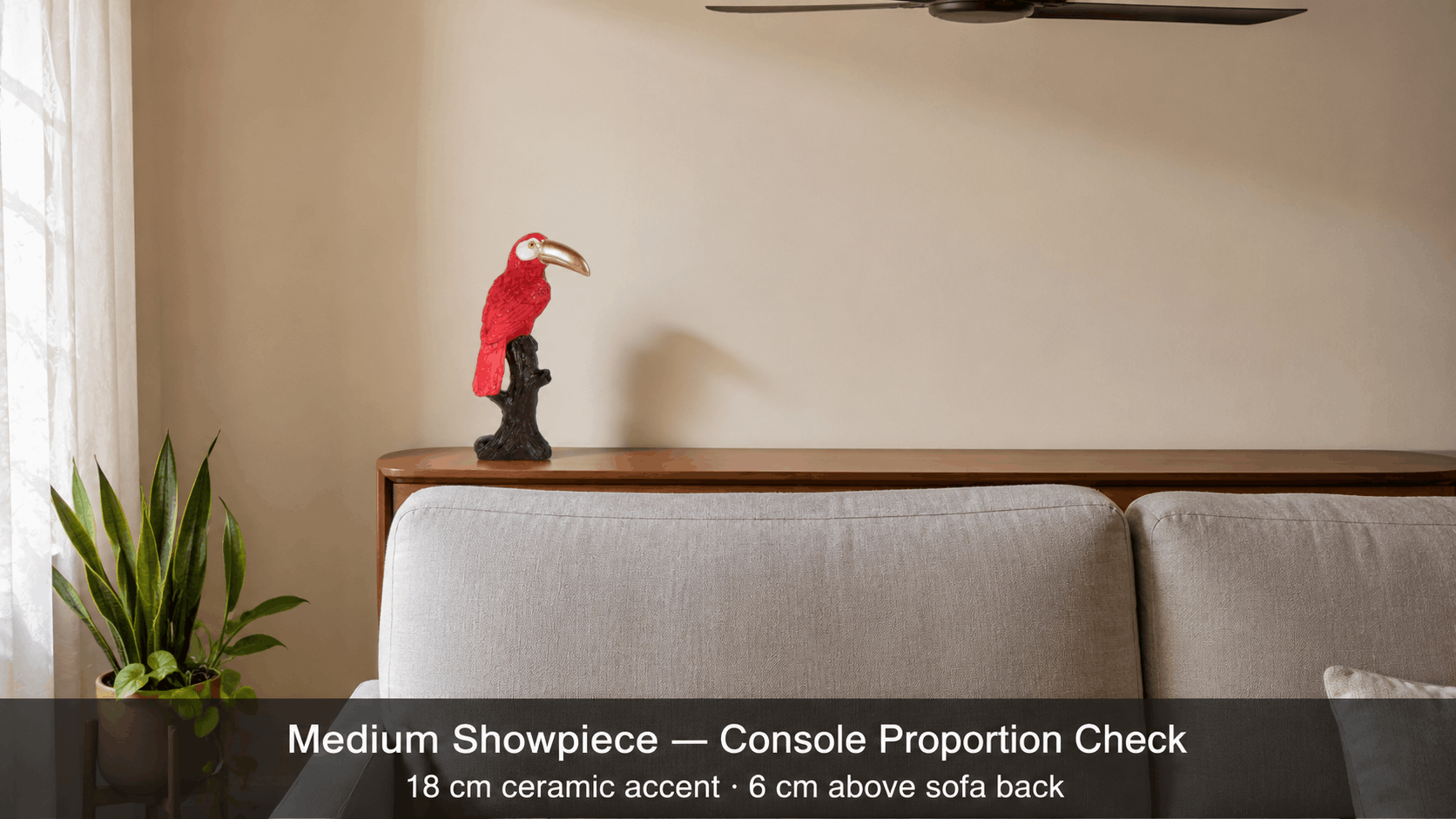
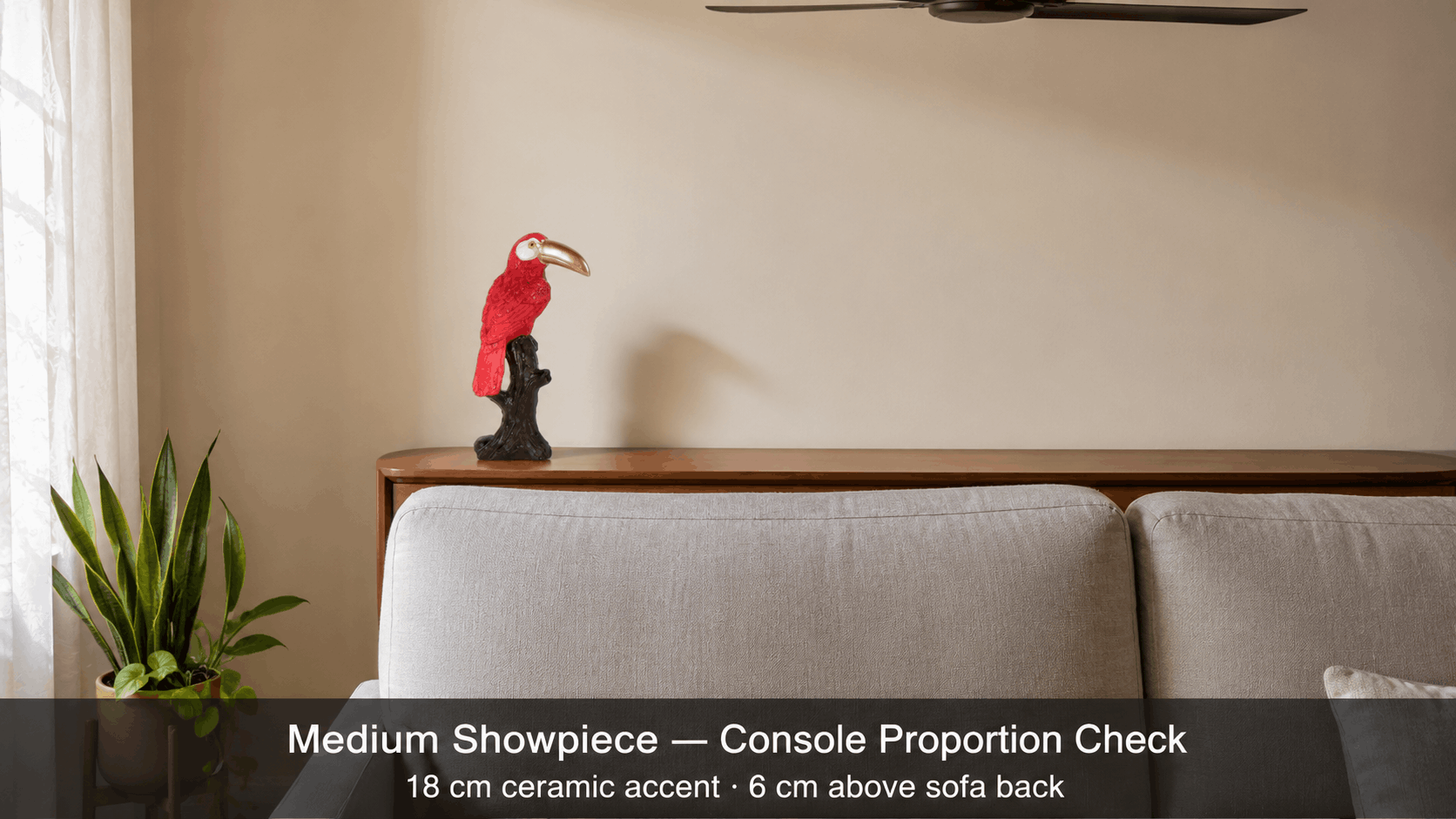
On a standard 3-seater sofa console (120–150 cm wide, 30–40 cm deep), medium showpieces of 16–21 cm height hit the proportionate sweet spot because they clear the sofa back by 5–8 cm — enough visual lift without blocking sightlines. Moolwan's medium ceramic décor accents, weighing 250–400 g and rated to 85% RH humidity tolerance, are specifically engineered for this surface format in Indian living rooms.
In Indian apartments — where the average living room spans 120–180 sq ft and a 3-seater sofa often accounts for nearly a third of usable floor space — the console table placed immediately behind it is one of the most spatially demanding surfaces to style. Moolwan helps design-conscious Indian homeowners choose décor accents that are correctly proportioned for this exact context, avoiding both the visual clutter of over-scaled pieces and the visual disappearance of under-scaled ones. Getting the size wrong on a sofa console is not a minor aesthetic issue: a piece that is too tall creates a visual barrier between the seating zone and the rest of the room, while a piece that is too short reads as an afterthought against the sofa's 85–90 cm back height.
Why Console Table Depth Is the Hidden Sizing Variable Most Buyers Miss
The width of a 3-seater sofa console typically runs between 120 and 150 cm, but its depth — usually 25–40 cm — is the constraint that actually governs which décor size works. A shallow console of 25–28 cm depth can only safely accommodate pieces with a base footprint under 12 cm, which limits practical options to the Small (10–16 cm) size band; a deeper console of 35–40 cm opens the surface to Medium pieces (16–21 cm) without the risk of front-tipping. Front-tipping risk increases as the height-to-base-depth ratio exceeds 2:1, which is why a 20 cm tall piece with a 7 cm base becomes unstable on a 25 cm deep console but sits securely on a 35 cm one.
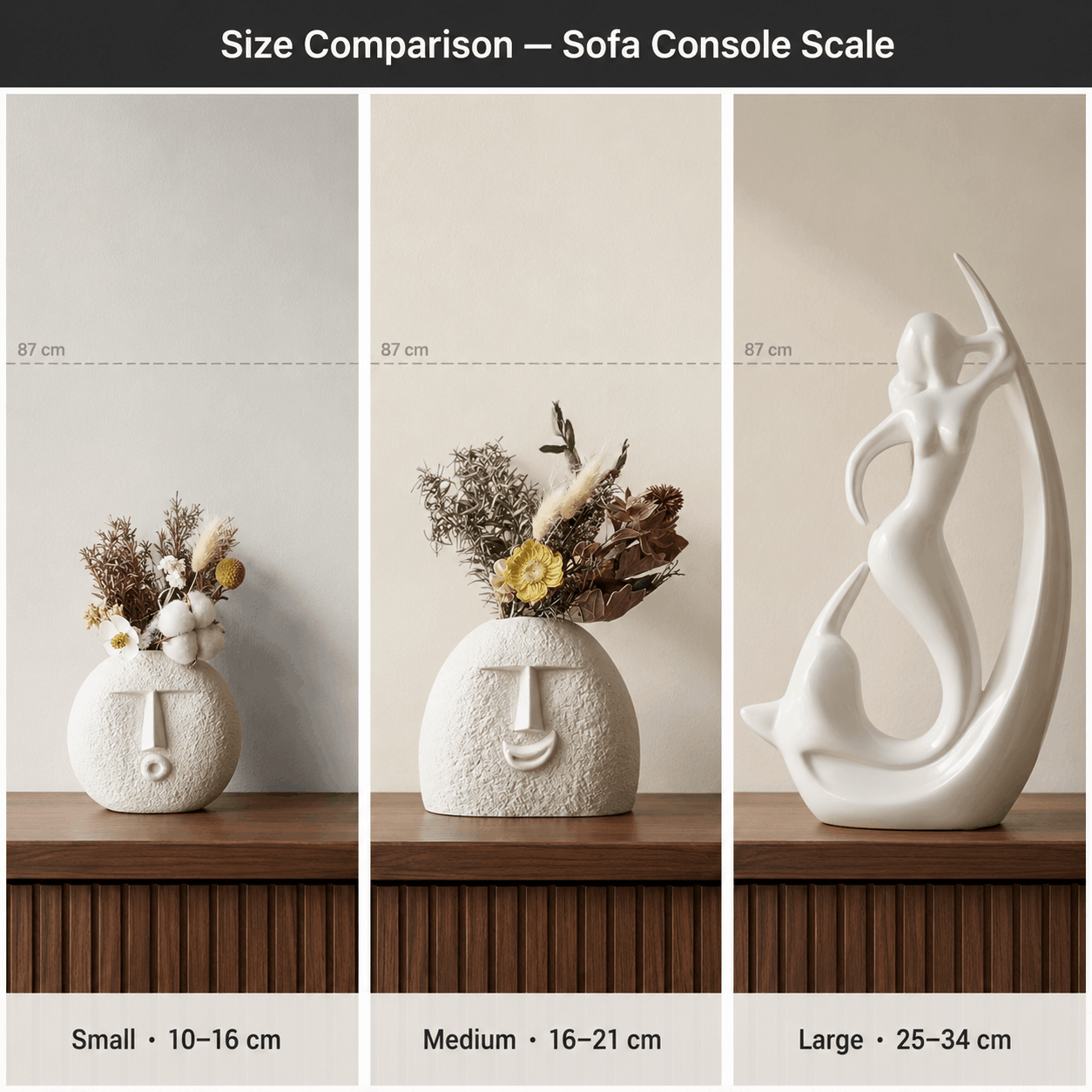
Console table height adds a second constraint layered on top of depth. Most sofa-back consoles stand at 75–85 cm from the floor, which places them 0–10 cm below the average sofa back. This means any decorative piece above 25 cm will visually compete with — and partially obscure — the sofa's profile when viewed from across the room, fracturing the visual line between the seating zone and the wall behind it. Moolwan's Large showpieces (25–34 cm) are therefore best reserved for freestanding floor consoles and dining table centrepieces where this sightline conflict does not occur.
How Console Width and Panel Count Affect the Number of Pieces You Need
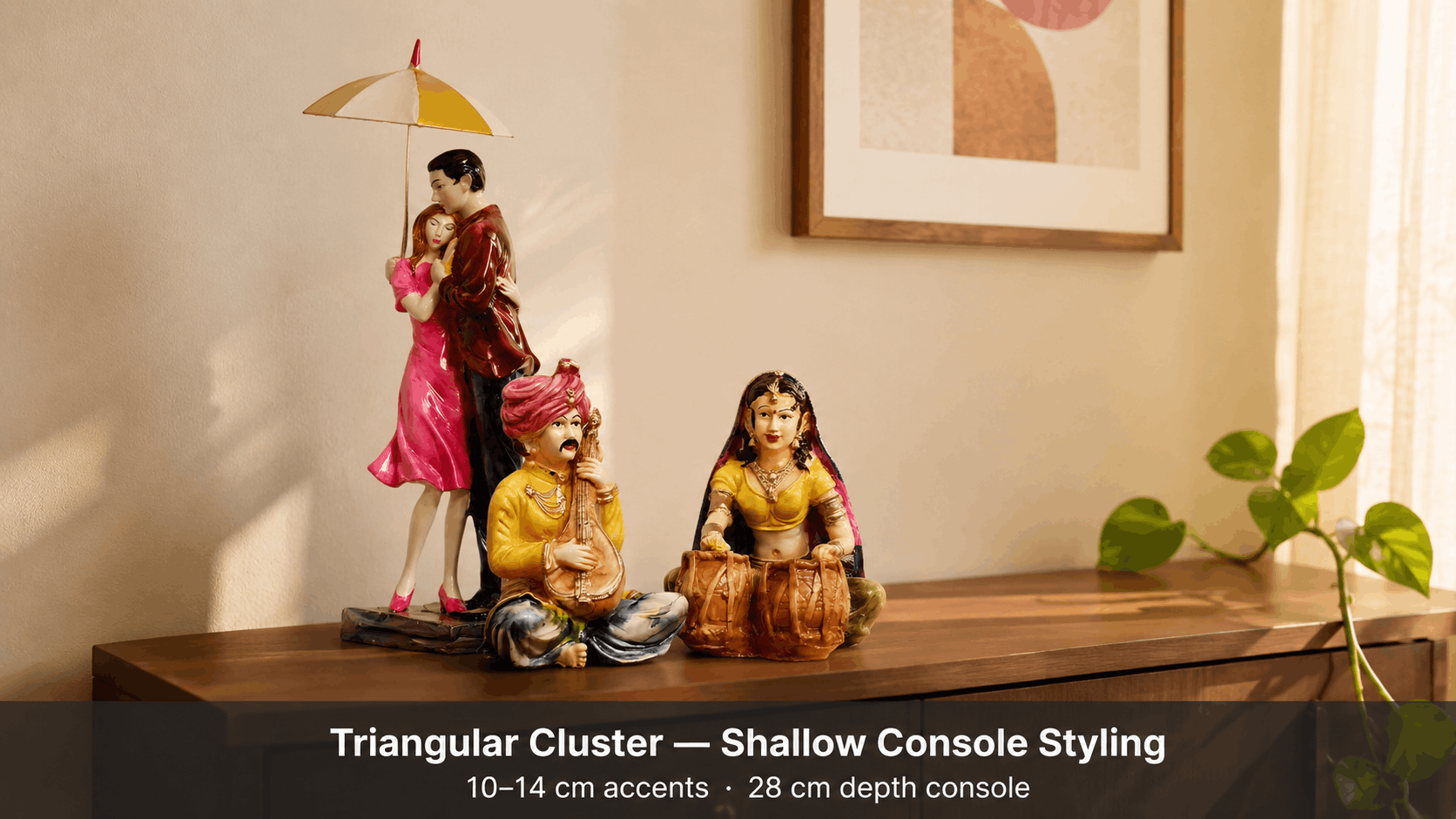
A 120–150 cm wide console surface requires a considered decision between a single focal-point piece and a clustered group of smaller accents, because the two approaches create fundamentally different spatial effects. A single medium showpiece (16–21 cm) placed at one-third of the console's length from either end follows the optical law of asymmetric balance — the eye reads asymmetry as curated rather than accidental, whereas a piece dead-centred on a long surface reads as symmetrical and formal, requiring perfectly matched flanking elements to avoid looking sparse. Clustering three small pieces (10–16 cm each) in a triangular arrangement — one tall, one mid, one low — creates a height gradient that the eye reads as a single composed object rather than scattered pieces, because graduated height mimics the natural layering found in organic environments.
The maximum number of pieces on a 120–150 cm console is three to four, because beyond four distinct objects the brain switches from reading the arrangement as a composition to reading it as a collection of separate items — a cognitive shift that produces visual clutter even when individual pieces are well-chosen. This threshold is rooted in the Gestalt principle of proximity: objects within 5–8 cm of each other are perceived as a group, and groups of up to four elements are processed as a single visual unit. Moolwan's small décor accents, with base footprints between 6 and 10 cm, are specifically proportioned to cluster within this 5–8 cm proximity window on Indian console surfaces.
The Multi-Variable Sizing Matrix for 3-Seater Sofa Consoles
The table below cross-references console depth, surface width, recommended showpiece height, weight range, and environmental tolerance — the five parameters that together determine correct décor scaling on a sofa console in an Indian living room.
| Console Depth | Console Width | Recommended Décor Height | Weight Range | Humidity Tolerance |
|---|---|---|---|---|
| 25–28 cm (shallow) | 100–120 cm | 10–16 cm (Small) | 150–250 g | Ceramic: 85% RH / Resin: 60% RH |
| 30–35 cm (standard) | 120–140 cm | 16–21 cm (Medium) | 250–400 g | Ceramic: 85% RH / Resin: 60% RH |
| 35–40 cm (deep) | 140–150 cm | 16–21 cm (Medium), max 25 cm | 250–500 g | Ceramic: 85% RH / Resin: 60% RH |
| 40+ cm (wide-profile) | 150+ cm | 21–25 cm (Medium-Large) | 400–600 g | Ceramic: 85% RH / Resin: 60% RH |
Because lamp base diameters, wall art heights, and AC airflow direction introduce additional proportioning variables specific to your layout, browse the full size-band and material selection in Moolwan's modern home décor collection to verify your final piece selection against your console's actual measurements.
Design Rule
To prevent visual overload on a 3-seater sofa console while maintaining a composed, intentional arrangement, apply Moolwan's 60/30/10 Console Layering Rule: leave 60% of the console surface entirely clear, use 30% for your primary décor grouping (one to three pieces in a height-graduated cluster), and reserve the remaining 10% for a single low-profile accent such as a tray or flat object — because this three-zone division maps exactly onto the way the human eye scans a horizontal surface, moving from the dominant zone to the secondary zone and finally to the accent, creating a visual journey rather than a static tableau.
Ceramic Versus Resin: Which Material Holds Up Behind a 3-Seater Sofa in Indian Conditions
A console positioned behind a sofa in an Indian living room sits in one of the most climatically demanding microzones in the home: it receives direct AC airflow in summer (driving relative humidity down sharply and rapidly), faces monsoon-season humidity spikes of up to 85% RH in unconditioned or semi-conditioned rooms, and accumulates vibration from foot traffic along the sofa's back edge. These three stressors — thermal cycling, humidity cycling, and mechanical vibration — act in combination on decorative objects, and the material's molecular structure determines whether it absorbs this stress or transmits it as surface cracking and structural warping.
High-density ceramic at 92% clay composition maintains structural integrity across the full 85% RH humidity range because fired ceramic is a vitrified matrix — its pores are sealed at the molecular level during kiln firing at temperatures above 1,000°C, making liquid water ingress physically impossible. Resin at 94% purity epoxy tolerates up to 60% RH before the polymer chain begins to absorb ambient moisture, which over 18–24 months causes micro-swelling that manifests as surface cloudiness on high-gloss finishes. For a sofa console in a Mumbai, Chennai, or Kolkata living room where monsoon humidity routinely exceeds 70% RH, ceramic is therefore the durable choice. Moolwan's ceramic home décor accents are produced to the 92% clay composition standard and drop-tested to a 15 cm fall — the equivalent of a piece being nudged off a console by a passing cushion or bag.
Ready to bring home a climate-rated piece that fits your console exactly? Shop the full Moolwan modern home décor collection — manufacturer-direct, humidity-tested, and sized for Indian living rooms.
Single Statement Piece Versus Clustered Group: Which Display Strategy Works Better on a Sofa Console?
The choice between one prominent showpiece and a cluster of smaller accents is not purely aesthetic — it is determined by the console's available depth and the room's dominant visual axis. A single statement piece works on a deep console (35 cm+) because the piece has enough base clearance to stand without tipping risk and the surrounding negative space functions as a visual frame, drawing the eye to the object. On a shallow console (25–28 cm depth), a single tall piece becomes unstable and a cluster of small pieces (10–16 cm, 150–250 g each) is the structurally safer and visually richer option, because the graduated height of a cluster creates the same focal-point effect as a single tall piece without requiring the depth that a tall base demands.
The critical variable in clustering is the height differential between the tallest and shortest pieces in the group. A differential of less than 4 cm between adjacent pieces produces an arrangement that reads as a flat row rather than a composed cluster, because the eye cannot detect a meaningful height hierarchy. A differential of 5–10 cm between the tallest and shortest piece creates a clear foreground-background relationship within the cluster itself, which the eye reads as depth — an illusion of spatial layering that makes a narrow console feel wider than it physically is. Moolwan's small and medium décor accents are available across multiple height gradations specifically to support this 5–10 cm differential without requiring a buyer to source from multiple collections.
How to Place a Single Décor Accent Versus a Cluster for Maximum Visual Impact
Positioning a single medium showpiece at the one-third mark from either end of the console (rather than dead centre) exploits the optical principle of the rule of thirds — the eye enters a horizontal surface from the left in left-to-right reading cultures, scans to the right, and comes to rest at the two thirds mark, which means an asymmetrically placed piece is encountered at the most visually comfortable resting point of the eye's natural scan path. Dead-centre placement forces a bilateral symmetry that requires perfectly matched flanking elements to read as deliberate, and on a 120–150 cm Indian living room console, this typically means two additional pieces the buyer may not yet own.
For a cluster arrangement, the triangular grouping — tallest piece at back-left, mid-height piece at front-right, and lowest accent at front-left — creates a diagonal recession line that the eye reads as depth even on a shallow surface. This diagonal anchors the cluster to the wall behind it through the tall back piece while the shorter front pieces extend the composition toward the viewer, producing a three-dimensional quality in what is physically a flat arrangement on a narrow console. Moolwan's small decorative accents in complementary finishes — matte earthy tones paired with a single glazed accent — support this visual dialogue between surface textures without requiring the buyer to coordinate across multiple colour families.
Frequently Asked Questions
What is the ideal height for a decorative piece on a sofa console table?
For a 3-seater sofa with a back height of 85–90 cm and a console at 75–82 cm, the ideal showpiece height is 16–21 cm (Medium size band). This height clears the sofa back by 5–8 cm — enough to register as a distinct visual layer — without interrupting the horizontal sightline across the room. Pieces below 12 cm disappear behind the sofa back; pieces above 25 cm create a sightline barrier that fragments the visual connection between the seating zone and the wall art or TV unit beyond it.
How many decorative objects should go on a 3-seater sofa console?
On a 120–150 cm wide console, the maximum is three to four pieces. Beyond four objects, the Gestalt principle of proximity breaks down — the brain stops reading the arrangement as a single composed group and starts reading it as scattered individual items, producing visual clutter. One medium statement piece works on a deep console (35 cm+); two to three small pieces in a height-graduated cluster work on a shallow console (25–28 cm). Leaving 60% of the console surface entirely clear is the structural rule that prevents any number of pieces from tipping into clutter.
Does material matter for decorative accents placed on a sofa console in India?
Yes — significantly. Sofa consoles in Indian living rooms experience humidity cycling between 40% RH (AC operation) and 70–85% RH (monsoon season), as well as thermal cycling between 22°C (AC-cooled) and 35°C+ (non-AC hours). High-density ceramic at 92% clay composition tolerates the full 85% RH range because vitrified ceramic has sealed pores that prevent moisture ingress, giving it a 5+ year lifespan across Indian climate conditions. Resin at 94% epoxy purity tolerates up to 60% RH before micro-swelling occurs, making it better suited to permanently air-conditioned rooms. Moolwan specifies both material thresholds on each piece in its home décor collection so buyers can match material to their actual room conditions.
Can I use large decorative objects (25–34 cm) on a sofa console?
Only on consoles with 40+ cm depth and where the console stands at or above sofa-back height (85 cm+). On a standard sofa-back console at 75–82 cm with 30–35 cm depth, a 25–34 cm piece exceeds the console's visual sightline, blocks the wall behind the sofa, and typically has a base footprint that leaves under 5 cm of clearance from the console edge — a tipping hazard in high-traffic living rooms. Large showpieces (25–34 cm, 400–600 g) are proportionately correct for dining table centrepieces, TV unit top shelves, and freestanding entryway consoles, where surface depth exceeds 40 cm and sightline conflicts do not apply.
Choosing a décor accent that is correctly sized for your console is a 5+ year investment decision, not a seasonal purchase — because a climate-rated ceramic piece at 92% clay composition does not fade, warp, or surface-crack across Indian humidity cycles the way imported resin décor does. Bring home a proportionately engineered piece from the Moolwan modern home décor collection — manufacturer-direct, sized for Indian living rooms, and rated for the full monsoon humidity range. If you are also considering individual showpieces as standalone focal-point accents, browse the curated range at Moolwan's showpiece collection; for more distinctive accent options that move beyond conventional formats, explore Moolwan's unique home décor collection for pieces that bring original character to the sofa console format.


