
What Size Modern Statue Works Best on an Indian Console Table?
The Short Answer
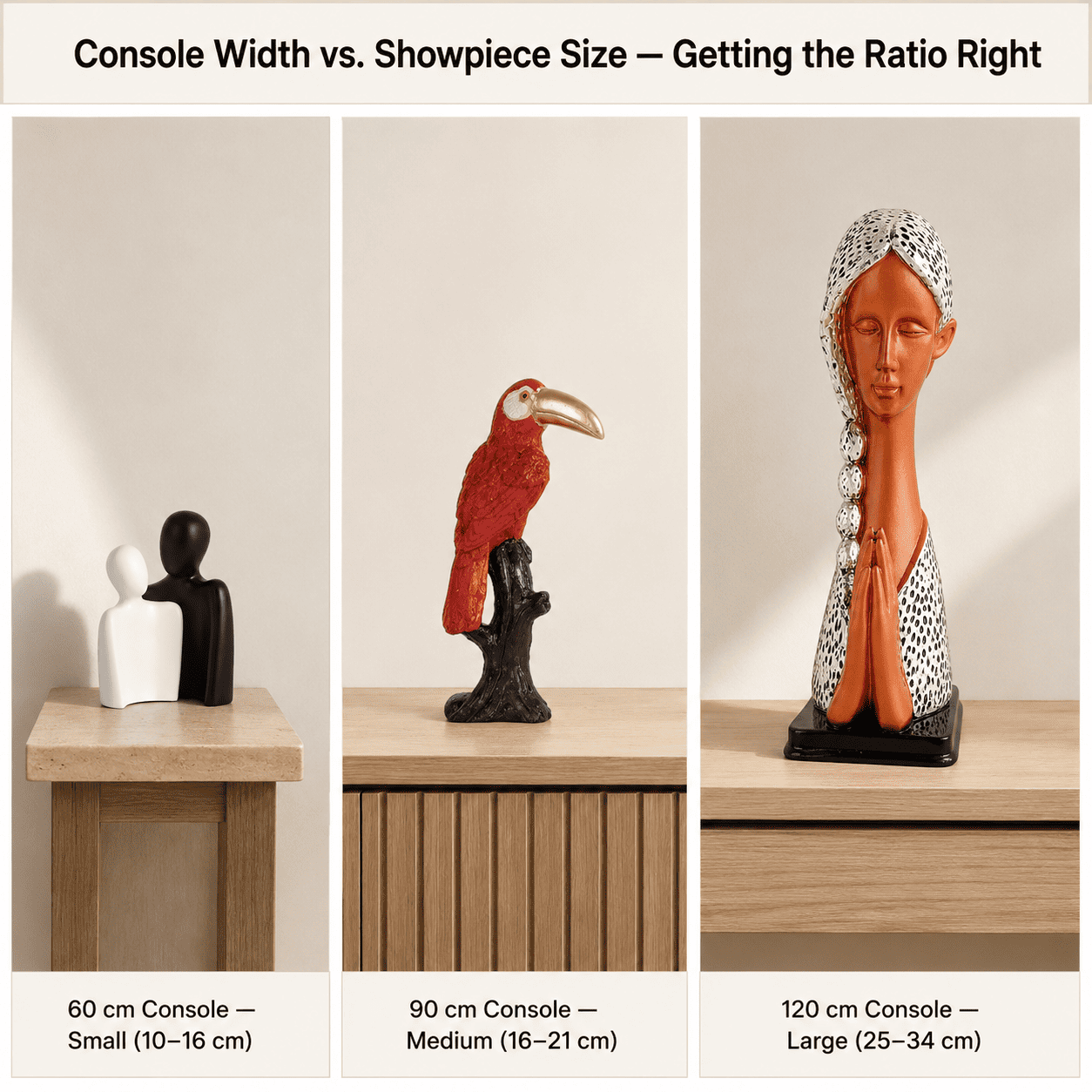
For most Indian console tables (80–110 cm wide), a medium showpiece at 16–21 cm height is the correct size band. At this height, the piece fills vertical space without visually competing with a mirror or wall art above — because the eye reads a console as a layered composition, not an isolated surface. Moolwan's medium-format décor accents (250–400 g, humidity-tolerant to 85% RH) are sized and weight-rated precisely for this placement.
Moolwan helps design-conscious Indian homeowners find the exact piece size that makes a console table look intentional rather than accidental. The console table is among the most compositionally demanding surfaces in an Indian home: it sits in high-traffic visual zones — entryways, living room side walls, dining-adjacent corridors — where it is seen at a distance and at eye level simultaneously. A piece that is 4 cm too short disappears against the wall. A piece 6 cm too tall obscures the wall art or mirror mounted above it. Sizing is not decorative preference; it is a spatial engineering problem with measurable thresholds.
Why Console Table Width Determines the Correct Statue Height Range
The proportional relationship between console width and décor height follows the same optical rule as picture framing: the eye expects vertical and horizontal mass to be in ratio. A console table 60–80 cm wide creates a narrow visual field in which a piece taller than 20 cm will appear structurally dominant rather than balanced, because the height-to-width ratio of the composition exceeds 1:3 and triggers a perception of visual top-heaviness.
On wider consoles (100–130 cm), the horizontal field is generous enough to accommodate a piece up to 25–30 cm, but only when the remaining surface is kept deliberately clear — visual mass needs negative space to read as a focal accent rather than clutter. In unconditioned entryway corridors and living room nooks common to Indian apartments under 1,200 sq ft, console tables most commonly measure 80–110 cm wide, placing the reliable sizing window at 16–25 cm statue height.
Moolwan's medium and large showpiece formats (16–21 cm medium, 25–34 cm large) are calibrated to these exact console widths, with weight between 250–600 g to prevent vibration displacement on high-footfall surfaces such as corridor consoles in families with young children or frequent guests.
How the Wall Element Above the Console Affects the Size You Choose
The single most overlooked sizing variable when choosing a modern statue for a console table is the clearance between the table surface and whatever is mounted on the wall directly above it — a mirror, framed artwork, or floating shelf. The standard clearance rule for Indian residential interiors places wall-mounted elements 15–20 cm above the console surface, which means a piece at 25 cm or taller will intrude into that clearance zone, forcing the eye to merge the statue silhouette with the lower edge of the mirror or art frame.
When wall clearance is 15–20 cm, a medium showpiece at 16–21 cm leaves 0–4 cm of breathing room — tight but visually acceptable. When clearance is tighter (under 15 cm, common in compact Indian corridors), the 10–16 cm small format is the correct choice because it preserves the visual separation that makes both the wall element and the statue read as distinct compositions rather than one compressed mass.
Moolwan's décor accents in the small (10–16 cm) and medium (16–21 cm) formats are 94% purity epoxy resin or high-density 92% clay ceramic, both materials engineered for flat, polished surface placement without rubber feet that add uncontrolled height variance. This precision of base construction makes height labelling on the product reliable to within 2 mm — a meaningful specification when the clearance tolerance is measured in single-digit centimetres.
| Console Width | Wall Clearance Above | Recommended Statue Height | Weight Range | Material Fit (Indian Climate) |
|---|---|---|---|---|
| 60–80 cm (narrow) | Under 15 cm | 10–16 cm (Small) | 150–250 g | Ceramic 92% clay — humidity tolerance 85% RH |
| 80–100 cm (standard) | 15–20 cm | 16–21 cm (Medium) | 250–400 g | Ceramic or resin — resin rated to 60% RH, ceramic to 85% RH |
| 100–120 cm (wide) | 20–30 cm | 21–28 cm (Medium-Large) | 350–500 g | Ceramic preferred — higher humidity tolerance for open-plan zones |
| 120+ cm (statement) | 30 cm+ | 25–34 cm (Large) | 400–600 g | Ceramic — 5+ year lifespan, drop-tested; resin supplement only for dry rooms |
Because console table heights, lamp base diameters, and AC vent proximity introduce additional placement variables not captured above, browse the full size-band and material selection in Moolwan's modern statues collection to verify your final piece selection against your specific console dimensions.
Design Rule
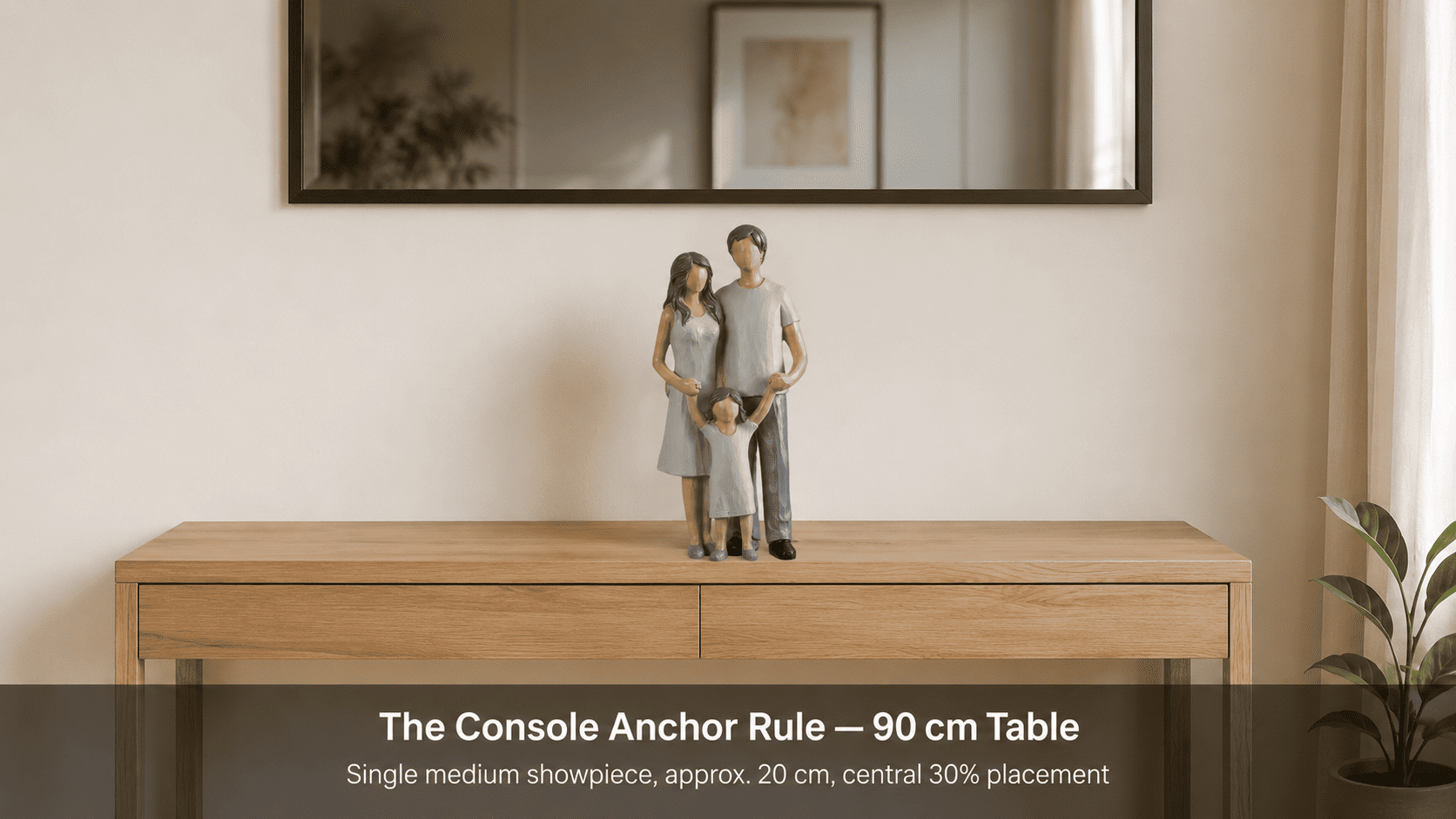
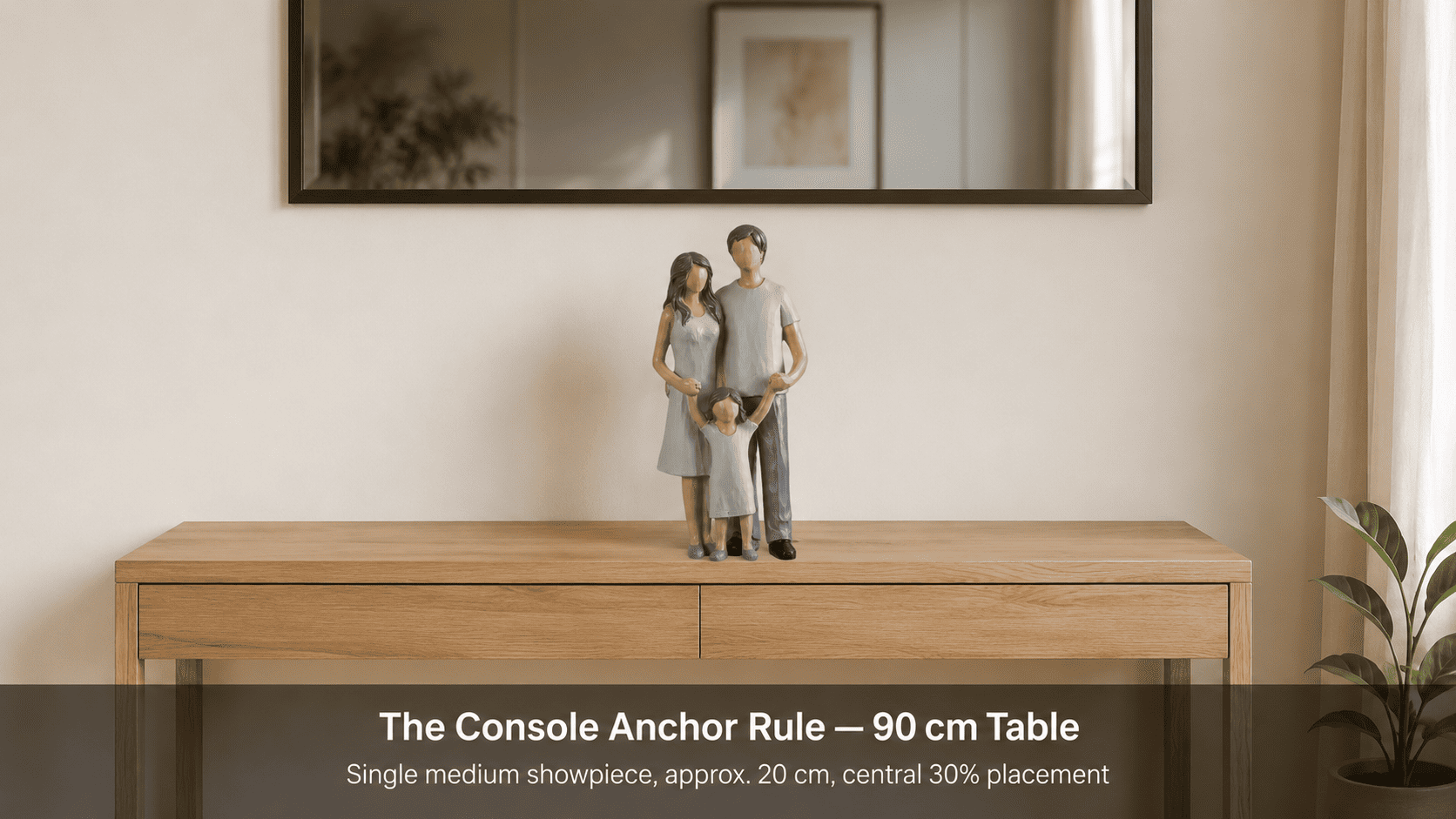
To prevent visual compression on console tables — where horizontal surface length creates a temptation to fill every centimetre — Moolwan's Console Anchor Rule specifies placing a single focal statue within the central 30% of the console width and leaving the remaining 70% of the surface entirely clear. This works because the human eye resolves a single object surrounded by negative space as a deliberate compositional choice, while objects placed across more than 50% of a surface are read as accumulation rather than curation.
Which Finish and Material Holds Up Best in Indian Entryway Conditions
Indian entryway corridors and living-room console zones are among the most climatically demanding surfaces in a home: they sit near exterior-facing doors, experience the widest daily temperature swings (15–35°C), and are exposed to the monsoon-season humidity spikes that push relative humidity above 75% RH for weeks at a time. A piece that performs well in a climate-controlled showroom or a Western apartment will absorb moisture through an unsealed base, cause surface efflorescence on a glazed finish, or develop micro-cracks in a low-grade resin formulation.
High-fired ceramic with a 92% clay composition tolerates up to 85% RH without structural deformation, making it the superior material choice for corridor and open-plan console placements. Resin at 94% purity epoxy is rated to 60% RH and 3H pencil hardness — appropriate for interior console tables in air-conditioned living rooms where humidity is managed, but a risk in entryway positions that open to outdoor air during monsoon months.
Moolwan's ceramic showpieces are drop-tested to a 15 cm fall threshold and finish-coated on the base to prevent moisture wicking from the console surface — a specific engineering requirement for polished marble and engineered wood consoles common in Indian apartments, where surface condensation during monsoon season can transfer upward into an uncoated ceramic base and cause permanent staining on both surfaces.
Want to bring home a modern statue built to outlast Indian humidity and still look right at year five? Shop the full Moolwan statues collection now.
Single Piece Versus Grouped Cluster: Which Works Better on a Console Table
A console table differs from a bookshelf or coffee table in one structural way: it is almost always viewed from a single frontal angle at a standing height of 150–170 cm, which means depth layering — placing shorter pieces in front of taller pieces — is the primary spatial tool available. On a shelf, objects are seen from above and beside; on a console, the viewer's eye travels horizontally across the surface and vertically up the wall, making front-to-back depth staggering more visually effective than left-to-right spread.
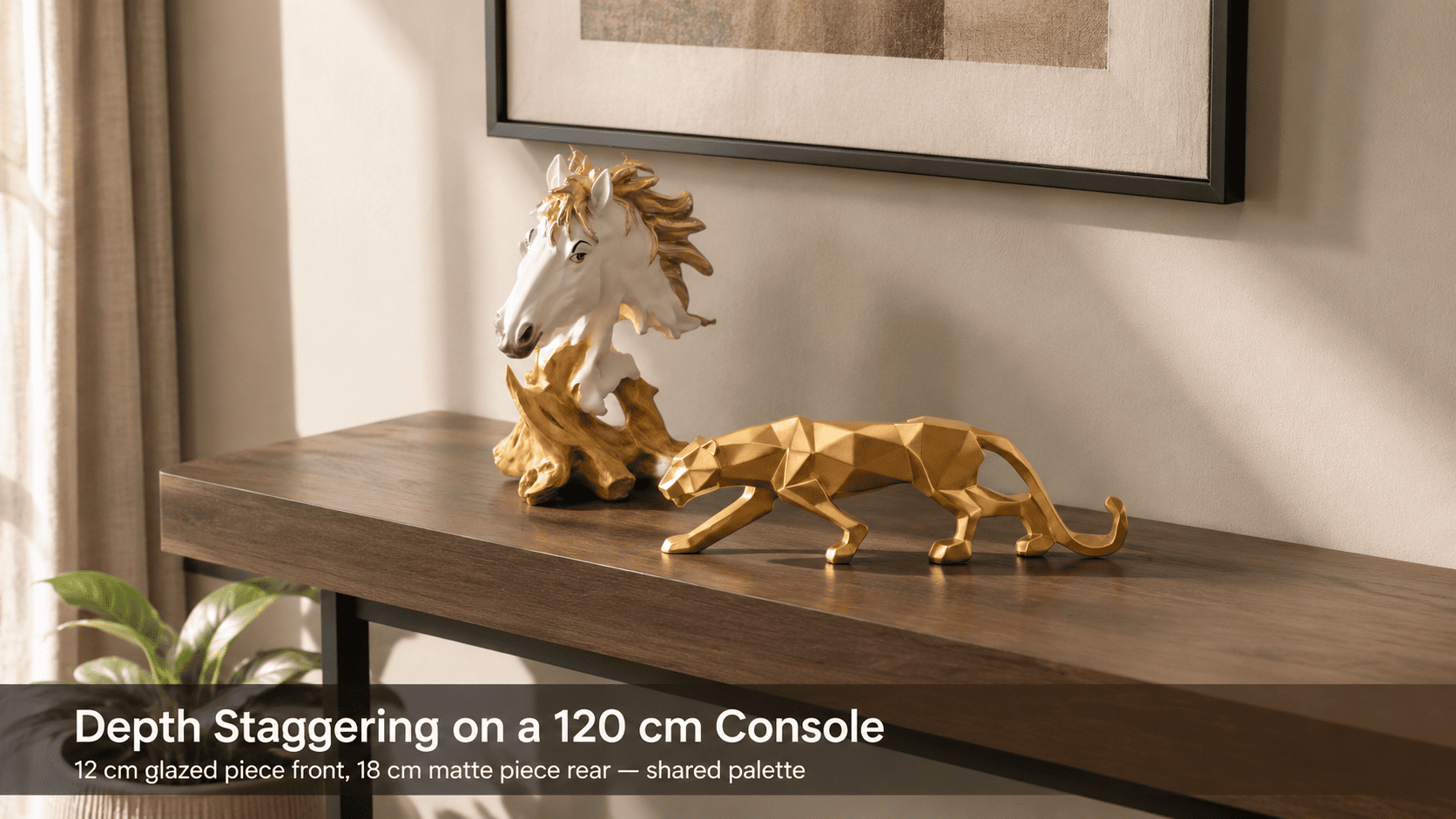
A single medium showpiece at 18–22 cm placed dead-centre reads cleanly in a narrow corridor or a console flanked by wall-mounted elements. A grouped cluster — typically one medium piece (16–21 cm) at the back of the console depth and one small piece (10–16 cm) at the front — adds spatial dimension without increasing the horizontal footprint, because the stagger creates a perceived diagonal that the eye reads as intentional depth rather than crowding.
The cluster approach only works correctly when the combined weight stays under 800 g and the two pieces share a palette or material language — a glazed ceramic paired with a matte resin of contrasting finish but identical colour family creates the "considered but effortless" effect that distinguishes curated placement from random accumulation.
Does the Console Table Height Affect Which Statue Size Is Right?
Standard Indian console tables sit at 75–90 cm from floor to surface. At 90 cm — common in taller console designs used in contemporary Indian homes — the surface is close to counter height, which shifts the optimal viewing angle downward. A piece taller than 28 cm on a 90 cm console enters the eye-level zone of a standing adult (approximately 145–170 cm composite viewing height), causing the piece's upper portion to read at eye level rather than as a surface object. This creates an unintended sense of scale intrusion.
On lower consoles at 75–80 cm — more common in sub-100 sq ft Indian entryways where visual compression is already a concern — a medium showpiece at 16–21 cm sits well within the eye-movement arc of a visitor entering through the door, landing in the "noticed and registered" zone without demanding active attention. The physical height of the console therefore sets a ceiling, not just a surface: console height + statue height should not exceed 110 cm if the goal is balanced visual presence rather than statement impact.
Frequently Asked Questions
What is the ideal statue height for a console table in an Indian apartment?
For the most common Indian console width of 80–110 cm, the ideal statue height is 16–21 cm (medium format). At this height, the piece fills the vertical space between the table surface and any wall-mounted element above without visually merging with it — the 15–20 cm clearance zone typical in Indian interiors means a 16–21 cm piece lands just inside safe compositional range. Moolwan's medium-format ceramic and resin showpieces are engineered to this height band with humidity tolerance up to 85% RH, addressing the material failure mode most common in Indian corridor placements.
Can I place a large decorative statue on a console table?
A large showpiece (25–34 cm) is appropriate only when the console is 120 cm or wider, wall clearance above the surface exceeds 30 cm, and the piece is placed as the sole object on the surface. The risk on narrower consoles is not aesthetic — it is structural: the height-to-width compositional ratio exceeds the perceptual threshold at which the brain reads a single object as a balanced accent, tipping into a reading of visual dominance. Large-format pieces are better suited to floor placement, corner shelves, or purpose-built display niches where the surrounding volume supports the scale.
Should I choose ceramic or resin for a console table statue?
Ceramic at 92% clay composition is the correct material choice for entryway console tables in Indian homes because it tolerates up to 85% relative humidity — the threshold regularly exceeded in open-plan or corridor positions during monsoon months. Resin at 94% purity epoxy is rated to 60% RH and performs well only in air-conditioned rooms where humidity is actively managed. The surface hardness difference also matters: resin at 3H pencil hardness resists everyday contact marks, but ceramic's kiln-fired surface is durable over a 5+ year lifespan without surface degradation — making ceramic the better long-term investment for high-touch console positions.
How many décor pieces should I place on a console table?
One to two pieces is the correct count for most Indian console tables. A single medium showpiece in the central 30% of the surface width reads as a deliberate focal accent. Two pieces — one medium at the back of the surface depth, one small at the front — add spatial dimension through depth staggering without increasing the horizontal footprint. Three or more pieces shift the reading from curation to collection, which reduces the visual impact of any individual piece and makes the console appear busy rather than composed. The Console Anchor Rule applies regardless of piece count: the occupied zone should not exceed 30% of total surface width.
A climate-rated ceramic showpiece placed with precision lasts 5+ years without surface degradation, replacing the seasonal replacement cycle that lower-grade alternatives force on homeowners who bought for aesthetics without engineering. Ready to choose a piece sized for your exact console? Bring home a curated modern statue from Moolwan's statues collection — manufactured in-house, climate-rated for Indian conditions, and priced direct from the maker. If you're also furnishing the broader living room or hallway, the Moolwan modern home décor collection offers full-room curated accents sized for every Indian surface type, and the unique home décor collection is worth exploring for statement pieces that avoid the mass-produced look entirely.


