For a 4-seater rectangular table, use a 6x9 ft rug. For a 6-seater, go with 8x10 ft. For 8 seats, choose 9x12 ft. The rule that matters most: the rug should extend at least 24–30 inches beyond the table edge on all sides, so every chair stays on the rug even when pulled out.
We help Indian homeowners plan dining rooms that feel intentional, not improvised — and rug sizing is the most common mistake we see. A rug that's too small makes the whole seating area look disconnected from the room, no matter how well the table and chairs are chosen.
Moolwan is a manufacturer-direct home décor brand built for Indian homes — from modern home decor items to wall art and showpieces, all designed to work with Indian space constraints, climate, and light. Getting the rug right is the foundation the rest of your dining room styling sits on.
The correct rug size depends on two things: the table's shape and how many chairs surround it. Use this chart as your baseline before you shop.
| Table Type | Seating | Table Size (approx.) | Recommended Rug Size |
|---|---|---|---|
| Rectangular | 4 seats | 4 x 2.5 ft | 6 x 9 ft |
| Rectangular | 6 seats | 6 x 3 ft | 8 x 10 ft |
| Rectangular | 8 seats | 7.5–8 x 3.5 ft | 9 x 12 ft |
| Round | 4 seats | 3.5–4 ft diameter | 8 ft round or square |
| Round | 6 seats | 5 ft diameter | 9 ft round or square |
| Square | 4 seats | 3.5 x 3.5 ft | 8 x 8 ft |
If your dining room falls between two sizes, always round up. A slightly oversized rug reads as intentional; an undersized one looks like an afterthought.
Every chair needs to stay fully on the rug when someone pulls it out to sit down or stand up. If a chair's back legs land off the rug, the chair rocks, catches on the rug edge, or scrapes your floor. That's why designers measure from the table's edge — not the chair's resting position — and add 24 to 30 inches on every side.
Skipping this measurement is the single biggest reason dining room rugs feel wrong even when the rug itself is beautiful.
Once your rug is right, the walls and surfaces around your dining table are what complete the room.
Shop Unique Decor for Your Dining SpaceA correctly sized rug anchors the room — but Indian dining spaces usually double as transition zones between the kitchen and living area, so the surrounding décor has to work harder. A console or sideboard along the wall is the natural place to layer in showpieces for home decor that pick up the tones in your rug and table.
Above the table or console, wall art fills the vertical space the rug leaves visually open. Moolwan's canvas pieces use 340 GSM cotton canvas with eco-solvent, UV-resistant inks and 1.5-inch kiln-dried pine frames — built to handle Indian humidity and sunlight without warping or fading, unlike mass-produced prints on thin frames.
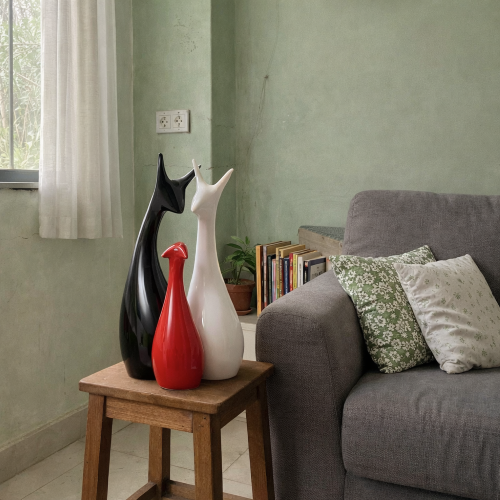
For the console or shelf itself, ceramic and resin showpieces are sized for exactly this kind of surface: small pieces (10–16cm) suit a narrow console, medium pieces (16–21cm) work as a centerpiece, and large pieces (25–34cm) become the focal point if your console has room to spare. You can browse the full range of modern home decor items sized specifically for Indian apartment and home layouts.
It's possible, but a round or square rug usually looks more proportional under a round table. If you use a rectangular rug, make sure it extends at least 24 inches beyond the table on every side, including diagonally.
Even in a compact space, don't go below 6x9 ft for a 4-seater table. A smaller rug will look cramped rather than cozy, and chairs won't stay on it when pulled out.
Yes. Center the rug under the table so the overhang is even on all sides — roughly 24–30 inches of rug should be visible beyond the table edge on every side.
It's not mandatory, but matching shapes (round table with round rug, rectangular table with rectangular rug) creates the most visually balanced look and is the safest choice if you're unsure.
Right-sized rug, right-sized décor. Complete your dining room with pieces engineered for Indian homes.
Shop Showpieces for Home DecorQuick View



