
What to Bring First When Moving to a New House as per Vastu?
The Vastu-Prescribed Entry Order for a New Home
Vastu Shastra, India's ancient architectural science, treats a new home's first entry as a ritual that sets the energetic foundation for everything that follows. The tradition is not superstition — it is a structured system of association: what you bring in first signals your intention for the space. Here is what classical Vastu texts and practising architects consistently recommend, in sequence:
- A Kalash (copper or brass vessel filled with water) — represents the five elements and invites Vastu Purush (the energy of the space) into alignment. Place it at the northeast corner, the Ishan Kone, which governs wisdom and prosperity.
- Salt — carried loose in a container, not a sealed packet. Salt absorbs negative energy and purifies the space before furniture or décor is moved in.
- Rice (uncooked) — symbolises nourishment and abundance. Keep a small quantity near the kitchen or in a silver or steel bowl at the entrance.
- A cow or cow symbol — if a living cow is not practical (most urban apartments), a decorative brass or ceramic cow figurine placed at the entrance fulfils this Vastu requirement symbolically.
- Lakshmi–Ganesha idols — these are the most essential décor items to position before any furniture arrives. Ganesha (facing east) clears obstacles; Lakshmi (north-facing, ideally) invites prosperity.
- A lit lamp (diya or lamp) — light is brought in before darkness is left behind. A brass or ceramic oil lamp placed at the entrance sets the tone for every room.
We help design-conscious Indian homeowners — both urban apartment dwellers and suburban families — create spaces where Vastu intention and modern aesthetic live together without compromise. At Moolwan, every showpiece and decorative item is engineered to sit beautifully in Indian homes, not just look good in a catalogue.
Browse Moolwan's Modern Home Décor Collection →
Vastu Entry Items: What Each Symbolises and Where It Goes
Vastu is spatial and directional — what you bring matters, but where you place it determines whether it activates or stagnates. The table below maps each first-entry item to its Vastu direction, material preference, and the energy it activates:
| Item | Vastu Direction | Material Preference | Energy Activated | Ideal Room |
|---|---|---|---|---|
| Kalash (water vessel) | Northeast (Ishan Kone) | Copper, brass, silver | Wisdom, spiritual clarity | Pooja room / entrance |
| Salt (loose) | Any corner | Rock salt preferred | Purification, negativity removal | Kitchen, corners |
| Uncooked rice | North or northeast | Unprocessed, uncovered | Nourishment, abundance | Kitchen shelf |
| Ganesha idol | East-facing | Brass, ceramic, resin | Obstacle removal, beginnings | Entrance, pooja room |
| Lakshmi idol | North-facing | Brass, ceramic, resin | Prosperity, abundance | Pooja room, living room |
| Cow figurine (symbol) | North or entrance | Brass, ceramic | Protection, fertility | Entrance, living room |
| Lit lamp / diya | Southeast (Agni corner) | Brass, clay, ceramic | Dispels darkness, invites warmth | Entrance, pooja room |
| Wall art (auspicious motif) | North or east wall | Canvas, wood-framed | Aesthetic energy, intention setting | Living room, bedroom |
Source: Compiled by the Moolwan Design Concept Team based on classical Vastu Shastra guidelines and contemporary interior application. Authored by Ruchi Malhotra, Founder & CEO, Moolwan (Euphorica Ventures Pvt Ltd), Bangalore.
Which Décor Items Should You Buy for a New Home as per Vastu?
Once the entry ritual is complete, the décor you choose for your first week of living determines how Vastu energy flows through each room. Focus on three categories:
1. Showpieces and Figurines for the Entrance and Living Room
Ganesha, Lakshmi, cow figurines, and lotus motifs are the most Vastu-aligned showpieces for Indian homes. The material matters as much as the motif. Ceramic showpieces with a 92% clay composition and humidity tolerance up to 85% RH are ideal for Indian climates — they do not crack, discolour, or degrade in monsoon-heavy regions. Moolwan's ceramic pieces carry a 5+ year lifespan and are drop-resistant to 15cm, making them practical for shelf placement. If you prefer a contemporary aesthetic, high-purity epoxy resin showpieces (94% purity, 3H scratch resistance) replicate the weight and presence of traditional brass without oxidation.
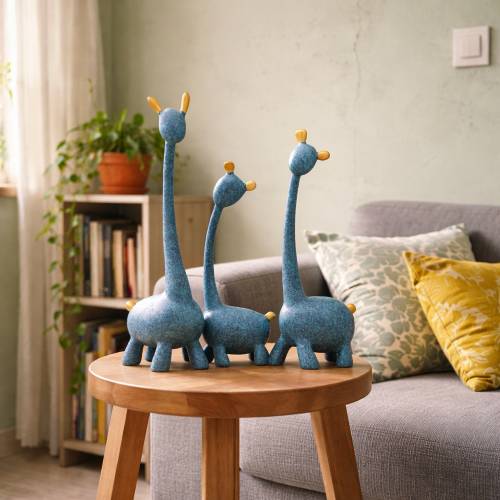
For sizing: small pieces (10–16cm) work on bathroom shelves and study desks; medium pieces (16–21cm) belong on your showcase or coffee table; large focal pieces (25–34cm) command a mantelpiece or console table near the entrance. All Moolwan showpieces weigh between 150g–600g — lightweight enough for Indian shelves without needing wall reinforcement.
Explore Moolwan's white home décor items for traditional living rooms — including statues, showpieces, and vases that blend Vastu intention with a clean, modern finish that suits both traditional and transitional interiors.
2. Wall Art for North and East Walls
Vastu recommends placing auspicious, uplifting imagery on the north and east walls of your living room. Nature scenes, flowing water, green landscapes, and sunrise imagery are considered prosperity-activating. Abstract or dark imagery on entry walls is specifically discouraged in Vastu. Moolwan's canvas wall art is printed on 340 GSM cotton canvas using eco-solvent UV-resistant inks with a moisture-resistant coating — this means colours stay true in humid Indian conditions and do not yellow over time. Frames are built with 1.5-inch kiln-dried pine, dimensionally stable across Indian seasonal temperature swings.
3. Vintage and Transitional Pieces for a Contemporary New Home
Many Indian homeowners moving into a new space want their home to feel rooted without feeling dated. If your aesthetic is contemporary but your values are traditional, a curated vintage-modern piece — a terracotta vase, a textured ceramic bowl, a brass-finish resin statue — bridges that tension elegantly. Browse Moolwan's modern vintage home décor collection for contemporary living rooms and new home interiors, where each piece is designed to honour Indian craft sensibilities while sitting naturally in a 2BHK flat or a new-build villa.
Room-by-Room Vastu Décor Placement for Your New Home
Vastu is not just about what you bring — it is about where each piece lives once you settle in. Here is a practical room-by-room placement framework:
Entrance / Foyer
- East-facing Ganesha idol at eye level (not on the floor).
- A small water feature or kalash symbol in the northeast corner.
- Avoid mirrors directly facing the main door — this deflects positive energy outward.
- A ceramic or resin lamp holder (southeast corner, symbolically) keeps the entrance feeling warm and active.
Living Room
- North wall: canvas wall art with water, nature, or sunrise themes.
- East wall: family photographs, light wooden frames.
- South or west wall: heavier décor, bookshelves, statement showpieces.
- Avoid placing television on the north wall (it creates restless energy per Vastu).
- A white or cream showpiece on the coffee table (north-east quadrant of the room) invites clarity.
Kitchen
- Keep a small brass or ceramic Annapurna (goddess of food) figurine on a shelf above the counter — not inside a cabinet.
- Avoid red or black décor in the kitchen; opt for green, yellow, or orange tones.
Bedroom
- Avoid idol placement in the bedroom, particularly facing the bed.
- Soft canvas art with abstract florals or muted landscapes on the south or west wall promotes rest.
- Pairs of décor items (two vases, two figurines) are considered conducive to relationship harmony.
Why Material Quality Matters When Choosing Vastu Décor for Indian Homes
A Vastu-aligned showpiece that cracks in humidity or fades in two monsoons is not fulfilling its purpose — aesthetically or energetically. Indian climates are demanding: coastal cities see 85%+ relative humidity; northern plains swing between 5°C winters and 45°C summers. Most imported décor or mass-market pieces are not engineered for this range. Moolwan manufactures directly, testing for Indian climate conditions specifically. Ceramic pieces tolerate humidity up to 85% RH and heat to 60°C. Resin pieces are rated for 60% RH and a 15–35°C temperature band — appropriate for most Indian indoor environments year-round. Canvas wall art uses moisture-resistant coating that prevents canvas warping and ink bleed during monsoon months.
Because Moolwan is a D2C manufacturer — no distributor, no retail markup — the same quality standard that a premium home décor brand charges ₹3,000–₹5,000 for is available at manufacturer-direct pricing. Every piece comes with a clear return policy: within 24 hours of delivery, unused, in original packaging, with a refund processed within 15 working days (10% restocking fee applicable).
If you are furnishing a new home and want décor that serves Vastu intention, Indian climate, and a modern aesthetic without compromise, explore Moolwan's complete modern home décor range — curated specifically for Indian living rooms and apartments.
Shop Vastu-Friendly Home Décor at Moolwan →
Frequently Asked Questions
Which idol should be kept first in a new house as per Vastu?
As per Vastu, Ganesha is the first idol to be placed in a new home — facing east, at the main entrance or in the pooja room. Ganesha is the remover of obstacles and is always invoked before any new beginning in Hindu tradition. Lakshmi follows next, placed north-facing to invite prosperity. Both idols should be at eye level or above — never on the floor.
Is it okay to keep a Ganesha idol made of resin in the pooja room?
Yes. Vastu does not prohibit resin or ceramic idols — material is a practical choice, not a Vastu restriction. High-purity epoxy resin (94% purity) is scratch-resistant and humidity-tolerant, making it better suited for Indian homes than brass or bronze, which can oxidise. Ensure the idol is intact (no chips or breaks), clean, and placed with intention.
Which direction should wall art face in a living room as per Vastu?
Vastu recommends placing auspicious wall art on the north or east walls of your living room. These directions are associated with prosperity (north, governed by Kuber) and new energy and sunlight (east). Avoid placing dark, violent, or solitary imagery anywhere in the living room. Landscapes, flowing water, rising sun, and floral art are specifically considered prosperity-activating motifs.
What should you not bring first into a new home as per Vastu?
Vastu advises against bringing broken items, old brooms, mirrors (especially facing the entrance door), or empty vessels into a new home first. These are considered inauspicious symbols — a broken object signals interrupted energy, an empty vessel signals lack. Secondhand furniture brought in without cleansing is also discouraged until the home has been smudged or sanctified.
How many décor items should you keep in a new living room as per Vastu?
Vastu favours odd numbers for standalone showpieces (1, 3, or 5) and even numbers for pairs (2 vases, 2 figurines in a bedroom). More importantly, Vastu discourages clutter — a small number of intentional, high-quality pieces is far more aligned than a crowded shelf. Three well-placed ceramic or resin pieces of varying heights (small 10–16cm, medium 16–21cm, large 25–34cm) create a visually balanced, Vastu-friendly arrangement.


