
What to Buy After Styling Shelves to Complete a Living Room in India
The Short Answer
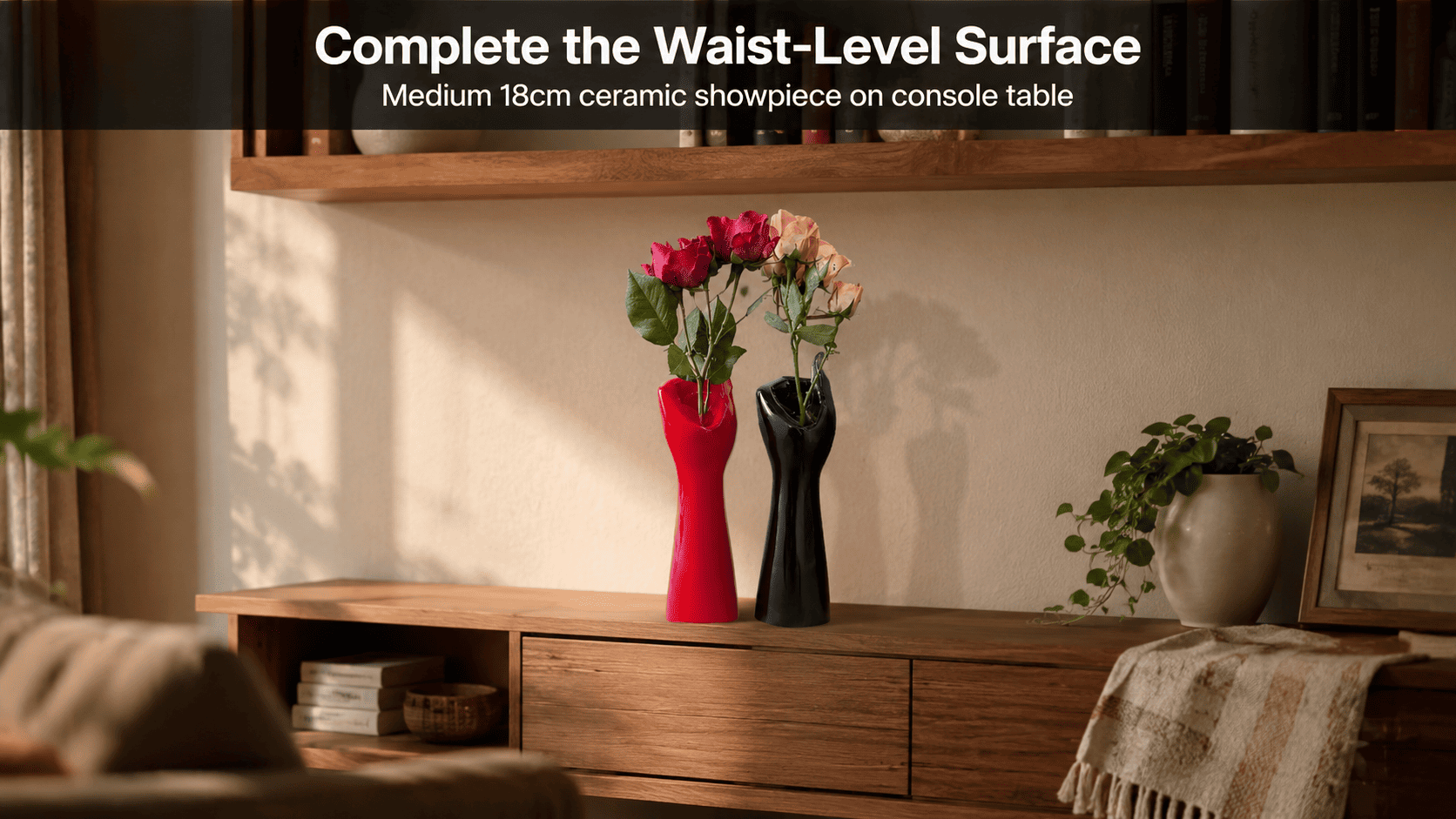
After shelves are styled, a living room still needs décor at two more height bands — waist-level (console or coffee table) and floor-level sightlines — because the eye stops scanning once it reaches a single cluster. Moolwan recommends a medium ceramic or resin showpiece (16–21 cm, 250–400 g) for the surface directly below or beside the shelf to complete the room.
In Indian apartments under 1,200 sq ft, a living room reads as "unfinished" when décor exists at only one height — typically the shelf — because the human eye scans a room in horizontal bands, not vertical columns, and a single decorated zone leaves the rest of the band visually empty. Moolwan helps design-conscious Indian homeowners close that gap by curating décor sized specifically for the surfaces below and beside an already-styled shelf, not just the shelf itself.
What Should You Buy After Styling Your Shelves?
Buy a décor accent for the nearest waist-height surface — a coffee table, console, or side table — sized to roughly half the height of the shelf piece above it. This size ratio matters because two objects of similar visual weight at different heights create a sense of intentional repetition, while a tall piece directly under a tall shelf piece competes for the same sightline and reads as cluttered rather than styled.
Moolwan's modern home décor collection groups pieces by exactly this logic: small accents (10–16 cm) for desks and narrow consoles, medium pieces (16–21 cm) for coffee tables and showcases, and large focal pieces (25–34 cm) for open floor-adjacent surfaces. Choosing from the size band one step below your shelf piece, rather than matching it exactly, is what keeps the room layered instead of repetitive.
How Do You Choose the Right Size for Surface-Level Décor?
Match the décor height to the surface width using a roughly 1:3 ratio, because a piece wider than a third of its surface visually overwhelms the table, while anything narrower than a fifth disappears into the surface. A 90 cm coffee table, for instance, comfortably holds a single medium piece (16–21 cm) without needing a second object to balance it.
Weight matters as much as height in Indian homes with frequent dusting and rearranging. Moolwan's ceramic pieces are drop-tested to a 15 cm fall and weigh 150–600 g depending on size, a range engineered so the piece is heavy enough to sit stably on a glass-top table but light enough to be repositioned by hand without strain — a durability detail most decorative imports skip.
| Room Footprint | Target Surface | Recommended Décor Size | Material & Humidity Tolerance |
|---|---|---|---|
| Sub-100 sq ft (studio corner) | Floating shelf or narrow console | Small (10–16 cm), 150–250 g | Ceramic, 85% RH tolerant |
| 100–150 sq ft | Bookshelf-adjacent side table | Small–Medium (14–19 cm), 200–350 g | Resin, 60% RH tolerant |
| 150–250 sq ft | Coffee table or sideboard | Medium (16–21 cm), 250–400 g | Ceramic, 85% RH tolerant |
| 250+ sq ft (open living-dining) | Console table or focal floor surface | Large (25–34 cm), 400–600 g | Ceramic, drop-tested to 15 cm |
Because surface width, room footprint, and material tolerance all shift the right size band, browse the full size and material selection in Moolwan's modern home décor collection to match a piece to your exact coffee table or console dimensions.
Design Rule
To avoid a living room that looks half-finished, follow Moolwan's Three-Surface Completion Rule: every living room needs a deliberately styled accent at three distinct height bands — shelf-level, waist-level, and floor-adjacent — so the eye travels through the room instead of stopping at a single cluster.
What's the Best Order to Complete a Living Room After Shelf Styling?
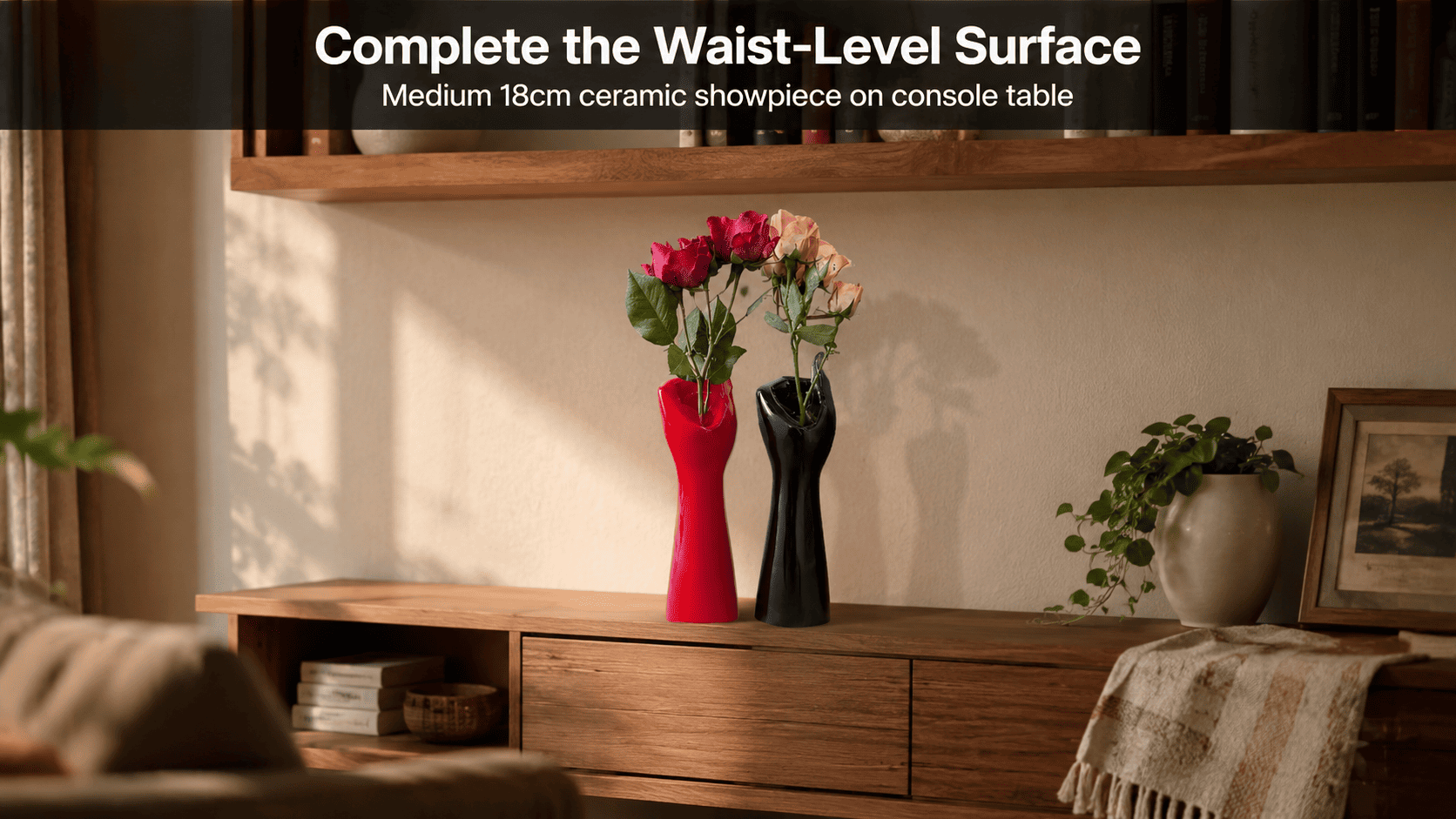
Work top to bottom: shelf first, then the nearest waist-height surface, then floor-adjacent corners last, because each layer is judged against the one above it and reversing the order forces repeated adjustments. Once the shelf is set, the coffee table or console is the next surface most homeowners' eyes land on when entering the room.
Skipping straight to floor-level décor — a large vase or sculptural piece — before the middle layer is set often leaves a visible gap between the shelf and the floor that no single object can bridge. Moolwan's collection is deliberately organised by this same top-to-bottom size logic, so each size band corresponds to the surface a homeowner would naturally style next.
Want to bring home the piece that completes your waist-level surface? Shop the full Moolwan modern home décor collection now.
Which Materials Hold Up Best in Indian Living Rooms?
In homes without round-the-clock air conditioning, décor needs to tolerate humidity swings of 60–85% relative humidity across monsoon and dry seasons without warping or losing finish. Moolwan engineers its ceramic line to a 92% clay composition rated for 85% RH and heat up to 60°C, and its resin line to 94% purity epoxy rated for 60% RH and 15–35°C, so the right material choice depends on whether the room runs an AC most of the day or not.
Buying a piece rated for the wrong humidity band is the most common reason decorative objects develop hairline cracks or surface dulling within a year. Choosing ceramic for non-AC rooms and resin for consistently conditioned rooms is a one-time decision that prevents a seasonal replacement cycle — the core ROI argument for paying slightly more upfront for climate-rated pieces.

How Do You Avoid an Overdecorated Living Room?
Cap the total number of standalone décor accents at one per surface, because every additional object beyond the first competes for the same sightline and the room reads as cluttered rather than curated past that point. A coffee table, a console, and a shelf each get one anchor piece — not a cluster of three.
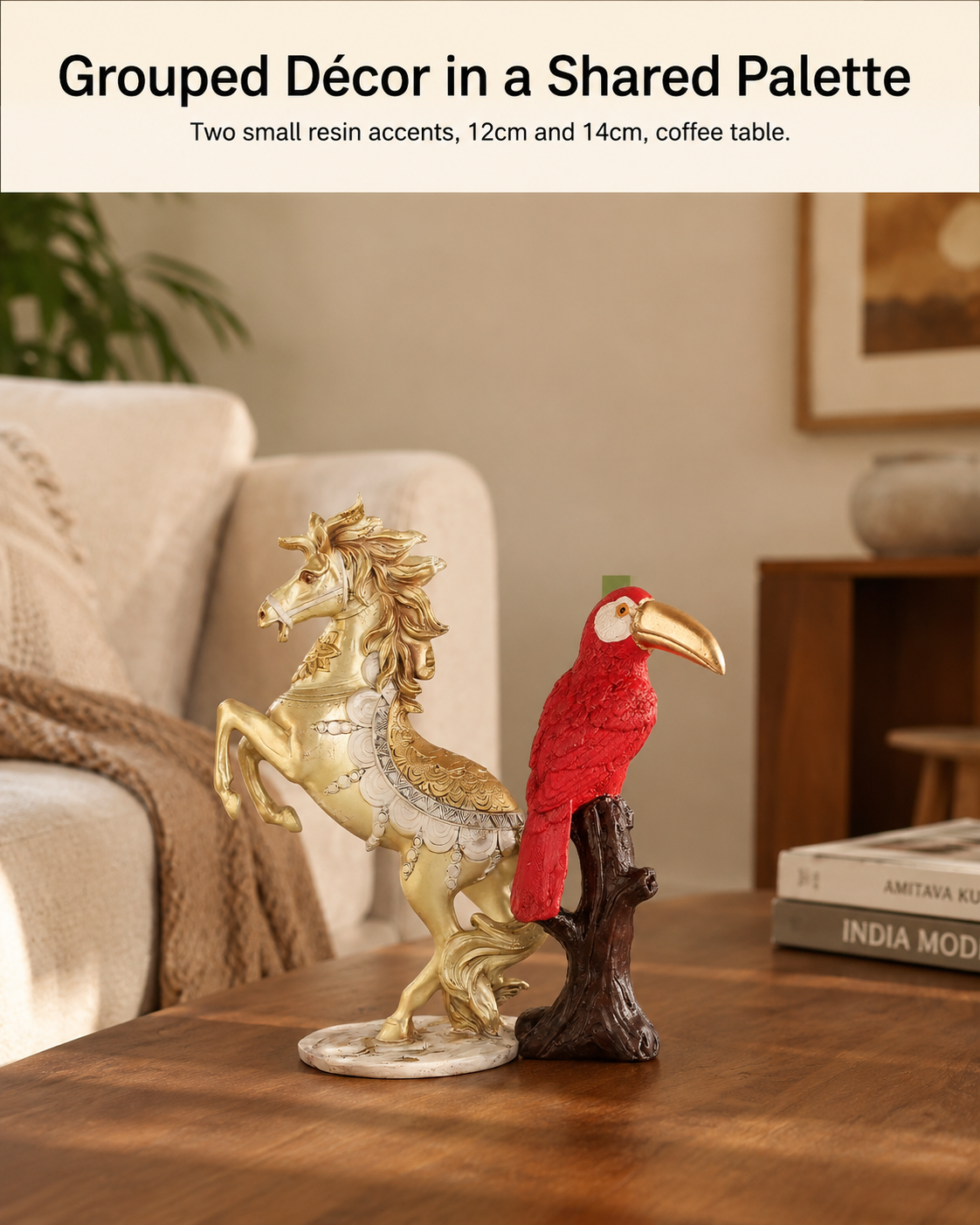
Grouping is the exception, not the default: two or three small pieces (10–16 cm) can sit together on one surface only if they share a palette or material, since mismatched finishes in a cluster register as visual noise rather than intentional styling.
Frequently Asked Questions
What's the first thing to buy after styling shelves?
Buy a décor accent for the nearest waist-height surface, usually a coffee table or console, sized one band smaller than the shelf piece above it. This keeps the room layered because the eye reads descending sizes as intentional, while matching sizes exactly reads as repetitive. Moolwan's medium ceramic pieces (16–21 cm) are sized for exactly this surface.
How many décor pieces does a living room need to feel complete?
Most living rooms under 250 sq ft need three anchor pieces total — one for the shelf, one for a waist-height surface, and one for a floor-adjacent corner or console — because three height bands are enough for the eye to register a "finished" room without crossing into clutter past four or five objects.
Should décor pieces match the shelf's colour palette exactly?
No — décor should share a palette family with the shelf, not match it exactly, because identical tones at different heights flatten the room's depth while a shared-but-varied palette (for example, two warm earth tones rather than one repeated shade) creates visual continuity without monotony.
How long do ceramic and resin home décor pieces last in Indian homes?
Ceramic pieces rated to 85% RH typically last 5+ years even in non-AC rooms during monsoon season, while resin pieces rated to 60% RH last 3+ years and perform best in consistently air-conditioned rooms. Choosing the material suited to your room's humidity profile is what determines which end of that range you land on.
Ready to complete the room beyond the shelf? Bring home a piece from the Moolwan modern home décor collection — manufacturer-direct, climate-rated for Indian humidity, and sized for apartments under 1,200 sq ft. If you're furnishing the whole space rather than one surface, also consider Moolwan's broader living room collection or the curated modern interior décor picks for new homes as alternative starting points.


