
What to Hang Above a Headboard to Make a Bedroom Feel High-End
The Short Answer
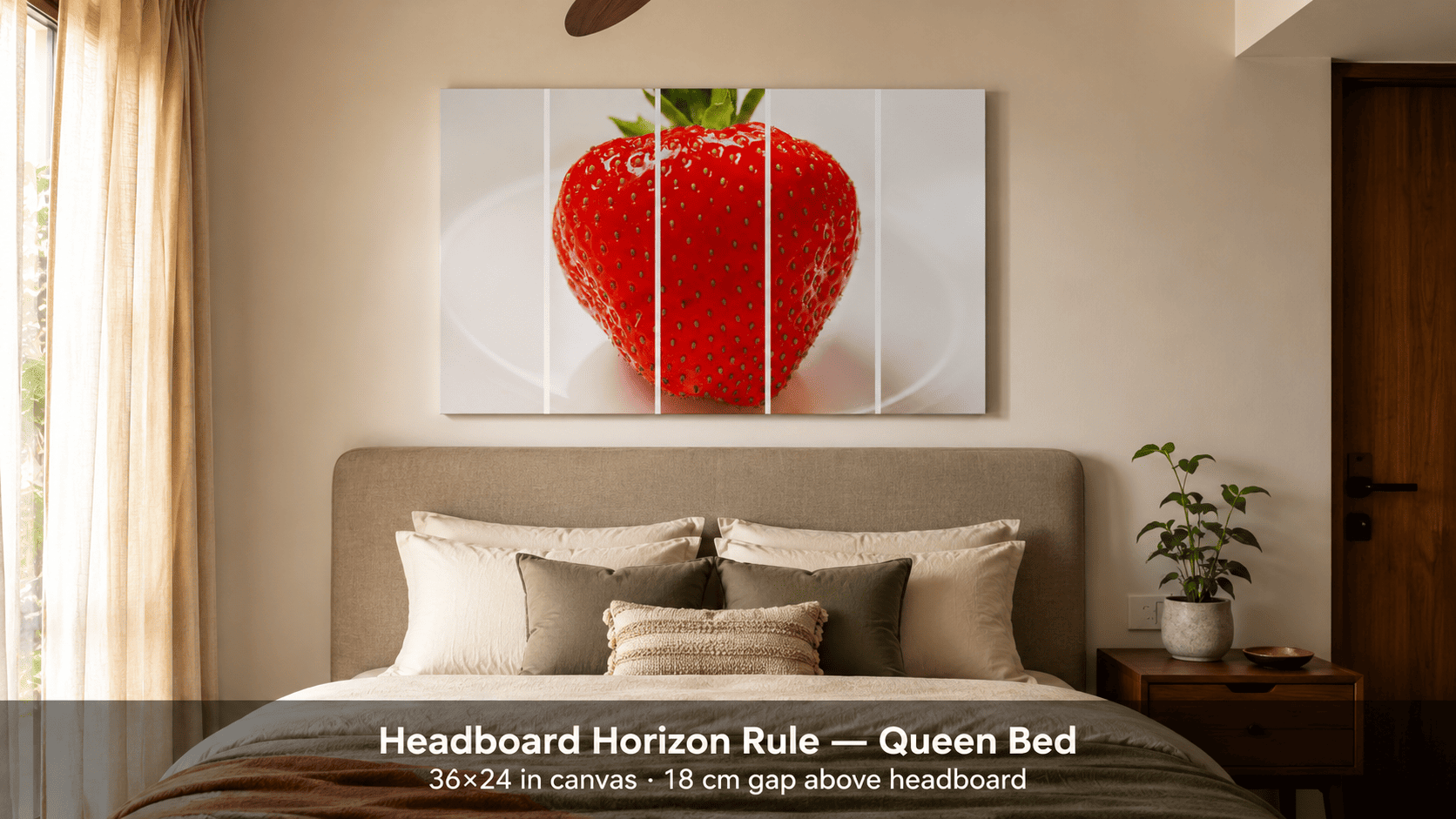
For a queen-size bed in a room under 150 sq ft, hang a single canvas wall art measuring 36×24 inches centred 15–20 cm above the headboard top. This gap activates perceptual continuity — the eye reads the art and headboard as one composed unit rather than two floating objects — which is the primary visual mechanism behind a "high-end" bedroom feel. Moolwan's UV-resistant, warp-proof bedroom canvas collection is sized precisely for this application.
Interior design research consistently shows that the wall above a headboard accounts for approximately 40% of a bedroom's perceived visual weight, because it is the first zone the eye resolves when entering the room and the last zone seen before sleep. Moolwan helps design-conscious Indian homeowners convert that blank wall into a composed focal point without undertaking renovation — using scaled bedroom décor and canvas wall art engineered for Indian room proportions, humidity conditions, and wall types.
Why the Wall Above a Headboard Controls the Entire Bedroom's Tone
The human visual system anchors spatial hierarchy to the largest vertical object in a room. In a bedroom, the bed — and by extension the headboard and the wall directly above it — is that object. When the wall above the headboard is bare, the eye has no anchor and the room reads as unfinished regardless of how well the rest of the space is styled.
Hanging a piece that is correctly scaled to the bed width creates what designers call a visual terminus: the eye travels up from the bedding, pauses at the headboard, continues to the art, and stops — completing a vertical composition. Rooms where this vertical sequence is intentional consistently test higher on perceived quality than rooms where the same budget was spent on furniture alone, because the eye has a resolved path rather than an open one.
Indian apartments under 150 sq ft face a compounding challenge: low ceiling heights (typically 9–10 feet versus 11–12 feet in Western homes) compress the vertical field, meaning the art above a headboard must be proportionally larger relative to the bed than Western interior guides recommend. A 24×18-inch piece that reads well above a queen bed in a 180 sq ft Western bedroom will appear diminished and adrift in an Indian apartment of equivalent bed size but lower ceiling.
How to Choose the Right Size for Above-Headboard Bedroom Décor
The correct width for above-headboard art is 50–75% of the headboard width. Going below 50% creates float — the piece appears to have been placed by accident rather than by intention. Exceeding 75% creates compression — the wall reads as overcrowded and the ceiling feels lower. This 50–75% bandwidth is the spatial rule that most high-end hotel rooms follow, and it works because it produces a mathematically balanced negative-space ratio on either side of the piece.
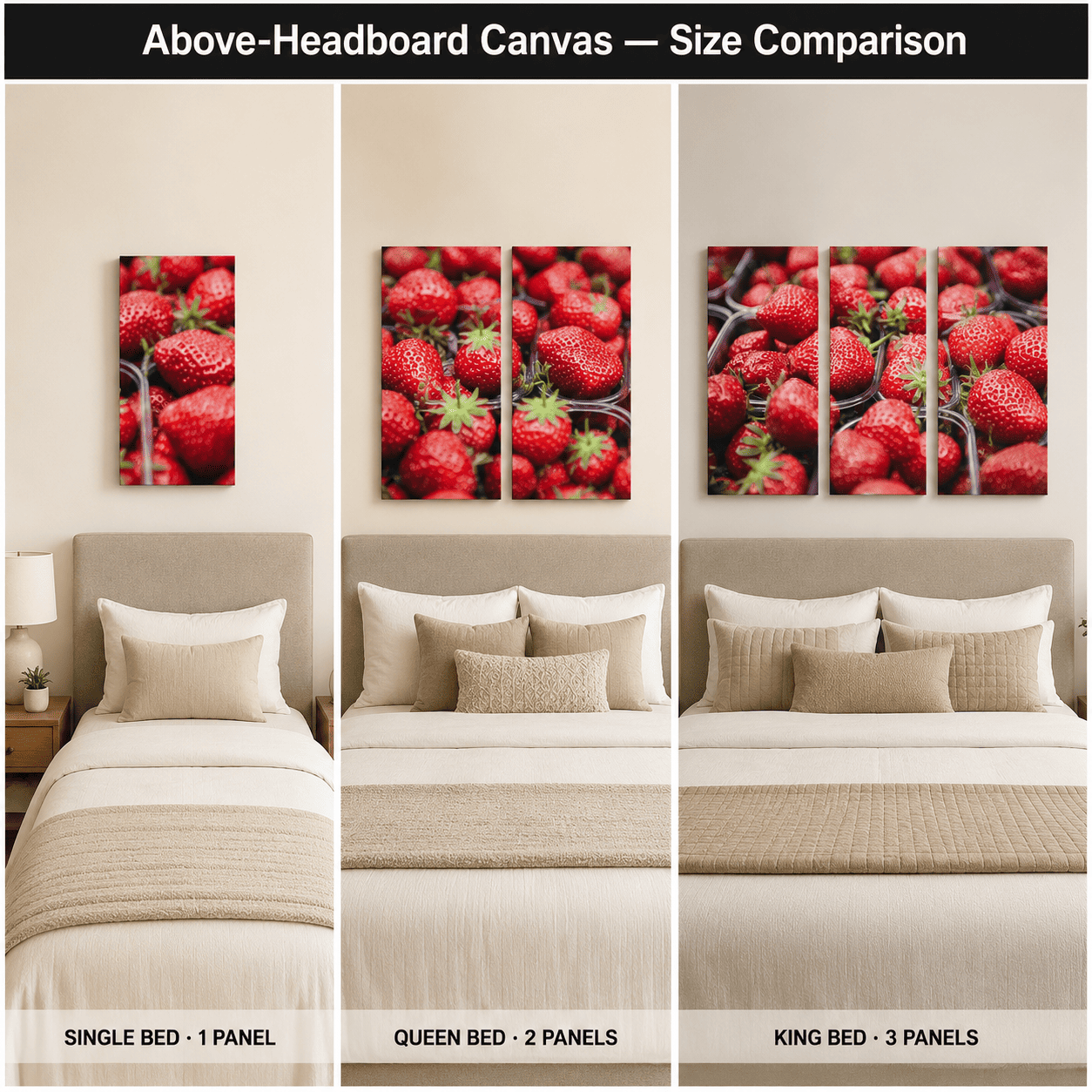
For a standard Indian queen bed with a headboard width of approximately 150 cm, this translates to an art width of 75–112 cm. A single 36×24-inch (91×61 cm) canvas sits squarely inside this band and is the most versatile choice for rooms under 120 sq ft. For rooms between 120–150 sq ft with higher ceilings, a 3-panel canvas set spanning 100–120 cm total width adds depth without requiring a second nail hole in the centre — which matters on Indian plastered walls where patching is disproportionately difficult.
Vertical placement is equally governed by physics, not taste. Hanging the bottom edge of the art 15–20 cm above the top of the headboard creates optical continuity because the gap falls within the visual cortex's threshold for grouping proximate objects as a single unit (approximately 10–25 cm at a viewing distance of 2–3 metres). Beyond 25 cm, the art and headboard separate perceptually and the composed effect is lost.
| Bed Size | Headboard Width | Recommended Art Width | Recommended Art Height | Ideal Gap Above Headboard |
|---|---|---|---|---|
| Single / Twin | 90–100 cm | 45–70 cm (18–28 in) | 30–45 cm (12–18 in) | 15–20 cm |
| Double | 120–135 cm | 60–100 cm (24–40 in) | 40–55 cm (16–22 in) | 15–20 cm |
| Queen | 150–160 cm | 75–112 cm (30–44 in) | 50–65 cm (20–26 in) | 15–20 cm |
| King | 180–195 cm | 90–140 cm (36–55 in) | 55–75 cm (22–30 in) | 18–25 cm |
| King (3-panel set) | 180–195 cm | 100–145 cm total span | 50–65 cm per panel | 18–25 cm |
Because ceiling height, AC duct placement, and headboard profile thickness introduce additional variables not captured in this table, browse the full size-band and style selection in Moolwan's bedroom décor collection to verify your final piece selection against your room's specific dimensions.
Design Rule
To create a resolved vertical composition above any bed size, apply Moolwan's Headboard Horizon Rule: the art width must fall within 50–75% of headboard width, the bottom edge must sit 15–20 cm above the headboard top, and the art's dominant tone must repeat at least once in the bedding palette — these three constraints together trigger the perceptual grouping that makes a bedroom read as designed rather than assembled.
Which Style of Bedroom Décor Works Best Above a Headboard in Indian Homes
Abstract and soft-geometric canvas wall art consistently outperforms literal figurative styles for above-headboard placement because abstraction does not compete with the face of a sleeping person. The brain's face-recognition circuitry is active even during relaxed wakefulness; a figurative portrait or a detailed landscape above the headboard triggers low-level processing that disrupts the visual calm a bedroom must deliver. Abstract forms — colour-field washes, soft geometric arcs, botanical silhouettes — carry visual interest without triggering the same recognition load.
Palette coordination between the art and the bedding produces a disproportionate quality signal for a low-cost intervention. When the art's dominant tone appears in the bedding (even in a muted or tinted form), the eye reads the room as intentionally colour-graded — a technique used in high-end hotel interiors to create the impression that every object was sourced together. For common Indian bedding palettes (ivory, sage, dusty blush, charcoal grey), warm earth-tone or muted botanical canvas wall art produces the strongest coordination because warm earth pigments appear in the undertone of nearly every Indian neutral fabric.
For rooms with strong seasonal humidity variance — a near-universal condition in Indian metros during monsoon — canvas material choice determines whether the above-headboard piece retains its visual impact at year three. Cotton canvases with moisture-resistant rear coatings prevent canvas fibres from absorbing ambient humidity, which causes micro-warping of the print surface that first appears as subtle colour banding and later as visible surface ripple. At 340 GSM cotton canvas with a moisture-resistant rear coating, Moolwan's bedroom canvas range is manufactured to stay dimensionally stable across the 60–85% RH swing that Indian bedrooms experience between summer AC use and monsoon open-window periods.
Ready to bring home canvas wall art engineered to hold its shape and colour through Indian monsoon seasons? Shop the full Moolwan bedroom décor collection now.
Single Panel vs Multi-Panel: What Actually Looks More High-End Above a Headboard
A single large-format canvas reads as more confident and high-end than a multi-panel set of equivalent total width in rooms under 130 sq ft, because fewer visual interruptions reduce cognitive parsing effort — the room feels calmer. Multi-panel sets (diptychs or triptychs) become the better choice above 130 sq ft or when the headboard width exceeds 160 cm, because at that scale a single canvas must be very large to maintain the 50–75% width rule, and a 3-panel triptych distributes the visual mass more gracefully while allowing the negative space between panels to function as a breathing gap.
The panel gap in a triptych set should be held to 3–5 cm. Below 3 cm, the panels merge visually and the triptych effect — three rhythmic beats of colour across the wall — is lost. Above 5 cm, the panels begin to read as unrelated objects rather than a composed set, which eliminates the quality signal the format is supposed to deliver.
How to Hang Above-Headboard Art Safely on Indian Plastered Walls
Indian plastered walls — whether POP (Plaster of Paris) or cement-sand — have a surface hardness and adhesion profile that differs from the drywall construction common in Western homes where most hanging hardware is designed. POP plaster in particular has a compressive strength of approximately 5–8 MPa at standard mix ratios, which means a standard picture-hook rated to 5 kg in drywall will hold reliably in POP plaster only if the hook penetrates through the plaster layer (typically 12–18 mm) into the brick or concrete substrate beneath.
For canvas wall art under 3 kg — which covers all single-panel bedroom canvas pieces up to 40×30 inches — a single 5 cm masonry nail at a 45-degree downward angle into brick substrate is the most mechanically reliable hanging method because the angular load path converts vertical weight into compressive force on the nail shaft, reducing the shear stress at the plaster face that causes slow pull-out over time. For 3-panel sets where total weight approaches 4–6 kg, two anchor points spaced at 60% of the total frame width distribute the load symmetrically and prevent the asymmetric torque that causes single-point hangs to rotate over months.
Kiln-dried pine frames — as used in Moolwan's canvas bedroom collection — are structurally critical here because green or inadequately dried pine frames absorb moisture from Indian humid-season air, increasing frame weight by up to 15% and adding mechanical stress to the hanging point that was not present at installation. A frame that felt secure in April can develop a slow lean by August not because the wall fixing degraded, but because the frame became heavier.
Frequently Asked Questions
How high above the headboard should art be hung?
The bottom edge of the art should be 15–20 cm above the top of the headboard. This specific gap falls within the visual cortex's proximate-grouping threshold at the 2–3 metre viewing distance typical of an Indian bedroom, causing the brain to read the headboard and art as a single vertical composition rather than two separate objects. Exceeding 25 cm breaks this perceptual grouping and the composed effect is lost. For headboards with decorative crests or protruding frames, measure from the highest physical point of the headboard to the art's bottom edge.
What width of canvas wall art should go above a queen-size bed?
For a queen-size bed with a headboard of approximately 150–160 cm, the art width should fall between 75–112 cm (roughly 30–44 inches). This 50–75% of headboard width rule is the spatial constraint that produces visual balance: below 50% the piece floats adrift, above 75% the wall feels compressed and the ceiling appears lower. A single 36×24 inch (91×61 cm) canvas sits at the centre of this range and is the most reliable starting choice for Indian queen-bed bedrooms under 120 sq ft. Moolwan's bedroom canvas collection includes pieces in this exact size band.
Will canvas wall art warp or fade in an Indian bedroom with AC and monsoon humidity swings?
Standard canvas prints manufactured for temperate climates are vulnerable to the 60–85% relative humidity swing Indian bedrooms experience between AC use and monsoon open-window periods, because untreated cotton canvas fibres expand laterally as they absorb humidity and contract when dried by AC, gradually causing print surface micro-warping. Canvas prints manufactured with a moisture-resistant rear coating and kiln-dried frames — the specification used in Moolwan's bedroom canvas range — eliminate this failure mode because the rear coating blocks moisture ingress at the primary absorption surface and kiln-dried pine has residual moisture content of under 10%, leaving no further absorption capacity during Indian seasonal variance.
Is one large canvas better than a gallery wall above a headboard?
For rooms under 150 sq ft — the typical footprint of an Indian apartment bedroom — a single large canvas or a 3-panel triptych consistently outperforms a gallery wall above the headboard. Gallery walls require a minimum of 5–7 pieces to resolve visually as a curated composition rather than a random cluster, and the number of nail holes required on an Indian plastered wall creates a high risk of surface damage during rearrangement. A single correctly-sized canvas delivers the high-end focal-point effect with one fixing point and zero compositional risk.
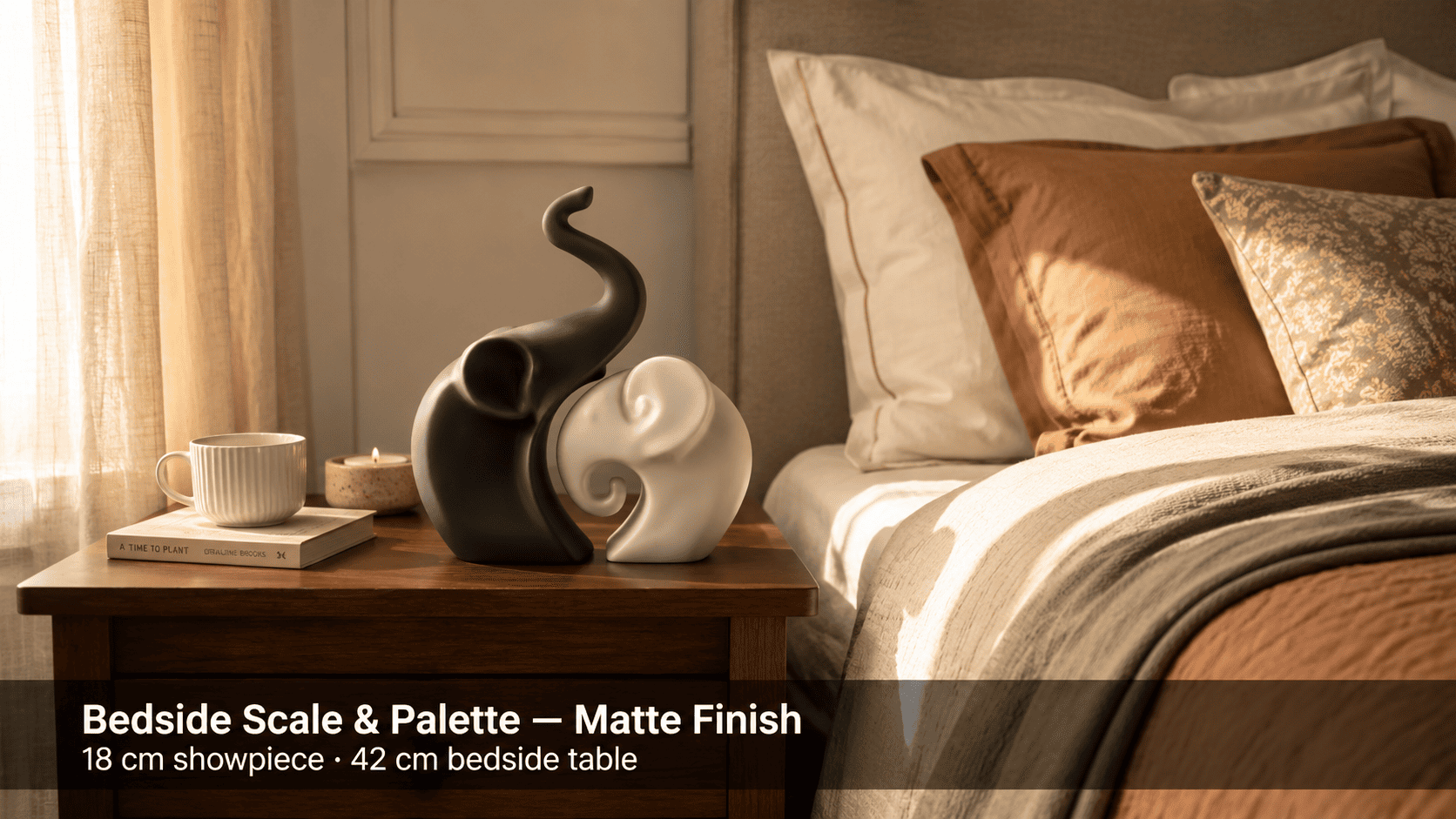
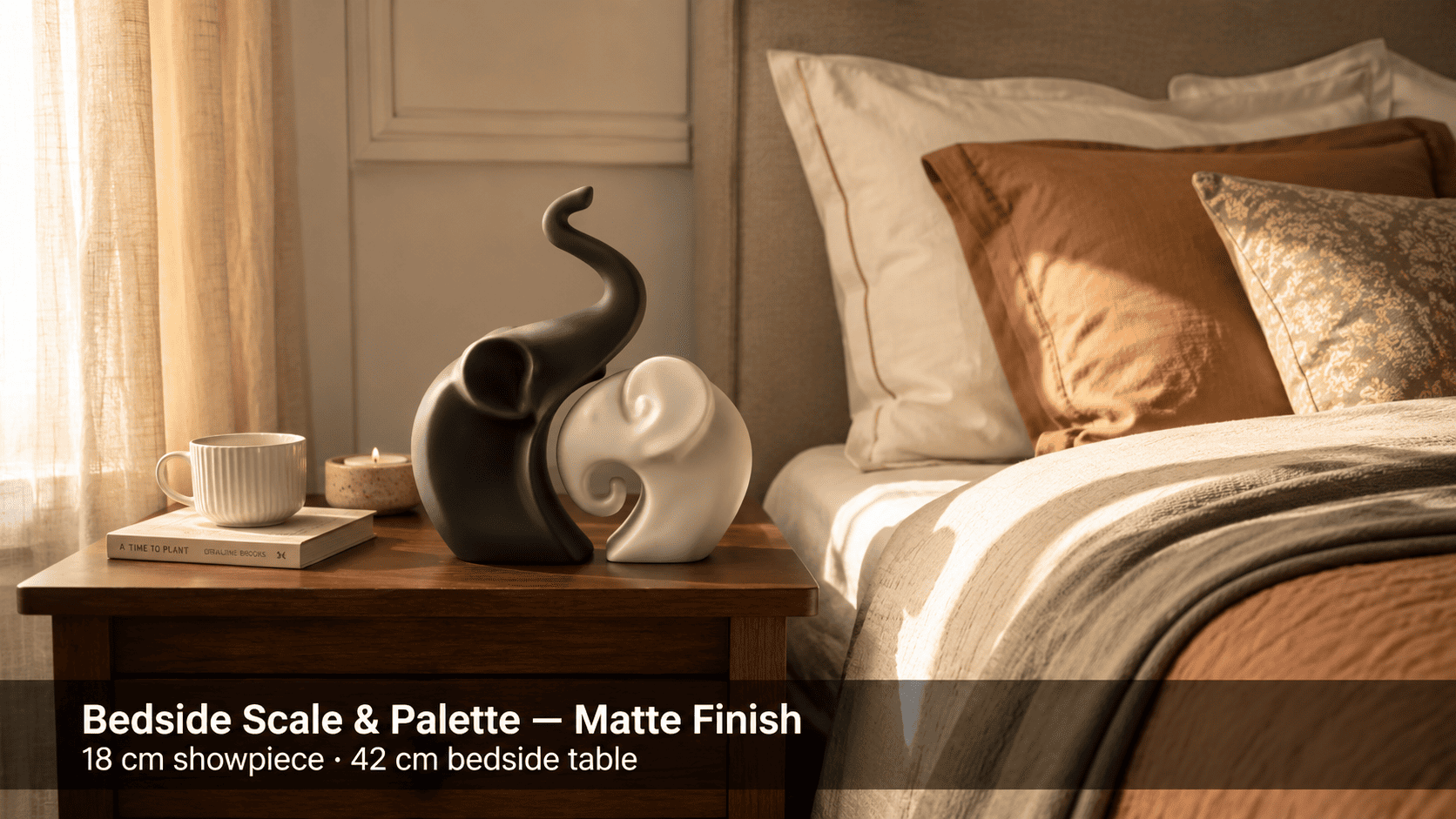
A bedroom décor piece engineered with moisture-resistant materials and UV-stable inks will hold its colour and form across 5+ years of Indian seasonal variance — eliminating the cost of seasonal replacement that mass-produced imports require. Bring home a climate-rated piece from the Moolwan bedroom décor collection — manufactured direct, sized for Indian beds, built for Indian walls. If you are also considering accent pieces for your bedside surfaces, the marble-finish bedroom showpiece range offers palette-coordinated surface accents in the 16–21 cm size band that complement above-headboard canvas selections. For a broader edit of décor suited to every surface in the bedroom — from dresser console to floating shelf — explore the full decorative items for bedroom collection curated for Indian apartment layouts.


