
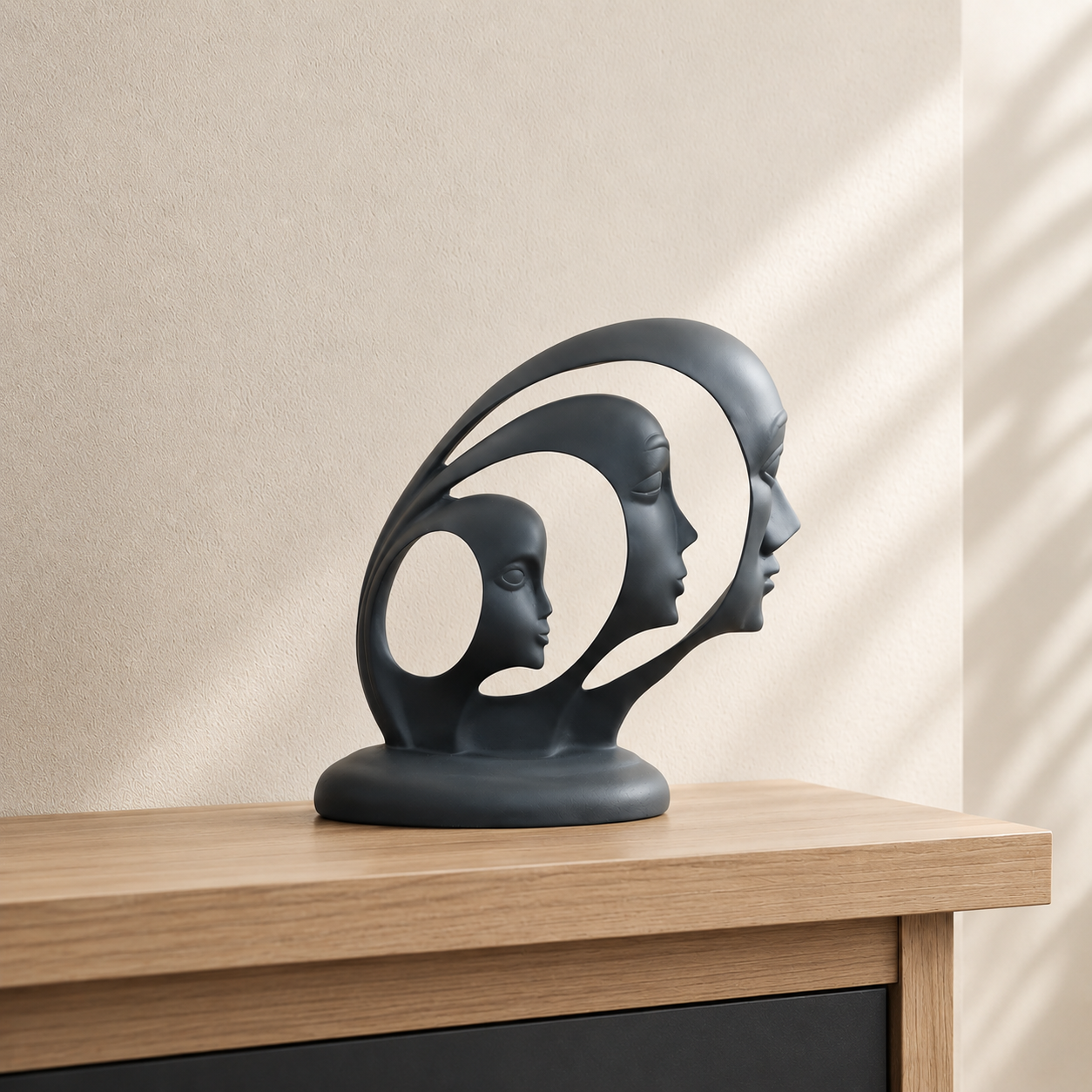
The Vastu-Approved Items for Your Main Door Entrance
We help design-conscious Indian homeowners style entrances that respect both tradition and taste. Vastu Shastra treats the main door as the point where energy, guests and good fortune enter the home, so what you place around it matters as much as the door itself.
| Item | Vastu Purpose | Placement Note |
|---|---|---|
| Toran / door hanging | Marks the threshold as auspicious, welcomes guests | Above the door frame, refreshed seasonally |
| Ganesha or Lakshmi idol | Invites prosperity and removes obstacles | Facing inward, never on the outer-facing wall |
| Wooden nameplate | Establishes identity and grounding energy | Wood if door faces most directions; metal for northwest-facing doors |
| Diya or brass lamp | Dispels negativity, lights the entry path | Lit at dusk, kept to one side of the door |
| Tulsi or money plant | Purifies air and represents growth | In a pot beside the door, never directly blocking it |
| Rangoli or floor design | Draws in positive energy at floor level | Centered on the threshold, on the outside |
| Brass bowl of water | Believed to absorb and trap negative energy | Just outside the door, refreshed regularly |
None of these need to compete with your interior style. A carved wooden nameplate or a small brass showpiece reads as intentional décor first, and Vastu correctness second — which is exactly how a design-forward Indian home should feel.
Which Direction Should Your Main Door Face? Northeast · North · East
Vastu considers northeast, north and east the most favourable directions for a main door, since these are believed to receive the strongest morning energy. A door facing directly into a T-junction, a lift shaft, or an abandoned structure opposite is generally considered inauspicious, and Vastu practitioners recommend remedies like a metal helix or pyramid rather than rebuilding the door.
If your entrance already faces a less-favoured direction, the fix is rarely structural. Keeping the doorway clean, well-lit, free of creaking hinges, and dressed with the items above is the standard corrective approach most Vastu consultants suggest before any renovation.
What Not to Keep Near the Main Door Vastu Don'ts
- Shoe racks, dustbins or garbage bins directly in front of the door
- Broken furniture, chipped idols, or cracked mirrors near the entrance
- A mirror positioned to directly face the main door
- Thorny or dying plants, such as cacti, at the threshold
- Clutter, umbrellas, or footwear piled at the doorway
- Poles, trees, or wires directly obstructing the door's path
The underlying logic is consistent across every Vastu source: obstruction and disorder at the entry point are believed to block the flow of positive energy into the home, regardless of which specific object is causing it.
Styling Vastu Items Without Compromising on Design
A Vastu-correct entrance and a beautifully designed one are not different projects — they're the same project, done with the right materials. This is where most mass-produced décor falls short in Indian homes: showpieces that chip within a season, or wall art that fades under direct sunlight near an entrance.
Moolwan builds décor specifically for this problem. Our ceramic showpieces — ideal as an entrance-side Ganesha or Lakshmi idol — are made from a 92% clay composition, heat-resistant up to 60°C, and humidity-tolerant up to 85% RH, which matters for an uncovered porch or a monsoon-exposed balcony door. For a stronger visual anchor near your entryway, browse Moolwan's showpieces for living rooms starting at ₹150, trusted by over 3,000 Indian households.
If your entrance opens into a foyer or hallway, a well-placed canvas piece — made on 340 GSM cotton canvas with eco-solvent UV-resistant inks and a 1.5-inch kiln-dried pine frame — holds its colour far longer than standard prints, even in bright entryway light. You can explore Moolwan's modern home décor collection for pieces sized to sit beside a door without overwhelming the space.
Ready to pair Vastu correctness with design that actually lasts in Indian weather?
Shop entrance showpiecesChoosing the Right Size for an Entrance Showpiece
Size matters more at a doorway than almost anywhere else in the home — too large, and it becomes an obstruction Vastu explicitly warns against; too small, and it disappears against a busy entryway wall.
- Small (10–16cm): best for a console shelf or beside a nameplate, 150g–250g, easy to dust daily
- Medium (16–21cm): best as a standalone entryway focal piece on a foyer table
- Large (25–34cm): reserved for wider porches or double-door entrances, never in a narrow passage
Every Moolwan piece ships in matte or glazed finish, both low-maintenance enough for daily entryway dusting. And because Vastu also frowns on keeping broken or chipped décor at the threshold, Moolwan's return policy allows an exchange within 24 hours of delivery on unused pieces in original packaging, with a 10% restocking fee and refunds processed within 15 working days — so a wrong-fit piece never has to sit at your door out of guilt.
Entrance Vastu: Quick Questions
Can I keep a Buddha statue at my main door as per Vastu?
Most Vastu consultants advise against a Buddha statue directly at the outer threshold, as it's traditionally placed facing the entrance from inside, at eye level, rather than outdoors. Ganesha and Lakshmi are the more commonly recommended deities for the outer entrance itself.
Is it bad Vastu to keep shoes near the main door?
Yes. Vastu consistently advises against shoe racks directly in front of the main door, as footwear is considered to block the flow of positive energy at the threshold. Keep shoe storage a few feet to the side, ideally out of direct line with the door.
What colour should the main door be as per Vastu?
Green, blue, brown and white tones are generally considered auspicious for main doors, while pure black is usually avoided as a dominant colour. Brass or gold-toned hardware is considered a favourable accent regardless of the door's base colour.
Can I place a wall art painting facing the main door?
Yes, wall art is treated differently from mirrors in Vastu — landscapes, florals, or auspicious motifs facing the entrance are considered welcoming, unlike a mirror, which is generally avoided directly opposite the door.
How often should I change the toran on my main door?
A fresh flower or mango-leaf toran is traditionally refreshed for major festivals and at least once a month, since a wilted or dried toran is considered counter to the intent of inviting positive energy.
Give Your Entrance the Décor It Deserves
Moolwan makes modern showpieces, wall art and gifts engineered for Indian homes — priced direct, without the middleman markup. This is what Moolwan stands for: décor that's beautiful, durable, and made for how Indian homes actually live.


