The best dining room wall colours for Indian homes are warm whites, terracotta, sage green, deep teal, and warm charcoal — depending on your room size, lighting, and décor style. Warm whites and off-whites suit most Indian apartments because they amplify natural light and pair cleanly with both traditional furniture and modern décor accents.
We help design-conscious Indian homeowners create dining rooms that feel inviting, intentional, and complete — without repainting twice. The right wall colour is not a trend decision; it is a spatial and lighting decision first. Below is a structured breakdown by room condition, so you can choose with confidence.
Content curated by Ruchi Malhotra, Founder & CEO, Moolwan (Euphorica Ventures Pvt Ltd), Bangalore — India's trusted source for modern home décor, wall art, and curated gifts engineered for Indian living spaces.
The dining room is the one space where your family spends 30–90 minutes together every day. Colour psychology research consistently shows that warm tones — amber, terracotta, warm red — stimulate appetite and conversation. Cool, dark colours like teal and charcoal create a sense of occasion, which is why they work well for dining spaces used for hosting. The goal is not just aesthetics — it is how the room makes people feel while eating.
Indian dining rooms have specific constraints that generic interior advice ignores: variable natural light (especially in north-facing or DDA-layout apartments), high humidity in coastal cities, artificial lighting that skews yellow, and furniture that often mixes teak, marble, and modern laminate. The colour choices below account for all of these.
| Room Condition | Best Colour Choice | Why It Works | Avoid |
|---|---|---|---|
| Small room, low natural light | Warm white / Ivory | Reflects light, makes space feel larger without looking sterile | Cool grey — looks dingy under yellow Indian lighting |
| Medium room, good natural light | Sage green / Olive | Earthy, calm, pairs beautifully with wood furniture | Bright lime — overpowers food and conversation |
| Large room or open-plan dining | Terracotta / Rust | Adds warmth and visual boundary in large spaces | Pale beige — disappears in a large room |
| Hosting-focused / formal dining | Deep teal / Peacock blue | Creates drama and depth for evening entertaining | White — too casual for a formal dining aesthetic |
| Coastal / high-humidity city (Mumbai, Chennai) | Warm charcoal / Greige | Masks moisture marks better than light colours; neutral enough for layering | Bright white — shows moisture stains and scuffs quickly |
If painting all four walls feels like a commitment, a single accent wall behind the dining table is one of the most effective changes you can make. It frames the dining area, creates a visual anchor, and lets you use a bold colour (deep teal, terracotta, muted mustard) without overwhelming the room. This works best when the remaining three walls are in a warm white or light neutral.
The accent wall also becomes the backdrop for your décor. A well-placed canvas painting or a curated cluster of showpieces against a terracotta wall transforms a functional dining room into a designed one. If you want to see how this looks in practice, explore Moolwan's room decoration ideas — the dining room edits there are specifically styled for Indian apartment sizes and lighting conditions.
Your wall colour is set. Now complete the look.
Shop décor designed specifically for Indian dining rooms — right size, right finish, right price.
Browse Moolwan's Modern Home Décor →Wall colour and décor are inseparable decisions. A sage green wall with a teak dining table calls for warm-toned ceramic showpieces or resin accents in amber or cream. A deep teal wall with a marble-top table calls for metallic or dark-finish accents. Getting the wall right is step one; getting the décor to respond to it is step two.
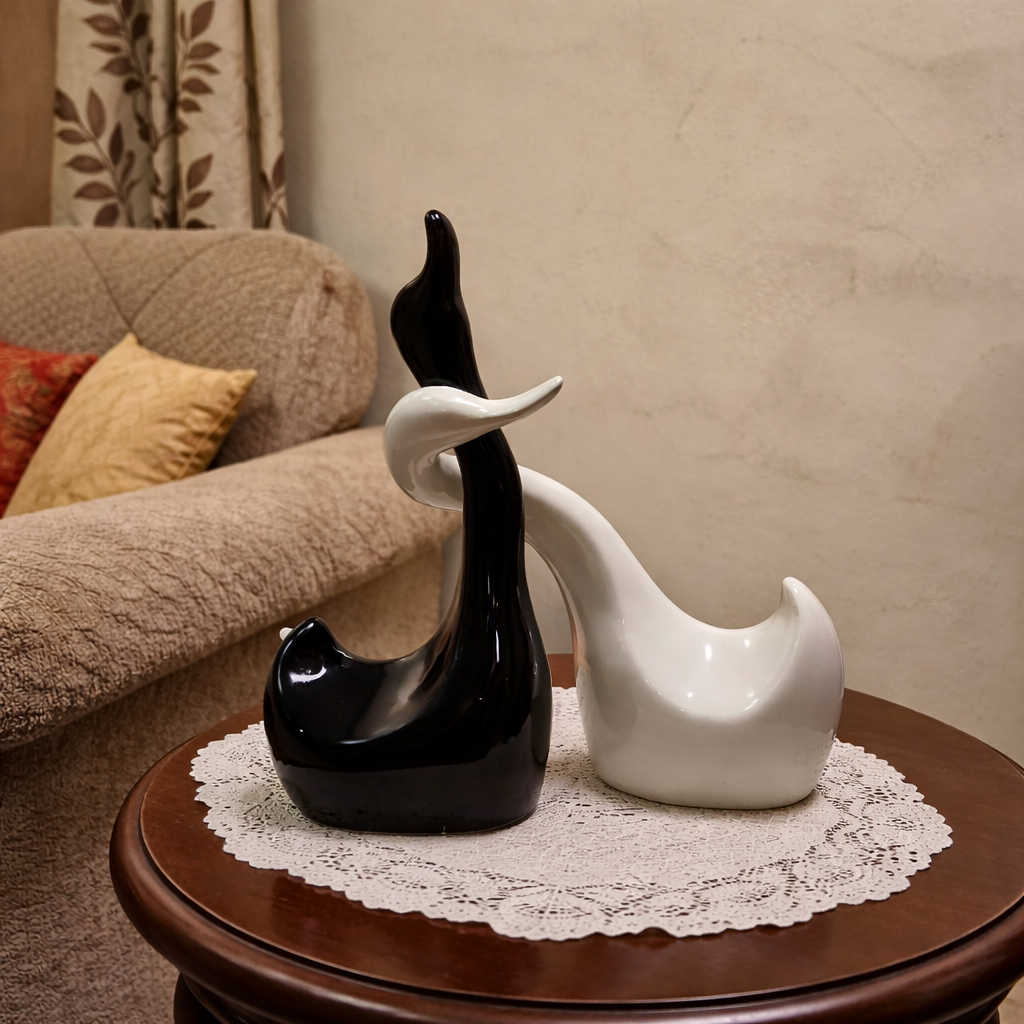
Moolwan's ceramic showpieces are engineered for Indian conditions — 92% clay composition, heat-resistant to 60°C, humidity-tolerant up to 85% RH — which means they hold their finish in coastal cities and high-humidity kitchens without fading or cracking. Sizes between 16–21cm (medium range) sit cleanly on a sideboard or dining shelf as a secondary visual element without competing with the wall colour. You can browse the full range of modern luxury décor items for contemporary rooms — including dining-room-ready showpieces and wall accents.
Some colours are popular on Pinterest but consistently disappoint in real Indian homes. Cool greys look flat under the warm yellow LED lighting that dominates Indian households — the colour reads as muddy, not sophisticated. Bright whites show every mark in a dining room context. Stark navy, without warm lighting to counter it, makes small Indian dining rooms feel like a closet. These are not opinions — they are the outcomes of painting choices made by thousands of Indian homeowners who then repaint within 18 months.
At Moolwan, we stand for one thing: upgrading every Indian home with décor that is beautiful, durable, and meaningful — without overwhelming your budget or requiring you to redo decisions every season. Wall colour is a one-time decision if made with the right data. The décor you layer on top of it should be just as considered. Moolwan's canvas wall art — printed on 340 GSM cotton canvas with eco-solvent UV-resistant inks and moisture-resistant coating — is designed to hold its colour on any Indian wall, in any Indian climate, for years. Every piece ships ready to hang, with no installation guesswork.
If you are in the process of decorating your dining room, start with your wall colour from the table above, then build your décor layer from Moolwan's modern home décor collection — curated for Indian apartments with pieces that start at compact shelf sizes and scale to statement focal points.
Warm white or ivory is the most reliable choice for small Indian dining rooms with limited natural light. These shades reflect artificial yellow lighting well, making the space feel larger and brighter without going sterile. Avoid cool greys — they absorb warm-toned LED light and make small spaces look dull.
Yes — deep teal, peacock blue, and warm charcoal work well in dining rooms, especially if the space is used for hosting or has good lighting. Dark colours on a single accent wall (behind the dining table) are the safest approach if you want drama without committing to all four walls. Pair with warm white on the remaining walls.
Sage green, warm white, and terracotta all complement dark wood dining tables. Sage green creates a calm, earthy contrast. Terracotta echoes the warmth of the wood grain. Warm white keeps the table as the visual focal point. Avoid matching dark wall colours with a dark table — the room will feel heavy.
Once your wall colour is set, build your décor layer around it — a canvas painting or a curated set of showpieces in complementary tones makes the biggest visual difference. For terracotta walls, try warm amber or cream ceramic accents. For teal walls, metallic or dark resin pieces work well. Moolwan's showpieces are sized 10–34cm and priced for Indian budgets — designed to be layered, not just displayed.
Moolwan offers canvas wall art, ceramic showpieces, and resin accents suited for dining room display — on sideboards, dining shelves, or accent walls. All products are manufactured in India and engineered for Indian climate conditions (humidity, heat, dust). Returns are accepted within 24 hours of delivery in original packaging, with a refund processed within 15 working days.
Wall colour decided. Décor is next.
Shop dining room décor built for Indian homes — manufacturer-direct pricing, climate-tested quality.
Shop Dining Room Décor at Moolwan →Quick View