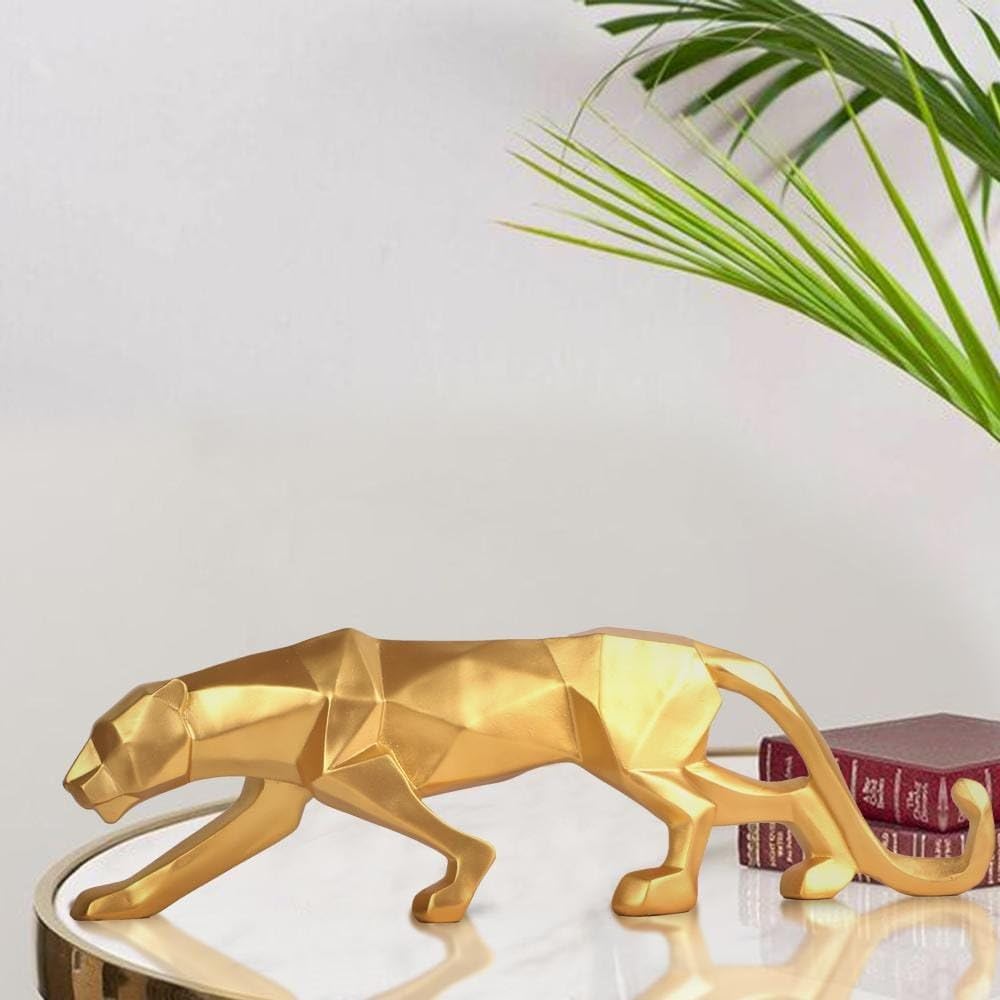
Every well-decorated Indian living room has three active display zones. Understanding which zone a showpiece belongs in prevents the most common mistake — buying the right piece and placing it in the wrong spot. At Moolwan, we help design-conscious Indian homeowners place showpieces that look intentional, not scattered.
The TV unit is the most-viewed surface in most Indian living rooms. Showpieces here benefit from ambient light and constant visibility. Choose pieces in the medium size range — 16 to 21 cm — so they hold presence without blocking the screen's peripheral view. Pair them symmetrically on either side of the TV, or group three pieces of varying heights on one end. Avoid placing more than four pieces on a single console; visual clutter reads as disorder. Our showpieces for living room — starting at ₹150 — are specifically sized and weighted (150 g to 600 g) for TV unit placement on Indian furniture without risk of tipping.
Open wall shelves are the highest-impact display zone in a living room because every piece is framed by negative space. Use a staggered height rule: no two adjacent pieces should be the same height. Mix textures — a matte ceramic figurine next to a glazed resin sculpture next to a framed canvas photograph. Leave at least 30% of each shelf visually empty. This breathing room is what separates a curated shelf from a cluttered one. For corner shelves or deep alcoves, consider a Buddha statue for home décor — the rounded form and calm finish anchor a corner without competing with surrounding elements.
The coffee table is the most intimate zone — pieces here are seen up-close and touched. One central showpiece works better than a cluster. Ideal dimensions for coffee table showpieces are 10 to 16 cm height and a base footprint under 15 cm, so it does not obstruct conversation or sight lines across the table. A resin sculpture or ceramic figurine with a matte finish is practical here — both are easy to wipe clean and resistant to everyday contact. Moolwan's resin items use 94% purity epoxy with 3H pencil hardness (scratch-resistant) and tolerate humidity up to 60% RH, making them suited to AC and non-AC Indian living rooms alike.
Ready to fill your living room's display zones with pieces that actually last?
Browse Living Room Showpieces from ₹150 Explore All Home Décor ItemsIndian living rooms come in distinct configurations — L-shaped, rectangular, compact urban flats, or large suburban halls. The right placement strategy shifts by layout. The table below summarises optimal placement by room type, so you can decide before you buy.
| Living Room Type | Best Display Zone | Recommended Showpiece Size | What to Avoid |
|---|---|---|---|
| Compact flat (under 150 sq ft) | Wall shelves, TV unit sides | Small: 10–16 cm | Floor-level pieces, oversized sculptures |
| Standard urban apartment | Console, coffee table, corner shelf | Medium: 16–21 cm | Clustering more than 4 pieces per surface |
| Large suburban/villa hall | Floor console, mantle, focal wall niche | Large: 25–34 cm | Small pieces on wide surfaces — they get lost |
| L-shaped living-dining combo | Divider shelf, dining-side console | Medium to Large: 16–34 cm | Placing all pieces on one side of the L |
| Pooja room–adjacent living room | Dedicated spiritual corner or niche | Medium: 16–21 cm | Mixing devotional and purely decorative pieces without clear zoning |
Vastu Shastra influences placement decisions for a significant number of Indian homeowners, and it aligns closely with practical aesthetics in several cases. Placing a Buddha statue or meditating figurine in the north or east-facing corner of a living room is consistent with Vastu recommendations for calm and positive energy, and it also captures morning light beautifully. The north zone is associated with career and prosperity; the east with new beginnings — both relevant to housewarming or first-home contexts.
For showpieces depicting animals (elephants, horses, birds), face them inward, toward the centre of the room, not toward the door. Outward-facing animal figurines are considered inauspicious in Vastu. Heavy or dark-toned sculptures belong on the south or west wall, which are structurally the stronger directional zones in a Vastu grid. Avoid placing showpieces under overhead beams — the compressed energy zone above a beam is best left visually clear.
What Moolwan stands for is the balance of the modern and the meaningful: every piece we sell is designed to work within the aesthetic and cultural context of real Indian homes — not just look good in a styled photoshoot. Browse our full range of home décor items curated for Indian living spaces if you are still building your room's visual language.
The material of a showpiece determines where it can survive long-term, not just where it looks good today. Indian living rooms have specific environmental stressors — high humidity in coastal cities, dust in northern India, temperature swings in landlocked regions. Here is how Moolwan's three core materials map to placement zones:
The most frequently seen mistakes in Indian living rooms are not about taste — they are about physics and proportion. Placing a 10 cm showpiece on a 6-foot floor console makes the piece invisible. Grouping five pieces of identical height creates a flat, uninteresting line. Placing a showpiece on top of a refrigerator or high-traffic counter (common in studio apartments) means it collects grease and dust in weeks.
The single most actionable rule: eye level is buy level. Any showpiece placed above or below seated eye level (roughly 90–110 cm from the floor when seated) loses most of its visual impact. TV unit surfaces and open wall shelves mounted at 120–140 cm from the floor land squarely in this range for standing viewers and just slightly above for seated ones — which is precisely why these are the highest-ROI placement zones.
The standard rule is a maximum of 3 pieces per surface and no more than 9 to 12 showpieces total in a single living room. More than this creates visual noise that cancels out each individual piece. If you have a large living room with multiple distinct zones (console, shelves, coffee table, side table), each zone can hold 2 to 4 pieces independently without the room feeling overcrowded.
The best-performing showpieces for Indian living rooms are mid-size ceramic or resin figurines in the 16 to 21 cm range — they read clearly from across the room, fit most Indian furniture proportions, and are durable against Indian climate conditions. Elephant figurines, Buddha statues, abstract sculptures, and geometric resin forms are consistently the top categories. Moolwan's ceramic showpieces are rated for 85% RH humidity and 60°C heat, making them reliable across all Indian climate zones.
Avoid placing showpieces directly on the floor (they lose presence and collect dust), above 180 cm height on walls (invisible from normal viewing angles), behind sofas where they are blocked from sightlines, and near direct steam or smoke sources. In Vastu terms, avoid the south-east corner for heavy metal or stone showpieces, and the centre of the room (the Brahmasthan) should be kept clear of objects.
Yes. The Buddha statue is widely used in Indian homes as a symbol of peace, calm, and mindfulness — not exclusively as a devotional object. Placing a meditating Buddha figurine in the north or east corner of your living room is both aesthetically popular and Vastu-compatible. It is one of Moolwan's most purchased décor items by non-Buddhist households specifically for its serene design language.
Moolwan accepts returns within 24 hours of delivery, provided the item is unused and in its original packaging. A 10% restocking fee applies. Refunds are processed within 15 working days. This policy applies to all showpieces and home décor items purchased directly from moolwan.com.
Your living room's display zones are ready. Fill them with showpieces built for Indian homes.
Shop Living Room Showpieces — From ₹150Quick View



