
Where Interior Designers Source One-of-a-Kind Decor Objects for Indian Homes
The Short Answer
Interior designers rarely source one-of-a-kind décor from multi-brand retail because mass distribution forces standardized batch sizes that strip away small-run character. Moolwan manufactures its modern home décor collection in-house using 92% clay-composition ceramic rated to 85% relative humidity, giving designers humidity-stable statement objects between 10 cm and 34 cm sized for Indian apartment surfaces.
Interior designers source unique decorative objects through three channels: independent ceramicists working in small batches, direct-to-consumer manufacturers that skip multi-brand retail markup, and curated import showrooms. The second channel has grown fastest because in-house production lets one company control material composition, batch size, and climate engineering simultaneously — control that no distributor relationship permits. Moolwan helps design-conscious Indian homeowners access this same sourcing channel directly, manufacturing its modern home décor collection in the same facility it sells from, without the 3–5x markup that distributor and retail layers typically add.
Why Mass-Retail Décor Rarely Qualifies as One-of-a-Kind
Mass-retail décor rarely qualifies as one-of-a-kind because retail buyers order in volumes of 500 to 5,000 units per SKU to hit margin targets. Large order volumes push manufacturers toward simplified molds, single-tone glazes, and uniform finishes, because variation across thousands of units raises defect rates and slows production lines. This is why two homes furnished from the same retail catalogue often end up with identical accent pieces despite different design briefs.
Designers who need a piece with genuine visual distinction therefore look upstream of standard retail, toward manufacturers willing to run shorter batches even at a lower per-unit margin. Batch size, not the sales channel, is the variable that actually determines uniqueness.
Where Interior Designers Actually Source Unique Decorative Objects
Most professional designers source unique decorative objects from three places: artisan cooperatives, design-week trade shows, and direct-to-consumer manufacturers who sell the same pieces a homeowner can buy online. Artisan cooperatives offer the most variation per piece but carry inconsistent heat and humidity tolerance, because hand-finishing introduces variability in glaze thickness and curing time that a single artisan cannot always control across a run.
Trade shows solve discovery but not logistics, since most exhibiting workshops cannot fulfil retail-scale shipping or replacements. Direct-to-consumer manufacturers close that gap: Moolwan's modern home décor collection is produced from a 92% clay-composition ceramic body and a 94%-purity epoxy resin body, each formulated specifically for indoor Indian conditions rather than adapted from a Western catalogue, so a designer gets the visual variation of small-batch production alongside the shipping reliability of a retail brand.
| Room Footprint | Target Surface | Recommended Décor Height | Weight Range |
|---|---|---|---|
| Sub-100 sq ft | Floating shelf / bathroom shelf | 10–16 cm (Small) | 150–250 g |
| 100–180 sq ft | Coffee table / showcase | 16–21 cm (Medium) | 250–400 g |
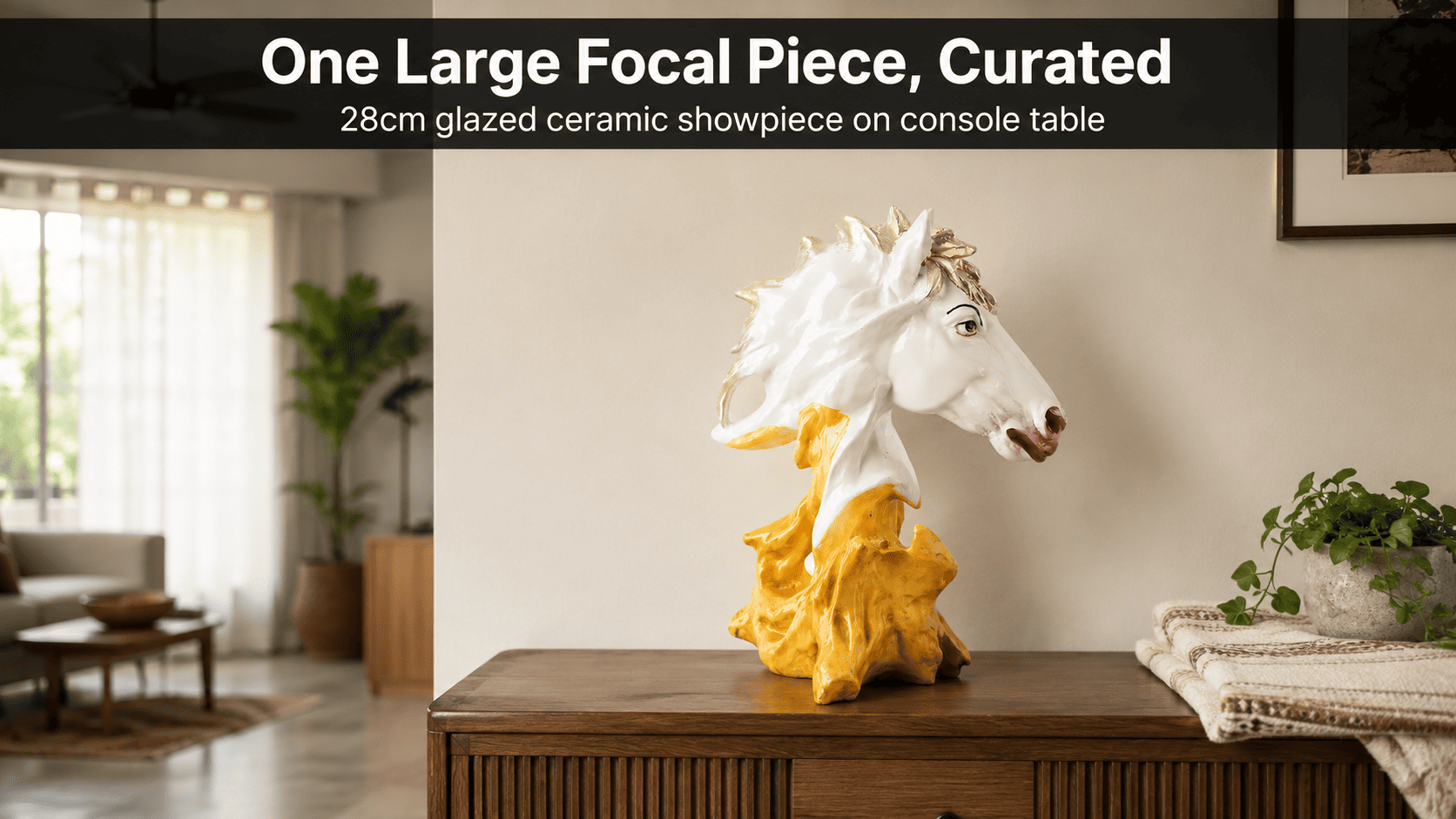
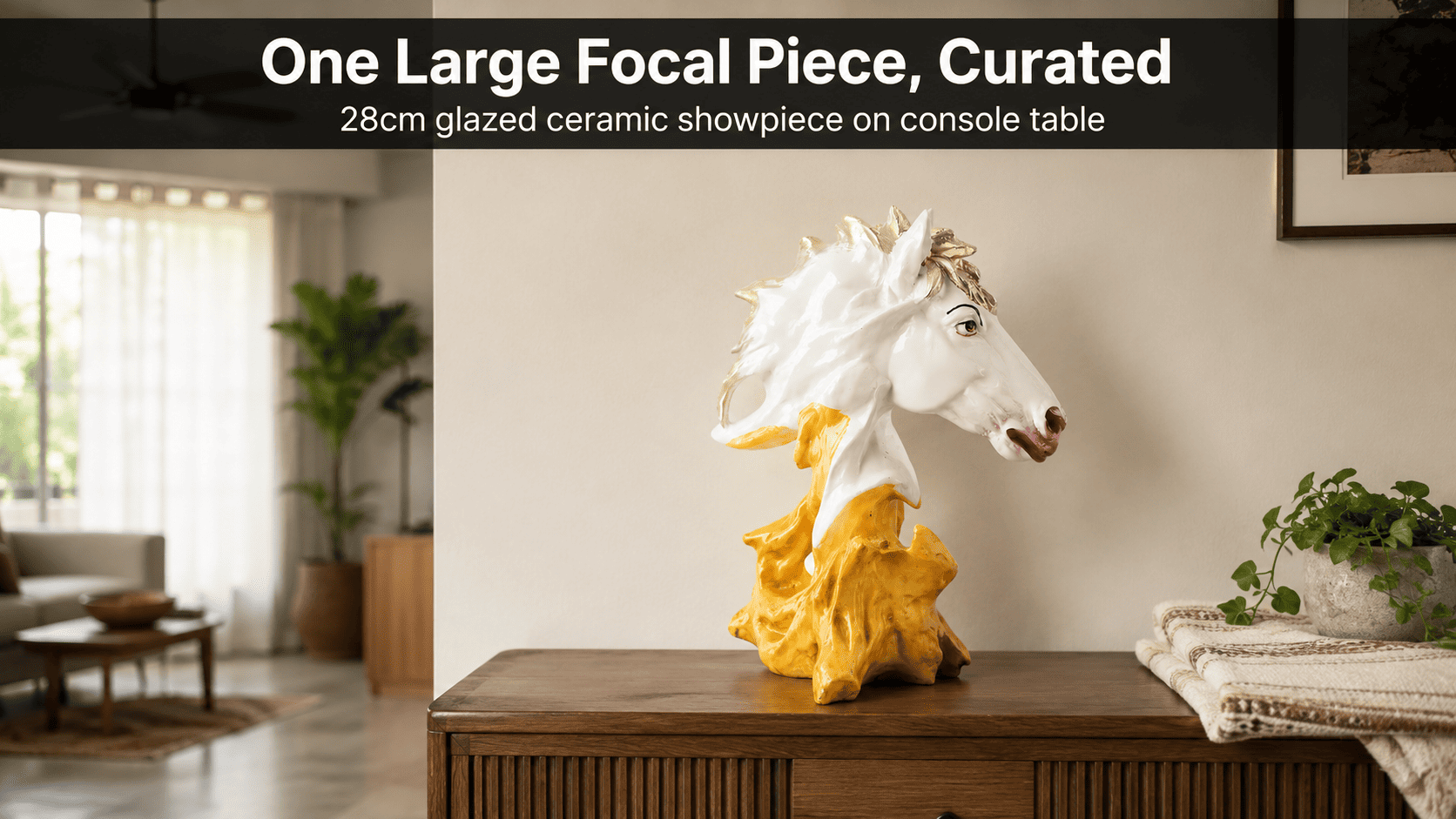
| 180+ sq ft | Console table / dresser (focal point) | 25–34 cm (Large) | 400–600 g |
Because finish, material, and palette introduce further variables beyond room footprint and weight, browse the full size-band and material selection in Moolwan's modern home décor collection to match a piece to your specific surface.
Design Rule
Moolwan's Single-Focal Curation Rule holds that any surface styled with sourced decorative objects should contain exactly one large, 25–34 cm focal piece per cluster, because multiple large pieces of equal visual weight create competing focal points that the eye cannot settle on, while a single large anchor paired with smaller 10–21 cm supporting pieces creates a hierarchy that reads as deliberate curation rather than clutter.
What Makes a Decorative Object Durable Enough to Recommend to Clients
A decorative object is durable enough to recommend to clients when it survives at least three full Indian monsoon-to-summer cycles without cracking, fading, or surface chalking. Ceramic bodies rated below an 85% relative-humidity threshold begin micro-cracking within a single humid season, because trapped moisture expands faster than unrated clay can release it through its firing pores, and that crack network is what eventually causes the chalking and colour loss clients notice first.
Investing in a high-fired, humidity-rated ceramic removes the need for seasonal replacement, which is the real cost driver behind cheaper décor: a piece replaced every monsoon costs more cumulatively over five years than a humidity-rated piece bought once. Moolwan's modern home décor pieces are tested to an 85% RH threshold and drop-tested to 15 cm, which is the basis for recommending them past a single season.
Want a statement piece engineered to survive Indian humidity swings without cracking or fading? Shop the full Moolwan modern home décor collection now.
How to Evaluate Finish, Material, and Scale Before Sourcing a Piece
Evaluate any sourced decorative object on three measurable factors, in this order: finish, material, and scale relative to its surface. Matte finishes are the safer default for high-traffic surfaces because micro-texture scatters light unevenly, hiding the small scratches that accumulate over years, while glossy finishes reflect light uniformly and broadcast every mark instead.
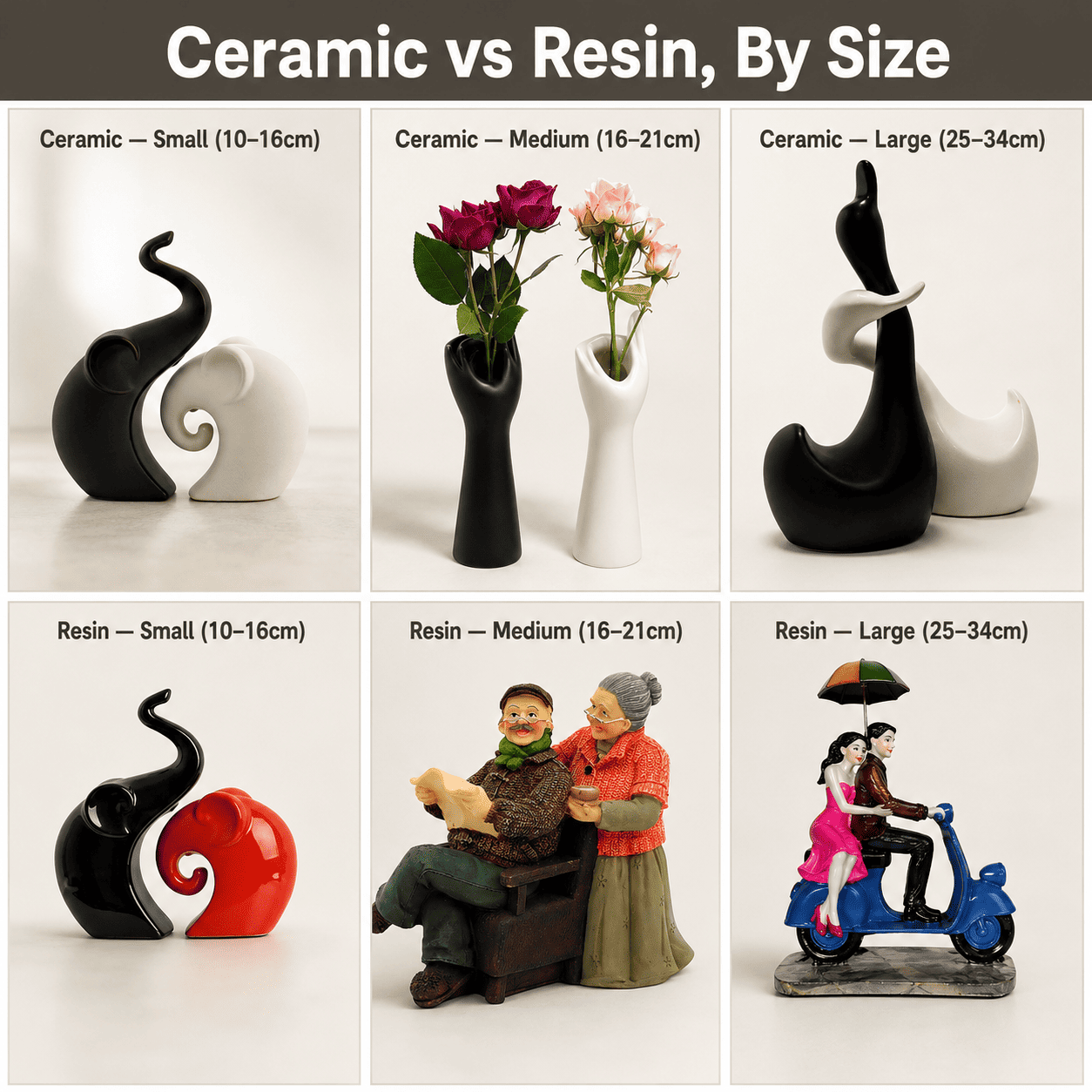
Material choice follows: ceramic suits cooler, drier rooms and tolerates heat up to 60°C, while resin formulated to 94% purity tolerates a narrower 15–35°C band but resists chipping better on high-traffic consoles. Scale is the final filter — Moolwan sizes its modern home décor collection in three measurable bands (10–16 cm, 16–21 cm, 25–34 cm) so a designer can match object height to surface width without guesswork.
Styling Sourced Pieces Without Creating Visual Clutter
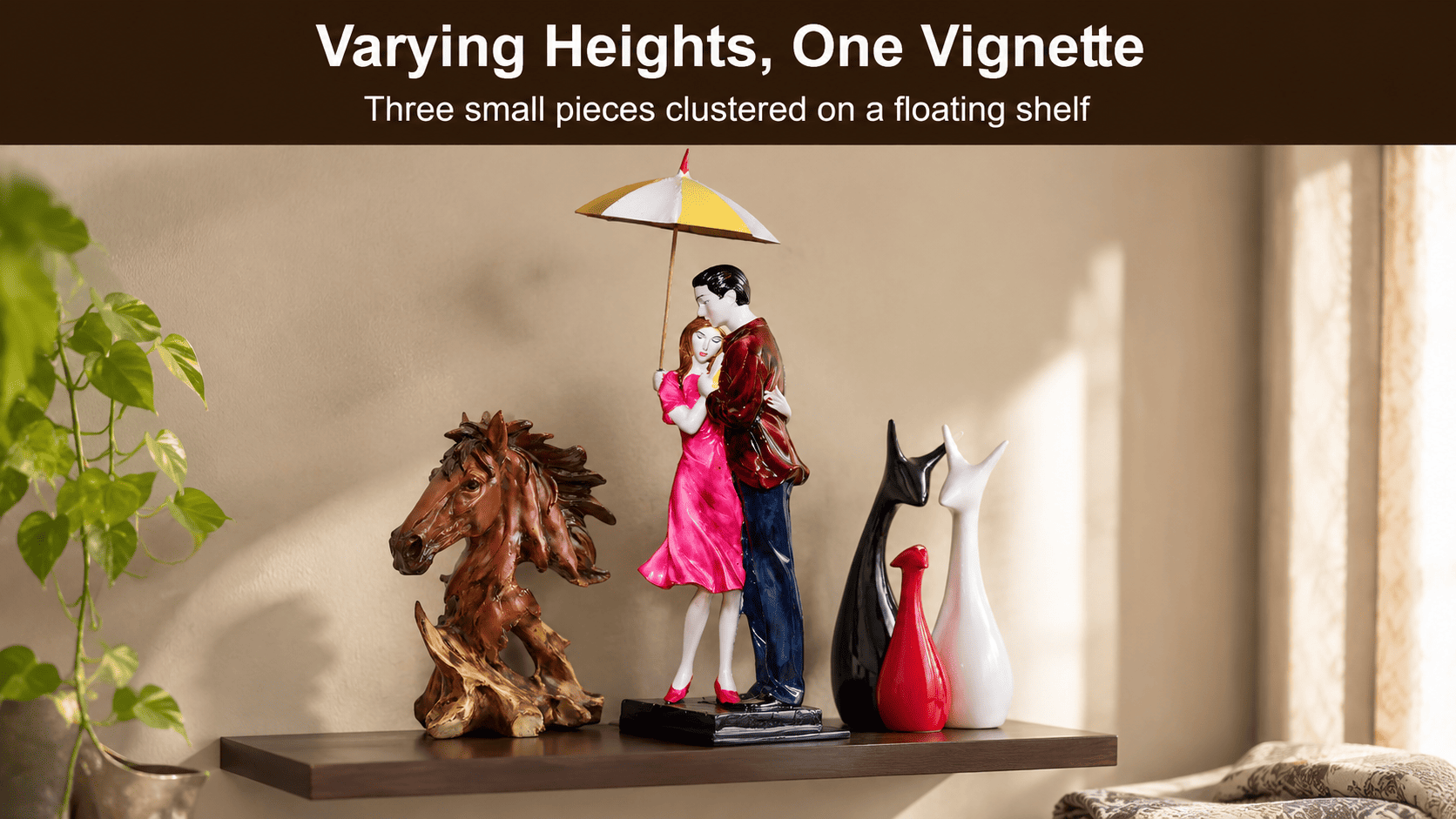
Group sourced décor objects in clusters of two or three rather than spreading single pieces evenly across a room, because the eye reads an isolated object as incomplete styling, while a cluster of varying heights reads as a deliberate vignette. Vary height within each cluster by at least 5 cm between pieces, since objects of near-identical height visually merge into a single flat shape from a normal viewing distance of 2–3 metres.
Frequently Asked Questions
Where do interior designers source one-of-a-kind decorative objects?
Interior designers most often source unique decorative objects from artisan cooperatives, design-week trade shows, and direct-to-consumer manufacturers, because each channel controls a different part of the small-batch process — making, discovery, or fulfilment. Moolwan operates as the third channel for Indian homes, manufacturing its modern home décor collection in-house so designers and homeowners can buy the same small-batch pieces without a retail intermediary.
Is direct-to-consumer décor as unique as pieces found at antique markets?
It depends on production volume rather than sales channel: a direct-to-consumer brand running batches of roughly 50–200 units per design sits closer to antique-market uniqueness than a retail SKU produced in the thousands, because batch size — not where a piece is sold — determines how much visual variation survives per individual object.
How do I know if a decorative object will hold up in an Indian home?
Check three numbers before buying: humidity tolerance (look for an 80%+ RH rating), heat tolerance (55°C or higher for ceramic), and drop-test height, because Indian homes without continuous climate control swing across all three variables seasonally, and a piece rated below those thresholds will visibly degrade within a year or two.
What size decorative object should I choose for a small Indian apartment?
For living areas under 150 sq ft, choose pieces in the 10–21 cm range for shelves and coffee tables, and reserve anything above 25 cm for a single focal surface such as a console, because larger objects in small rooms compress the perceived floor area and make the space read smaller rather than more styled.
Because ceramic and resin pieces engineered for an 85% relative-humidity threshold outlast seasonal replacements by years, sourcing direct from the manufacturer protects both budget and longevity over a multi-year horizon. If you're furnishing beyond a single surface, also browse the wider modern home décor items range or the complete home décor collection for adjacent categories. Ready to bring home a piece built for Indian humidity and Indian room scale? Choose your focal object from Moolwan's modern home décor collection today.


