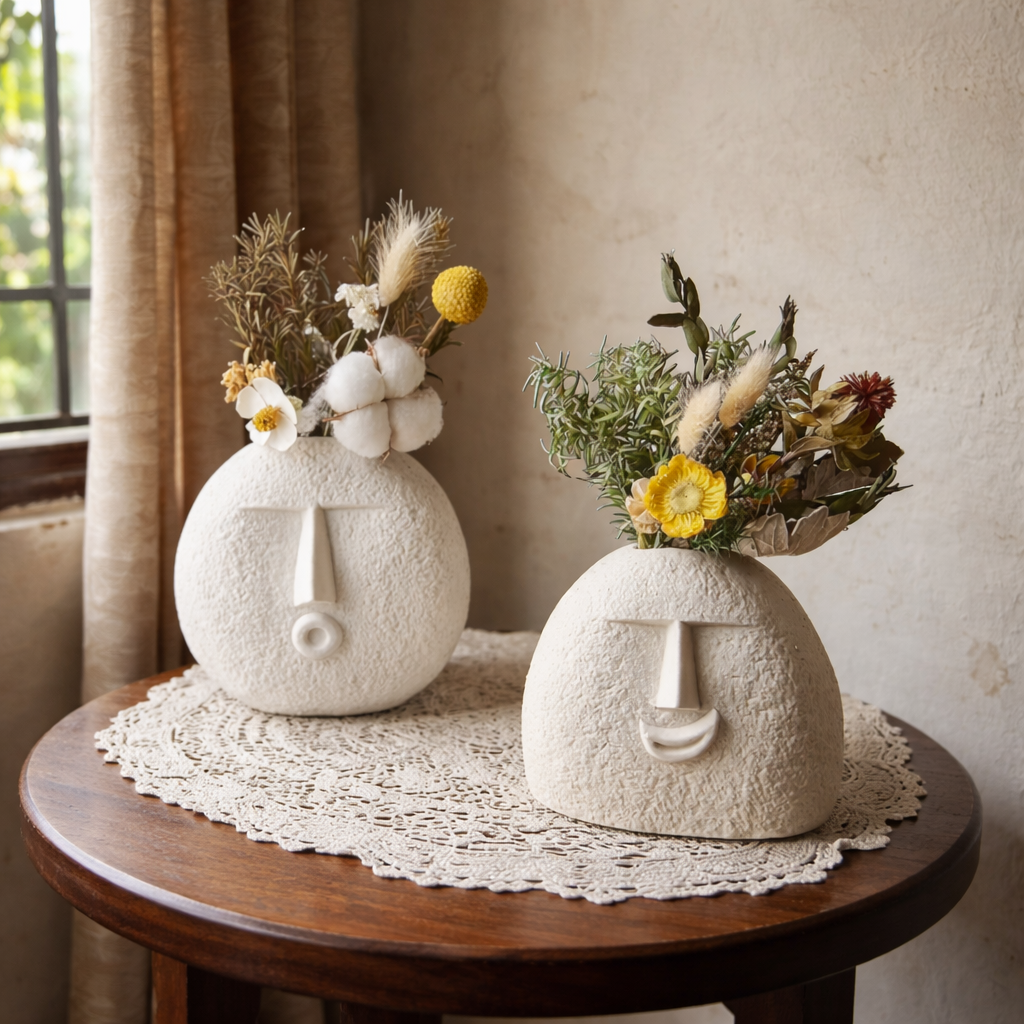
Place a decorative statue where it anchors a visual focal point — the entryway console, the living room shelf, or the bedroom side table. The right spot depends on the statue's size, material, and what emotion you want the room to communicate. At Moolwan, we help design-conscious Indian homeowners choose and place statues that balance modern aesthetics with cultural meaning, engineered specifically for Indian climate and compact spaces.
Most placement mistakes happen for one reason: the statue is chosen before the location is decided. The correct order is the reverse — identify the focal point first, then select the piece that fits. A statue placed without intention looks like an afterthought, regardless of how beautiful it is.
Moolwan's in-house design team uses what we call the Anchor-First Rule: every room has one natural anchor point — a shelf edge, a console top, a mantle, a niche. That is where your statement statue belongs. Secondary statues support the anchor, they do not compete with it.
For Indian homes specifically, two additional constraints apply: humidity tolerance and available surface depth. Most Indian living spaces have shallower console and shelf depths than Western references. A statue sized 25–34 cm (Moolwan's Large size band) works as a room focal point, while the 16–21 cm Medium range is ideal for showcases and coffee table trays. Small pieces (10–16 cm) belong on desks, bathroom counters, or narrow shelves.
If you're starting your search, browse Moolwan's curated showpieces for home décor — each listing specifies size, weight, and suggested placement so you don't have to guess.
The entryway is your home's first impression and the highest-impact placement for a single statement statue. Place one medium-to-large piece (16–34 cm) on a console table, centred or offset to the left. Keep the surface 40–60% clear around it — this is Moolwan's 60/40 Surface Clearance Rule: the statue occupies no more than 40% of visible surface to avoid visual clutter. Ceramic statues perform best here; Moolwan's ceramic range is rated humidity-tolerant up to 85% RH, making them resilient in monsoon-heavy entryways that see frequent door opening.
The living room shelf is India's most-used statue spot, and the most over-cluttered. Use the 3-Tier Cluster Rule for shelf arrangements: group odd numbers (3 or 5 pieces), vary height by at least 8–10 cm between items, and leave one full shelf bay empty. One large anchor statue (25–34 cm) plus two smaller supporting pieces creates a balanced composition without feeling busy. For elegant living room décor that holds up over years, prioritise pieces with matte or glazed finishes — both are easy to wipe clean and resist dust in Indian homes.
In a bedroom, a statue should feel calming, not decorative-for-decoration's-sake. A single small (10–16 cm) or medium (16–21 cm) piece on the bedside table is enough. Avoid large statues here — they disrupt the visual quiet a bedroom needs. Resin statues with 3H scratch-hardness are a practical choice for bedside placement where they get moved during cleaning; Moolwan's resin pieces are rated for indoor temperature ranges of 15–35°C and humidity up to 60% RH, which covers most Indian bedroom conditions year-round.
This is the one room where placement is governed by both aesthetics and tradition. Deity statues face the devotee — typically placed at eye level when seated, on a clean surface free of unrelated objects. Ceramic is preferred for puja placement due to its heat tolerance (Moolwan's ceramic range handles up to 60°C) — relevant where diyas and incense are used nearby. Keep the statue elevated slightly on a wooden base or tray for visual respect and easier cleaning.
The dining sideboard is underused in most Indian homes. One or two medium statues (16–21 cm) bookended by candles or a small plant tray create an intentional vignette without intruding on the functional surface. Avoid resin pieces in rooms adjacent to kitchens where temperature spikes above 35°C are frequent; ceramic is the more durable choice for warm or semi-humid rooms.
| Room | Best Surface | Ideal Size | Recommended Material | Key Constraint |
|---|---|---|---|---|
| Entryway / Foyer | Console table | Medium–Large (16–34 cm) | Ceramic (85% RH tolerance) | High humidity from door traffic |
| Living Room Shelf | Floating shelf / TV unit top | Large anchor (25–34 cm) + small supports | Ceramic or Resin | Dust accumulation; visual clutter risk |
| Bedroom Side Table | Bedside table / dresser | Small–Medium (10–21 cm) | Resin (3H hardness, moveable) | Frequent handling; limited surface |
| Puja Room | Elevated mantle or tray | Medium (16–21 cm) at seated eye level | Ceramic (60°C heat tolerance) | Diya / incense heat; tradition rules |
| Dining Room | Sideboard / buffet counter | Medium (16–21 cm) | Ceramic (avoid resin if near kitchen heat) | Temperature spikes near kitchen |
| Home Office / Study | Desk corner / bookshelf | Small (10–16 cm) | Resin or Ceramic | Must not distract; AC-friendly needed |
Size bands and material specs sourced from Moolwan product standards. Ceramic: 92% clay, 60°C heat tolerance, 85% RH. Resin: 94% epoxy purity, 3H pencil hardness, 60% RH, 15–35°C.
Found your room? Now find the right statue for it.
Shop modern home décor at Moolwan →Placement errors are more common than material errors. These are the four most frequent mistakes in Indian homes:
Moolwan manufactures in-house and engineers each category for Indian climate: the ceramic line for high-humidity rooms, the resin line for AC-controlled interiors. Every piece is tested to a 15 cm drop resistance before dispatch — because Indian homes with children and house help need décor that survives real life, not just showrooms.
Many Indian homeowners ask about Vastu when placing statues, especially deity or animal figures. The core Vastu principle for statues is directional energy: figures representing prosperity or divinity generally face the interior of the home (so a Ganesha at the entrance faces the family, not the door). Elephant statues symbolising good fortune are traditionally placed near the main door facing inward.
For Vastu-neutral statues — abstract sculptures, nature motifs, geometric forms — direction matters less than visual balance and material appropriateness. A ceramic Ganesha in the entryway and a resin abstract sculpture on your living room shelf can coexist without Vastu conflict, provided each is sized and positioned with intention.
The practical Vastu rule worth following regardless of belief: avoid placing any statue in a bathroom or directly on the floor without a base or elevation. Elevation signals respect; it also protects the base from moisture damage in Indian floor-cleaning routines.
Explore Moolwan's full range of unique decorative items for Indian living rooms — including statues, showpieces, and wall hangings designed to complement both modern and traditional Indian interiors.
A single statue is a statement. Three statues, grouped correctly, become a curated vignette. Moolwan's 3-Tier Cluster Rule defines how to group multiple pieces without the arrangement looking random:
The rule works on console tables, shelves, sideboards, and even bathroom counters. The key is the diagonal forward-step between tiers — it prevents the flat, uniform look that makes shelf arrangements look like a store display rather than a curated home.
For ready-to-group collections, explore Moolwan's showpieces for home décor — each product page lists compatible sizes and companion pieces for easy grouping.
Every Moolwan statue lists its size, material specs, and suggested placement — so you buy with confidence, not guesswork. Made in India, priced direct, engineered for Indian spaces.
Shop showpieces & statues Browse all home décorQuick View



