
Where to Place a Showpiece in the Living Room According to Vastu
The Short Answer
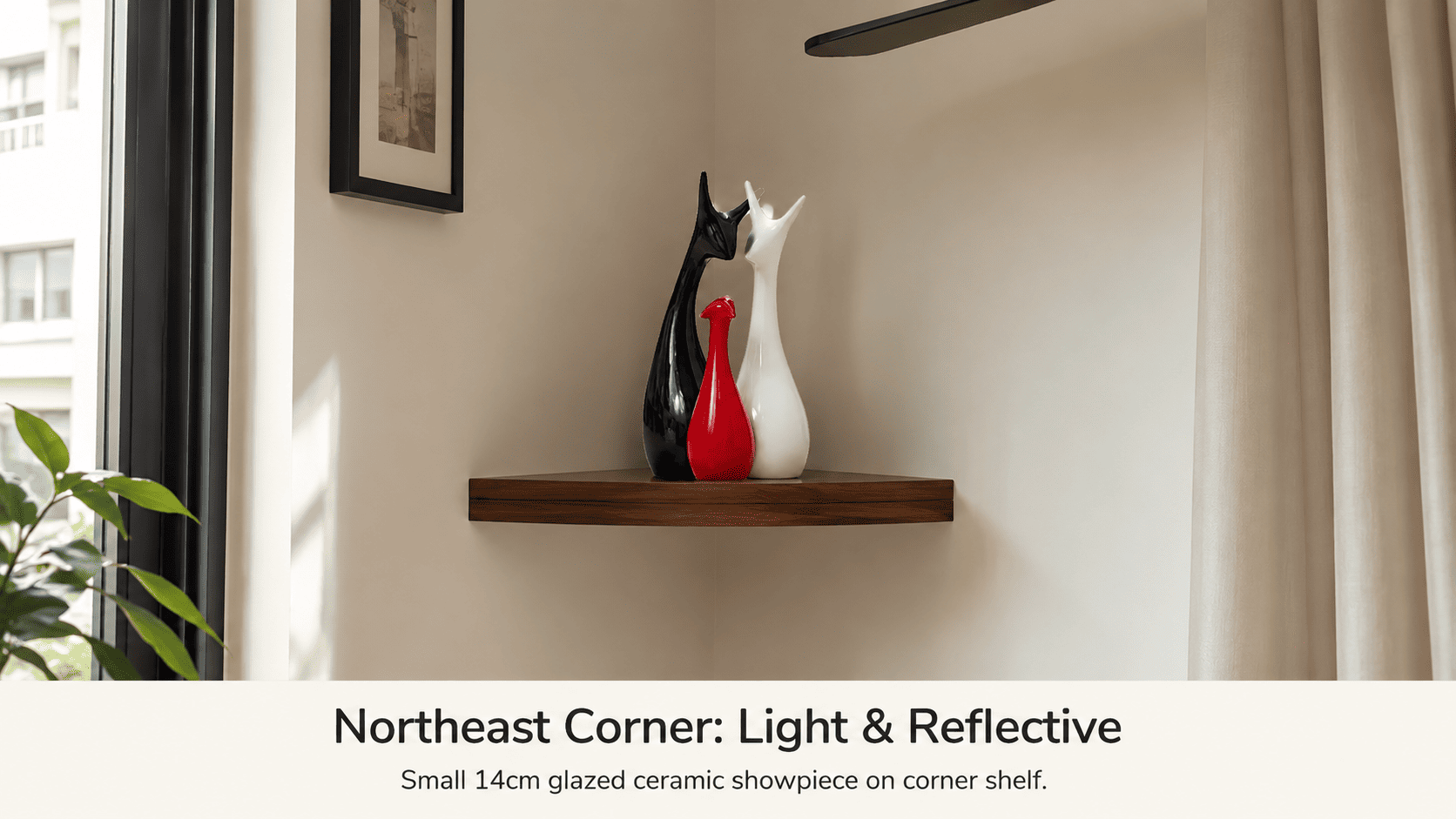
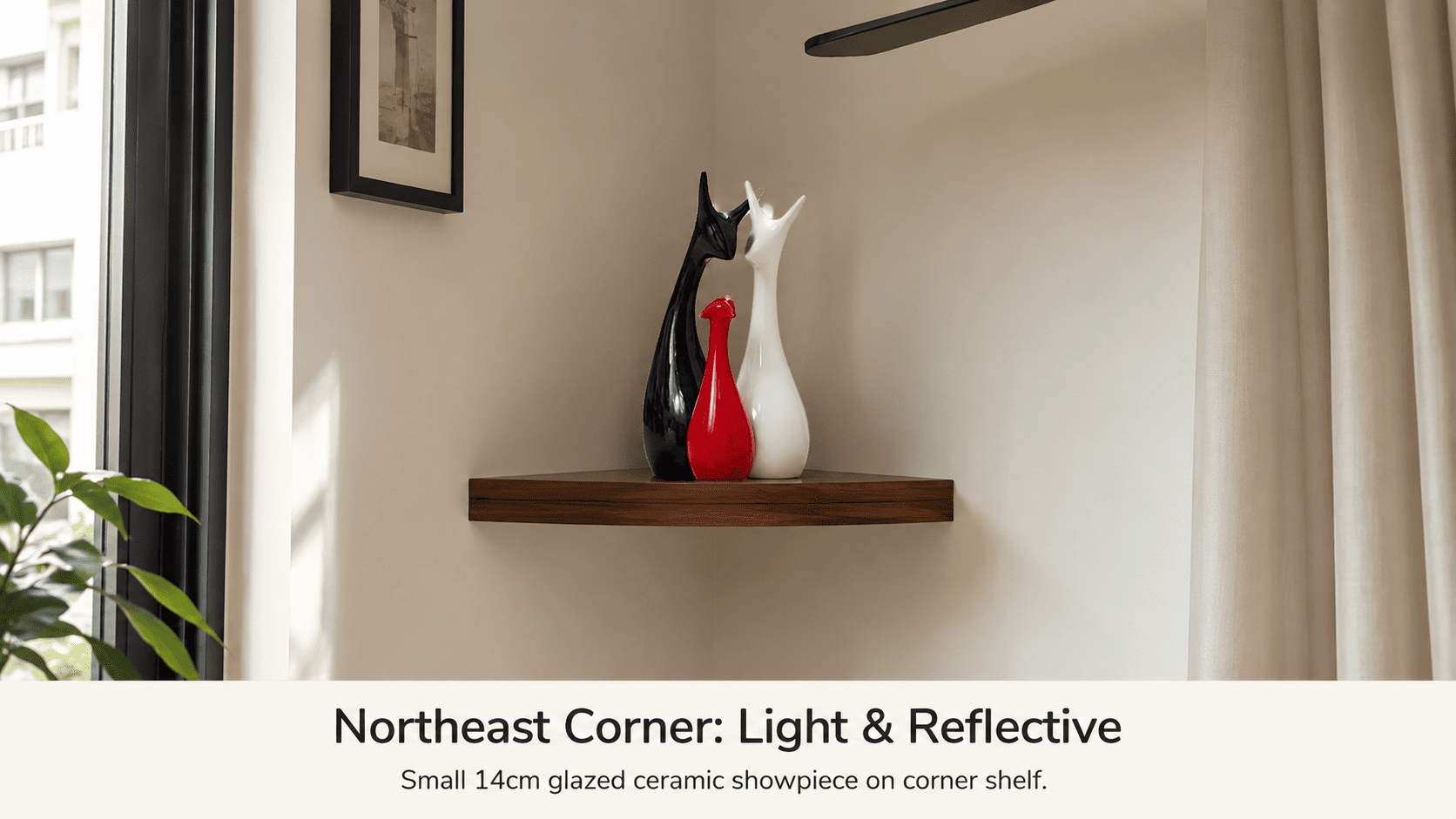
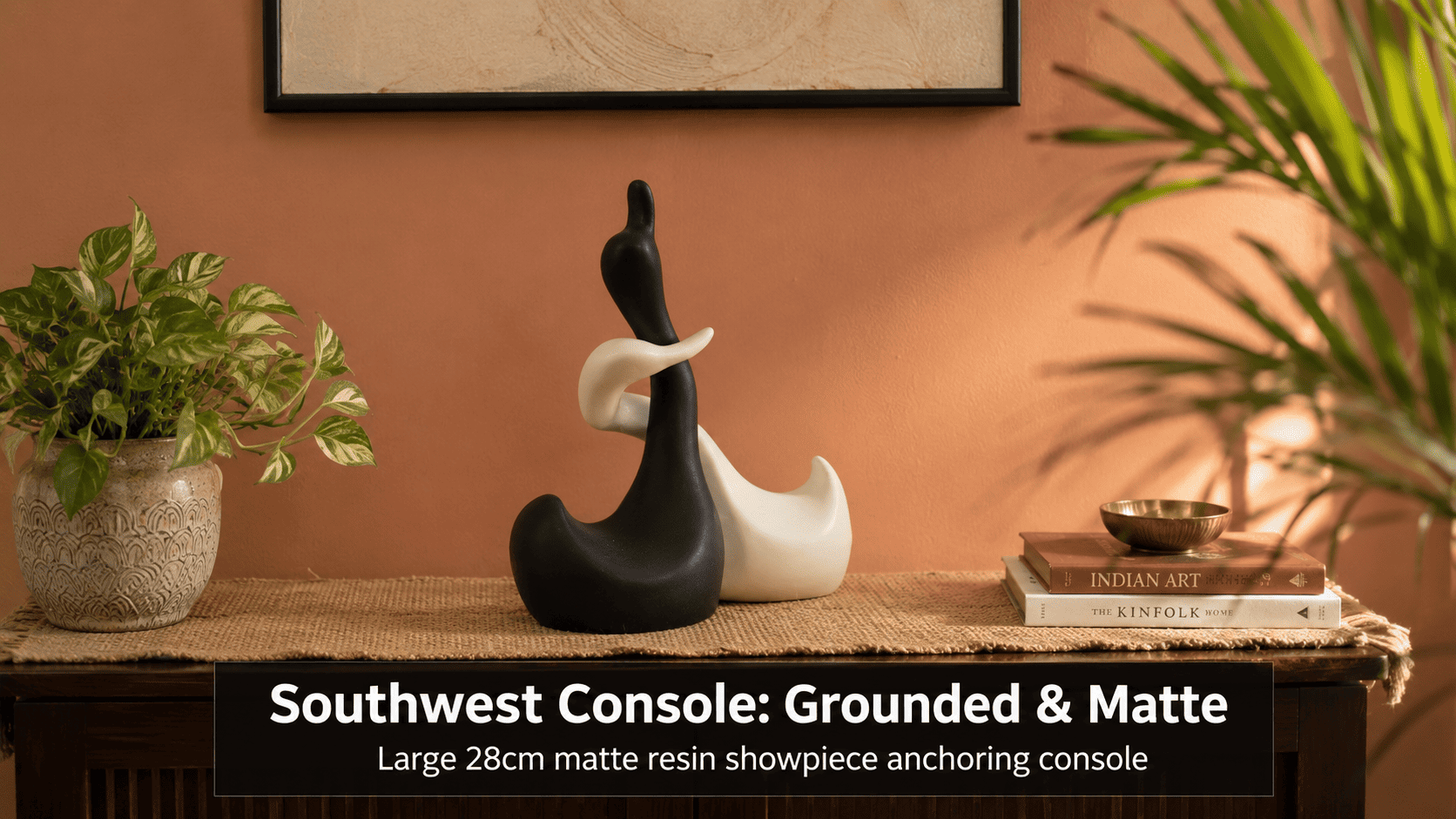
Vastu Shastra assigns the northeast corner to the water element and the southwest corner to the earth element, so light, reflective showpieces belong in the northeast while heavier, grounding pieces belong in the southwest. Moolwan sizes its ceramic and resin showpiece collection specifically so a single household can furnish both zones correctly — small 10–16 cm glazed ceramic pieces for the northeast, and large 25–34 cm matte resin pieces for the southwest.
In Vastu Shastra, the living room is divided into eight directional zones, each linked to one of five elements — earth, water, fire, air, and space — and each element is traditionally associated with an object weight, finish, and energy that suits it. Moolwan helps design-conscious Indian homeowners translate these directional guidelines into an actual shopping decision, because knowing "northeast is auspicious" does not tell you whether a 12 cm ceramic vase or a 30 cm resin sculpture belongs there.
Which direction is best for a showpiece in the living room?
The northeast (Ishaan) and north zones are considered the most favourable for showpieces in Vastu tradition. This is because the northeast is treated as the entry point of positive energy in a home, and objects placed there are meant to be light, low, and non-obstructive so that energy can flow through the space rather than being blocked by mass.
Practically, this means a small, light showpiece — under 250 g and 10–16 cm tall — sits correctly in the northeast, because anything heavier is believed to weigh down a zone meant to stay open. A 30 cm resin sculpture in the same corner works against the principle it is meant to support.
The southwest zone follows the opposite logic. It is associated with the earth element and stability, so larger, heavier pieces belong there instead — the same reasoning Moolwan applies when recommending 25–34 cm resin pieces for southwest console placement rather than northeast shelves.
Does the showpiece's material and finish matter for Vastu placement?
Yes — material is treated as a secondary variable after direction, and it changes the durability outcome as much as the Vastu one. A glazed ceramic finish is traditionally favoured in the northeast because its reflective surface is thought to circulate light and energy, while a matte, earth-toned resin finish suits the southwest because matte surfaces absorb rather than scatter light, echoing the grounded quality of the earth element.
This pairing also solves a durability problem worth knowing before you buy: because northeast-facing walls in most Indian apartments receive indirect morning light and higher ambient humidity from being close to windows, Moolwan's 92% clay ceramic pieces — humidity-tolerant to 85% RH — hold their glaze integrity longer in that zone than a resin piece would. Southwest walls, by contrast, tend to sit in warmer, drier interior corners, which suits the 94%-purity epoxy resin's 15–35°C tolerance range and 3H pencil-hardness surface built for high-touch console placement.
How much space should be left around a Vastu-placed showpiece?
Regardless of direction, Vastu principles consistently discourage overcrowding a single surface, because a cluttered zone is considered to trap rather than circulate energy — and from a purely visual standpoint, an overcrowded shelf reads as chaotic instead of intentional. A showpiece needs breathing room on at least two sides to read as a deliberate placement rather than a leftover object.
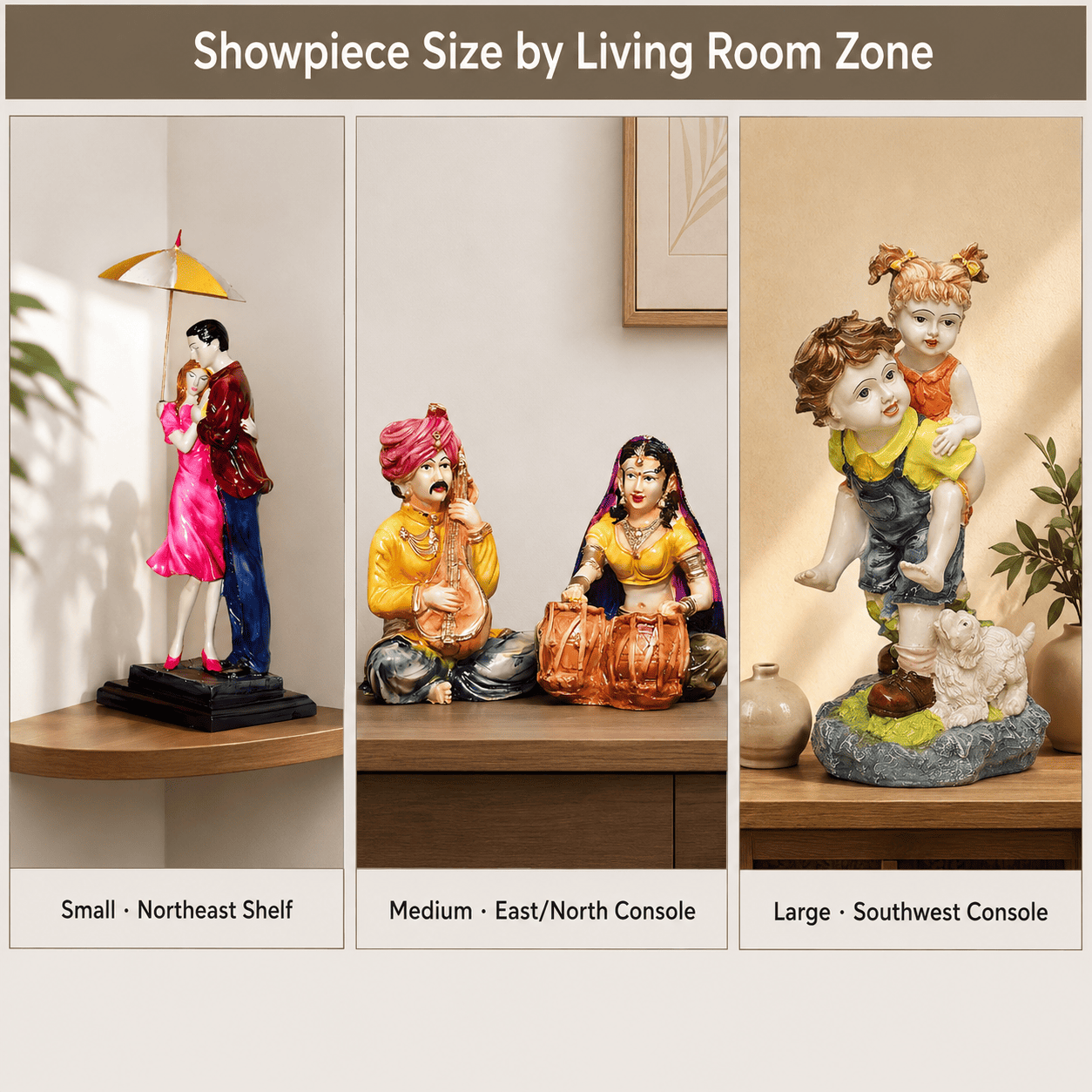
| Living Room Size | Vastu-Recommended Zone | Recommended Showpiece Height | Weight Range |
|---|---|---|---|
| Sub-100 sq ft studio living room | Northeast corner shelf | 10–16 cm (Small) | 150–250 g |
| 101–150 sq ft living room | East or north wall console | 16–21 cm (Medium) | 250–400 g |
| 151+ sq ft living room | Southwest corner or wall | 25–34 cm (Large) | 400–600 g |
Because ceiling height, window placement, and existing furniture all shift where a zone's true centre falls in a real apartment, browse the full size-band and finish selection in Moolwan's living room showpiece collection to match a piece to your specific layout.
Design Rule
Moolwan's Directional Weight Rule holds that showpiece weight should increase from northeast to southwest across a living room — light, reflective ceramic pieces under 250 g in the northeast, and denser, matte resin pieces up to 600 g in the southwest — so that the room's physical weight distribution mirrors the elemental weight Vastu assigns to each zone.
Can a showpiece face the main entrance door?
Direct alignment with the main door is generally avoided in Vastu practice, because incoming energy is considered to need a clear, unobstructed path into the home rather than an object positioned to intercept it head-on. A showpiece placed slightly off-axis from the door — angled toward a side wall or console rather than centred in the doorway's direct line — satisfies this without requiring the piece to be hidden or moved out of the main living area.
Want a showpiece sized and finished for the exact zone you're placing it in? Shop the full Moolwan living room showpiece collection now.
What if a living room has no clear northeast or southwest corner?
Open-plan and irregularly shaped apartments — increasingly common in Indian metros — often don't have a clean 90-degree northeast corner. In this case, Vastu practitioners generally recommend working from the room's approximate compass centre outward rather than skipping the principle altogether, treating the nearest wall segment in each direction as that zone's placement surface.
Frequently Asked Questions
Which direction is best for a showpiece in the living room as per Vastu?
The northeast is considered the most favourable direction for a living room showpiece, because it is associated with the water element and open energy flow. Moolwan recommends a small 10–16 cm glazed ceramic piece for this zone specifically because its light weight and reflective finish align with the low, unobstructive quality the direction calls for.
Can a resin showpiece be placed in the northeast corner?
It's generally better suited to the southwest. Resin pieces in Moolwan's collection run heavier — 400–600 g at the large end — which works against the northeast's open-energy principle but complements the southwest's earth-element association with stability and weight.
Should a showpiece face the main door?
Most Vastu guidance recommends placing it slightly off the direct line of the main door rather than centred in the doorway's path, so incoming energy isn't blocked. An angled console or side-wall placement satisfies this while keeping the piece visible in the main living area.
What size showpiece is right for a small living room?
For a sub-100 sq ft living room, a small showpiece in the 10–16 cm range on a northeast corner shelf fits both the Vastu open-energy principle and the practical need to avoid crowding a compact space.
Choosing the right showpiece for the right corner shouldn't mean guessing between five open browser tabs on directions and sizing. Bring home a piece engineered for Indian apartment layouts and climate from the Moolwan living room showpiece collection — and if you're building out more than one corner, the handmade showpiece collection and the home décor showpiece range are worth considering as well, manufacturer-direct and made for Indian homes.


