
Where to Start When Redecorating a Living Room: A 5-Step Plan
The Short Answer
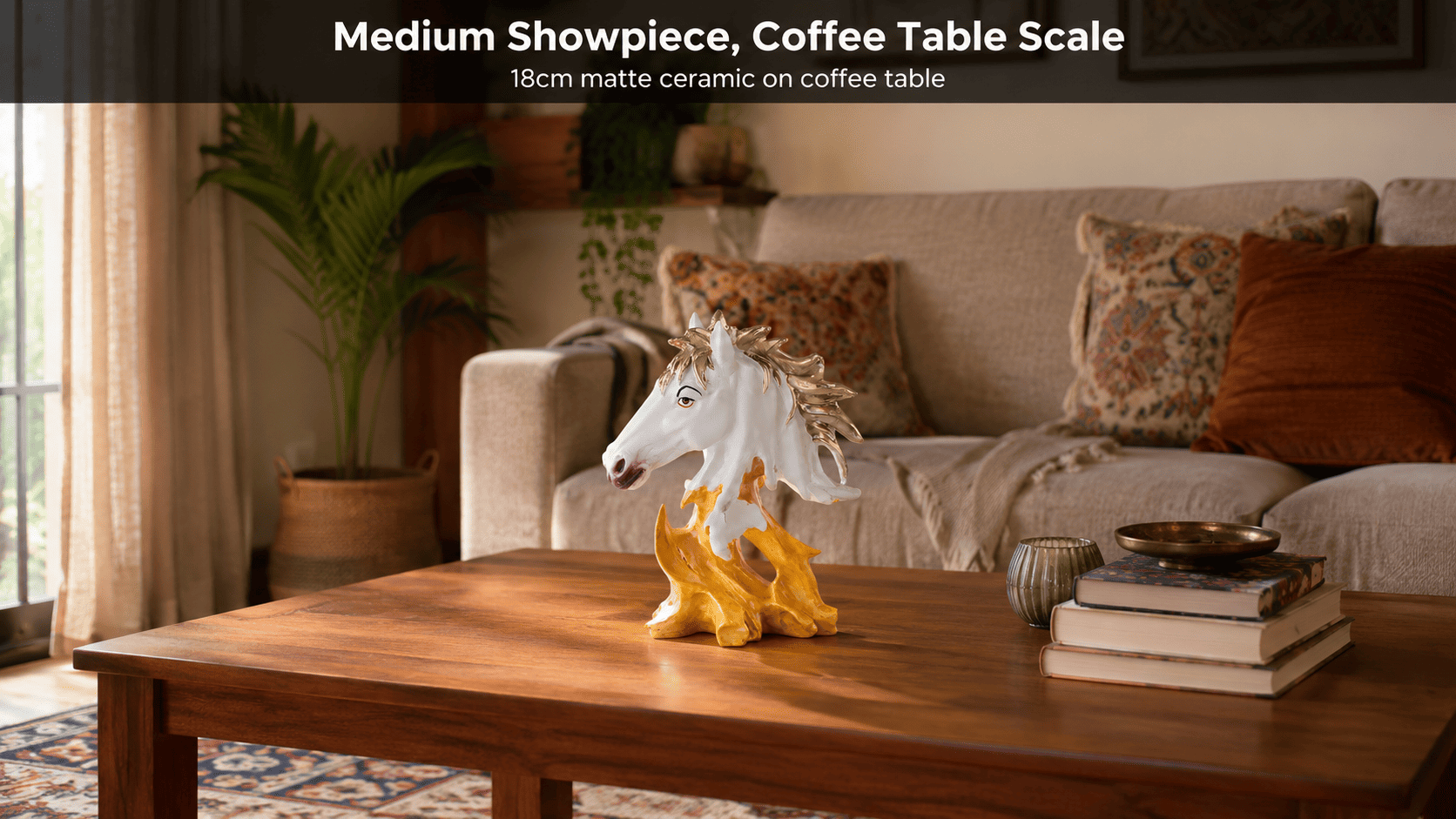
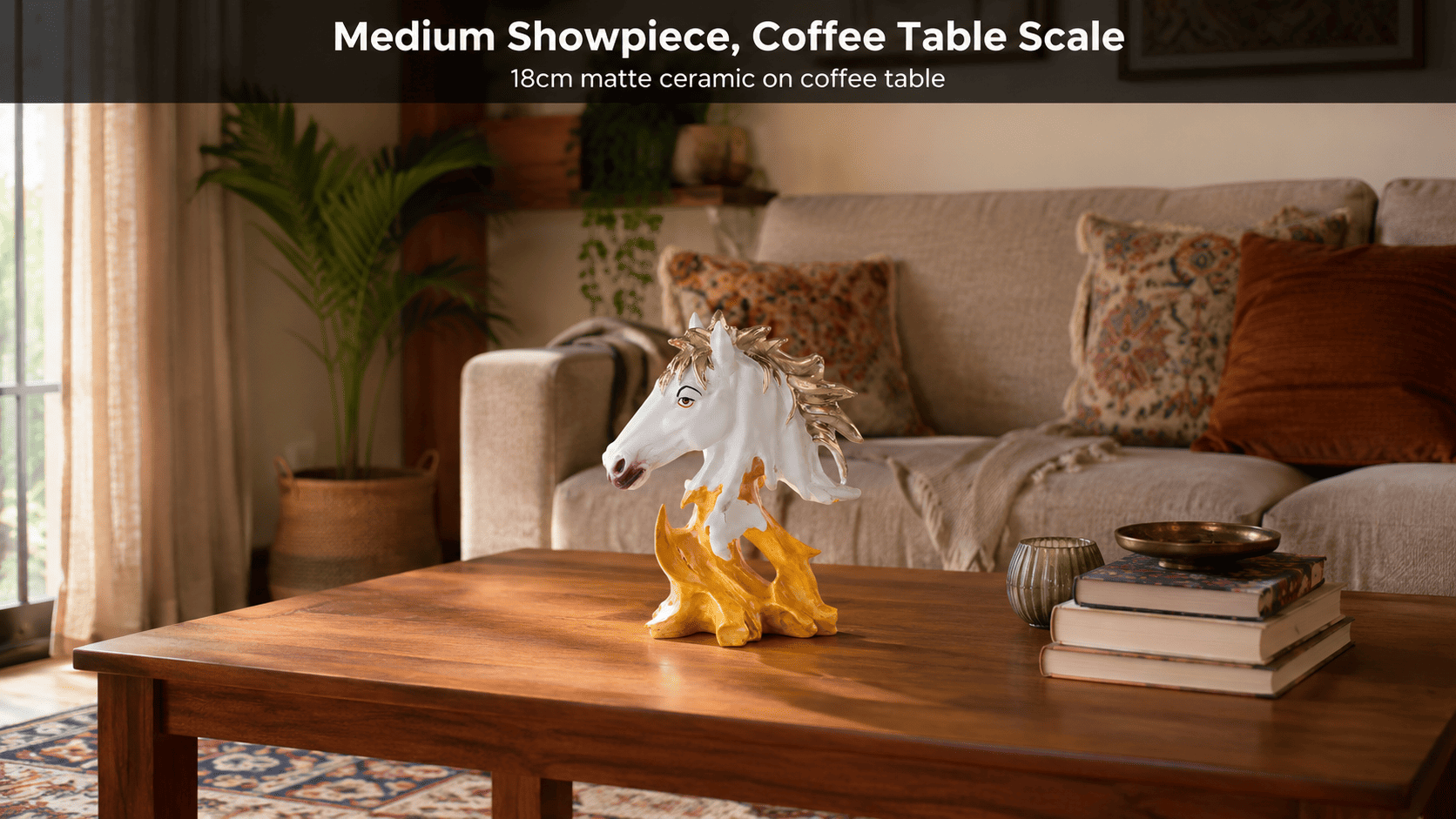
Start a living room redecoration by fixing your seating layout and traffic flow before buying any decor, since pieces that look great in isolation create clutter when placed without spatial planning first. Moolwan recommends finalizing a medium ceramic showpiece (16 to 21 cm) for the coffee table only after layout and palette are locked.
Most living room redecorations stall or go over budget not because of bad taste, but because of bad sequencing: furniture and decor get bought before the room's traffic flow and focal point are settled, which forces awkward returns and mismatched scale later. Moolwan helps design-conscious Indian homeowners avoid this costly trial-and-error by sequencing every redecoration around five fixed steps — layout, palette, focal point, scale, and accent — each measured against real Indian apartment dimensions rather than showroom-sized mockups.
Why Layout Comes Before Any Decor Purchase
Layout must be settled first because every later decision — palette, piece scale, accent count — depends on a confirmed seating arrangement and walking path.
In Indian apartments under 1,200 sq ft, a living room typically needs at least 90 cm of clear walking width between furniture pieces to stay functional, since narrower paths force two people to turn sideways to pass each other. Moolwan sizes its modern home decor and showpiece collections specifically for these compact footprints, so a piece enhances a console or coffee table without eating into that clearance.
Locking the seating arrangement before buying decor matters because moving a sofa or shelf even 30 cm later changes the available surface width for a showpiece, often forcing a size downgrade after the piece has already been bought. Settling the floor plan first means every subsequent purchase, including a medium or large Moolwan piece, gets sized once and correctly.
How to Choose a Living Room Palette That Lasts
A living room palette should be chosen from the fixed elements already in the room — flooring, wall colour, and large furniture — not from a single decor piece bought on impulse.
Because repainting a wall or reupholstering a sofa costs far more than swapping a showpiece, the palette should anchor to whichever element is hardest to change, and decor should be chosen to match it rather than the reverse. Moolwan's modern home decor collection is finished in matte, glazed, and warm-earth tones specifically so a single coffee-table or console piece can be swapped during a palette refresh without repainting a wall or replacing furniture, protecting the larger investment already made in the room.
This is also where ROI logic matters most: a matte-finish ceramic piece resists visible wear for 5+ years because micro-texture on the surface scatters light unevenly, hiding small scratches that a glazed, uniformly reflective surface would expose almost immediately.
What to Buy First: The Focal Point, Not the Accents
The first purchase in any living room redecoration should be the single focal-point piece for the most-viewed surface, sized against that surface — not a scattering of small accents bought first because they're cheaper.
Surface width, room footprint, and weight tolerance all move together, which is why a single "small vs medium vs large" rule fails once the actual surface is accounted for.
| Room Footprint | Target Surface | Recommended Decor Height | Weight Range |
|---|---|---|---|
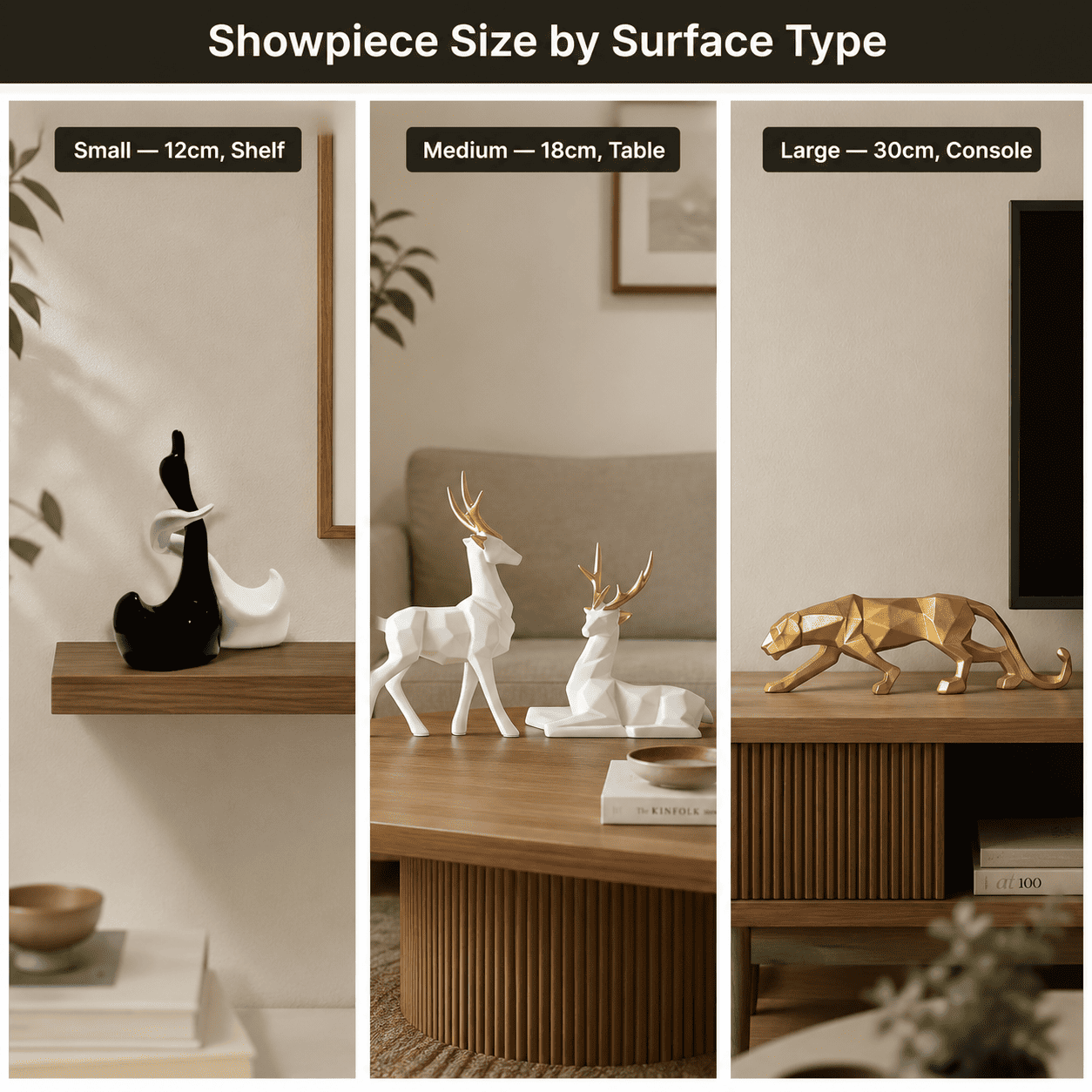
| Sub-100 sq ft living area | Floating shelf or entry console | 10–16 cm (Small) | 150–250 g |
| 100–180 sq ft living room | Coffee table or bookshelf | 16–21 cm (Medium) | 250–400 g |
| 180–250 sq ft living room | TV-unit console | 25–34 cm (Large) | 400–600 g |
| 250+ sq ft living room (duplex/villa) | Paired consoles flanking seating | 25–34 cm (Large, paired) | 400–600 g each |
Because ceiling height, natural light direction, and existing furniture finish add further sizing variables beyond room footprint alone, browse the full size-and-finish selection in Moolwan's living room showpiece collection to match a piece to your exact surface before you buy.
Design Rule
Before any decor enters the room, apply Moolwan's 3-Foot Clearance Rule, which mandates a minimum 90 cm walking path between any two pieces of furniture, since a path narrower than this forces people to angle their bodies sideways — a physical signal that the room is overcrowded regardless of how well the decor itself was chosen.
When to Add Accent and Small Decor Pieces
Accent and small decor pieces should be added last, only after the focal-point piece is placed, because adding them earlier makes it impossible to judge how much visual "breathing room" the room actually has left.
Want a focal-point piece sized correctly for your coffee table on the first try? Shop the full Moolwan living room showpiece collection now.
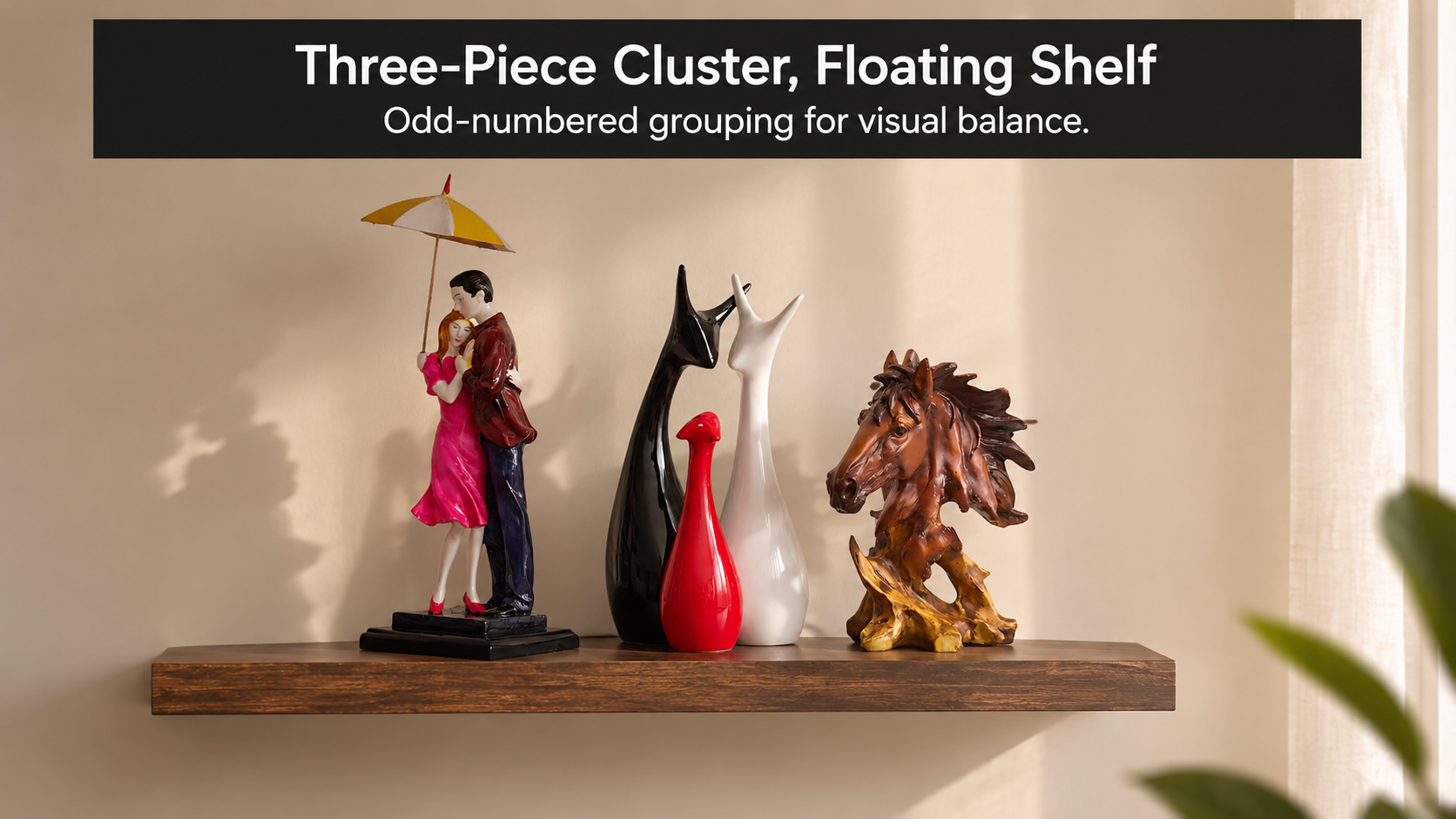
Small decorative pieces under 16 cm work best clustered in odd numbers of three, since odd-numbered groupings read as a deliberate composition to the eye, while even-numbered pairs tend to read as leftover or accidental placement. A 15 to 35 cm gap between an accent cluster and the main focal piece prevents visual competition, letting both register as intentional rather than crowded.
Frequently Asked Questions
What's the very first step in redecorating a living room from scratch?
The first step is fixing the seating layout and walking paths, not buying decor, because every later sizing decision depends on confirmed surface widths and clearances. Moolwan's design team treats this as the non-negotiable first step in any room plan, since reversing it after a purchase usually means returning at least one piece.
How big should a living room showpiece be?
Showpiece size should match the surface it sits on: 10 to 16 cm for a floating shelf or entry console, 16 to 21 cm for a coffee table or bookshelf, and 25 to 34 cm for a TV-unit console acting as the room's focal point.
Should decor be bought before or after furniture?
Decor should always be bought after furniture and layout are confirmed, because furniture defines the available surface dimensions, and a decor piece bought first is sized against guesswork rather than a real measurement.
How many decor pieces are too many for a small living room?
In a sub-150 sq ft living area, more than one focal-point piece plus one small cluster of three tends to read as cluttered, since compact rooms have less negative space to absorb additional visual weight.
A living room redecoration only pays off when the focal piece is scaled correctly the first time, saving the cost and hassle of a later return. Bring home a piece engineered for Indian humidity and apartment-scale surfaces from the Moolwan living room showpiece collection — and if you're still narrowing down a style, also consider the curated picks in Moolwan's elegant living room decor edit or the handcrafted options in Moolwan's handmade showpiece collection.


