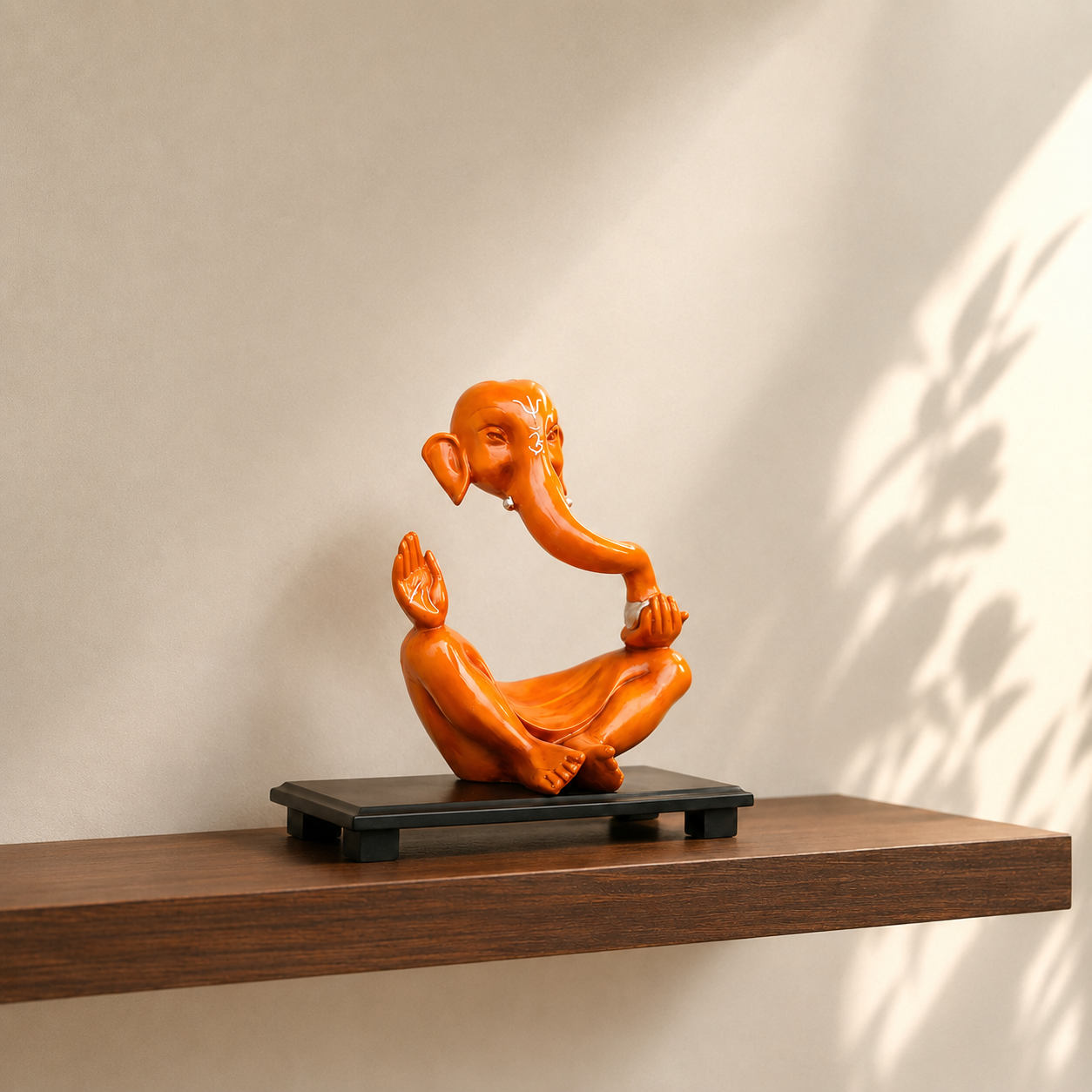
A material-backed, Vastu-informed buying guide for Indian homeowners choosing an entrance idol.
Lord Ganesha and Goddess Lakshmi are the two deity idols most recommended for an Indian home entrance. Ganesha, positioned facing inward, is believed to clear obstacles for everyone who enters; Lakshmi, placed facing the doorway, is associated with inviting prosperity. Vastu Shastra recommends placing either idol at eye level, on the entrance wall or console, facing east or north for the most favourable energy flow.
We help design-conscious Indian homeowners choose entrance décor that is both auspicious and visually considered — not an afterthought picked up on the way out of a puja shop. This guide answers the direct question with the reasoning, placement rules, and material specifications behind it, so you can decide with confidence before you buy.
Across Indian homes, entrance idol choice is not random — it follows centuries of Vastu and Hindu tradition, and two deities dominate for specific, well-documented reasons.
Ganesha is the most common entrance idol in Indian homes because he is worshipped as Vighnaharta, the remover of obstacles, before any new beginning. A Ganesha idol at the entrance is traditionally placed facing inward, toward the interior of the home, so that obstacles are cleared from within rather than invited in. Sitting or standing Ganesha idols both work at the entrance; a seated posture is generally preferred for a calmer, more grounding energy near a front door.
Lakshmi, the goddess of wealth and abundance, is the second most common entrance choice. Her idol is traditionally placed facing outward or toward the doorway, symbolically welcoming prosperity into the home. Many Indian households place a Lakshmi idol or a Lakshmi-Ganesha pair together at the entrance console — Ganesh clears the path, Lakshmi brings in the abundance.
Placement matters as much as the deity itself. Vastu Shastra ties entrance décor to specific directions and heights, and getting this wrong is one of the most common mistakes Indian homeowners make.
An entrance idol sits in one of the harshest micro-climates in an Indian home — direct sun through the door, monsoon humidity, and daily dust. Material choice determines whether it lasts one season or several years. Every Moolwan showpiece is manufactured in-house and engineered against these exact conditions, which is a specification most décor sellers won't publish because they don't manufacture their own pieces.
| Material | Composition | Humidity Tolerance | Temperature Range | Expected Lifespan | Best For |
|---|---|---|---|---|---|
| Ceramic | 92% clay composition | Up to 85% RH | Heat-resistant to 60°C | 5+ years | Covered entrances, matte traditional finish |
| Resin | 94% purity epoxy resin | Up to 60% RH | 15°C to 35°C | 3+ years indoors | Detailed sculpting, glazed contemporary finish |
For coastal or monsoon-heavy regions, ceramic's 85% RH tolerance makes it the safer entrance choice. For covered, climate-controlled entryways — apartment lobbies, gated-society porches — resin's fine detailing and 3H pencil-hardness scratch resistance hold up well against daily handling during aarti and festive cleaning. You can browse Moolwan's showpiece collection for home décor to compare both finishes side by side before deciding.
Manufacturer-direct pricing, no middlemen markup, and pieces sized for Indian consoles and entryways.
Shop Showpieces for Home DécorEntrance consoles in Indian apartments are typically shallow and narrow, so idol size needs to match the space, not overwhelm it. Moolwan sizes showpieces into three practical bands for exactly this reason.
Weight also matters for wall-mounted entrance shelves in older buildings — Moolwan idols range from 150g to 600g, light enough for standard wall fittings and shelf brackets common in Indian homes. If your entrance opens directly into your living space, pair the idol with wall art rather than a second showpiece to avoid visual clutter — you can browse Moolwan's modern home décor items for pieces that complement a traditional idol without competing with it.
Most entrance décor mistakes are placement errors, not deity choice errors. Four come up repeatedly:
If your entrance also opens onto a passage or corridor, a hanging décor piece near the idol can frame the space without crowding the console — see Moolwan's home décor hanging items for options sized for entryways and corridors.
Yes. A Ganesh-Lakshmi pair is one of the most common entrance console combinations in Indian homes — Ganesha faces inward to clear obstacles, and Lakshmi faces the doorway to invite prosperity.
Ganesha idols are traditionally placed facing into the home. Lakshmi idols are traditionally placed facing toward the door. This is the most-searched placement question and the most commonly reversed by mistake.
Ceramic is the better choice for uncovered or coastal entrances because it tolerates humidity up to 85% RH, compared with resin's 60% RH tolerance. Covered entryways can use either material.
A small (10–16cm) or medium (16–21cm) idol suits most Indian apartment consoles. Large (25–34cm) idols are better reserved for wide foyers or bungalow porches.
Moolwan accepts returns within 24 hours of delivery for unused items in original packaging, with a 10% restocking fee and refund processed within 15 working days.
Explore Moolwan's full range of modern home décor pieces built for Indian homes and climates.
Shop Modern Home Décor ItemsQuick View



