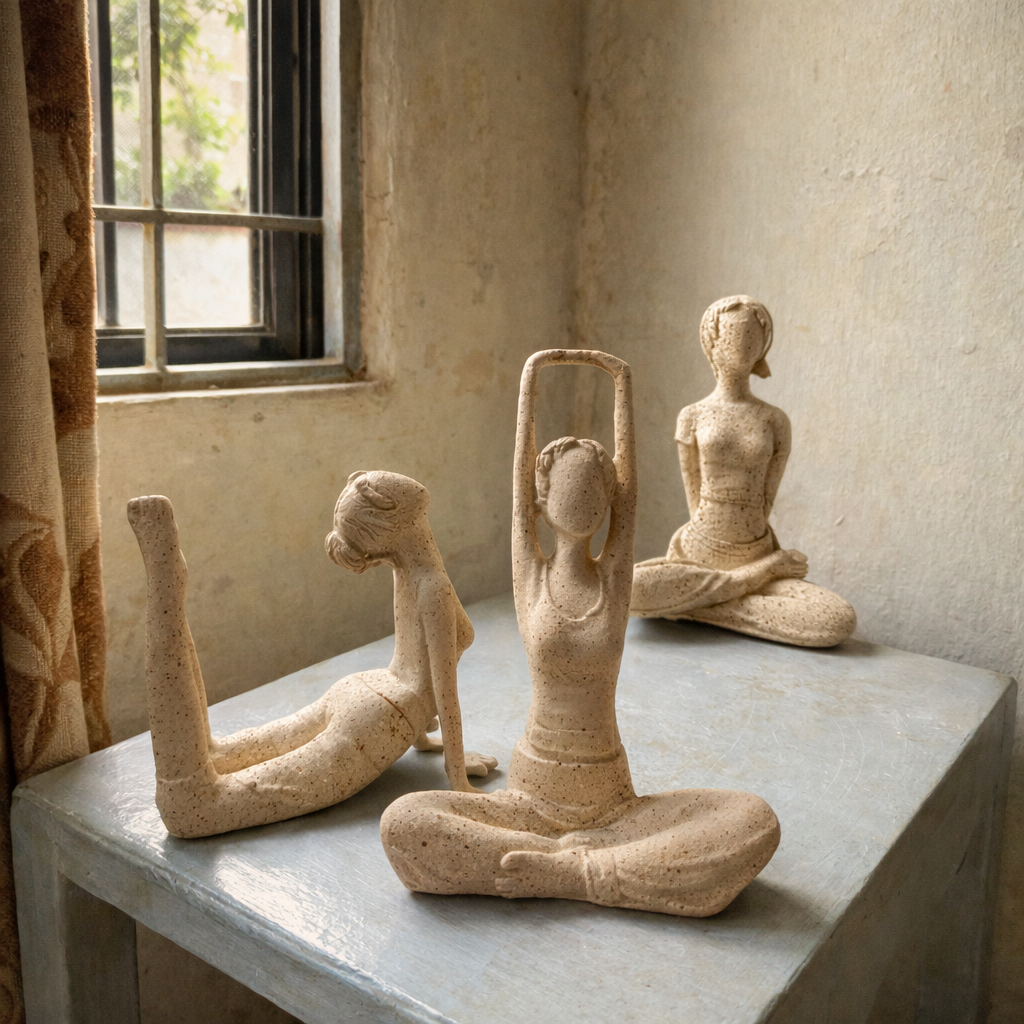
By Ruchi Malhotra, Founder & CEO, Moolwan (Euphorica Ventures Pvt Ltd), Bangalore · Updated June 2026
For most Indian homes, Contemporary Indian — a blend of modern minimalism with traditional motifs, warm earthy tones, and climate-engineered materials — is the best-performing décor style. It suits compact urban apartments and larger suburban spaces alike, works with Indian lighting conditions, and holds up against humidity, heat, and daily use. The right style ultimately depends on your room size, existing furniture, and which aesthetic your family will live with comfortably — not just photograph.
Most décor advice online is written for Western homes: high ceilings, low humidity, neutral-season climates, and rooms that double as studios. Indian homes are different. They deal with temperatures between 18°C and 45°C, monsoon humidity that can spike past 80% RH, compact rooms where every piece competes for visual space, and family aesthetics where five people need to agree on one shelf.
At Moolwan, we help design-conscious Indian homeowners choose décor that is beautiful, durable, and culturally resonant — without the inflated prices that come from buying through middlemen. We manufacture in-house in India, engineer materials for Indian climate conditions, and price direct. That means what you buy from us has been thought through for your living room — not a loft in Brooklyn.
The styles that genuinely work for Indian homes share three traits: they tolerate heat and humidity, they don't overwhelm compact rooms, and they leave room for the traditional elements — a brass diya, a family heirloom, a puja corner — that make a house feel like yours.
The table below compares the six most popular décor styles among Indian homeowners against the factors that actually matter in an Indian household: climate compatibility, suitability for Indian room sizes, maintenance effort, and ease of blending with traditional elements.
| Style | Climate Fit (Heat + Humidity) | Works in Compact Rooms | Blends with Traditional Elements | Maintenance | Best For |
|---|---|---|---|---|---|
| Contemporary Indian | ✔ Excellent | ✔ Yes | ✔ Designed for it | Low | Most urban & suburban homes |
| Bohemian / Eclectic | ✔ Good | ✗ Needs space | ✔ Yes | Medium | Independent villas, larger flats |
| Scandinavian Minimal | ✗ Poor (yellows in heat) | ✔ Yes | ✗ Clashes with warm tones | Low | Air-conditioned urban studios |
| Industrial | ✗ Poor (rusts + fades) | ✔ Yes | ✗ No | High | Commercial spaces, cafés |
| Art Deco / Glamour | Medium | ✗ Overwhelms small rooms | Medium | High | Formal living rooms, penthouses |
| Traditional Indian / Heritage | ✔ Excellent | Medium | ✔ Native to it | Medium | Ancestral homes, bungalows |
Data sourced from Moolwan's in-house product engineering assessments and customer feedback across 3,000+ deliveries across India (2023–2025).
Contemporary Indian décor is not a single aesthetic — it is a framework. It takes the clean lines and restrained palette of modern design, then roots them in India: warm terracotta and ochre tones instead of cold grey, handcrafted textures instead of factory plastic, and space for the meaningful objects your family already owns. It doesn't ask you to throw out your grandmother's brass vase to be modern. It makes room for both.
For wall décor, this translates to canvas art that carries Indian motifs — mandalas, nature-inspired abstracts, earthy landscapes — without looking like a tourist souvenir. Moolwan's modern home décor items are designed exactly for this balance: contemporary enough for a 2024 apartment, warm enough for a family home.
Most imported or mass-produced Indian décor fails within two monsoon seasons. Cheap canvas prints sag when humidity spikes; resin showpieces yellow in heat; uncoated ceramics crack under temperature swings. Moolwan engineers against these failure points specifically:
Canvas wall art uses 340 GSM cotton canvas with eco-solvent UV-resistant inks and a moisture-resistant coating — built to hold colour through years of Indian summers and monsoons. Ceramic showpieces use a 92% clay composition, are heat-resistant to 60°C, and can tolerate humidity up to 85% RH — conditions common in Mumbai, Chennai, and coastal cities. Resin pieces use 94% purity epoxy resin with a 3H pencil hardness scratch resistance, suitable for indoor temperatures of 15–35°C.
Explore home décor engineered for Indian rooms, climates, and budgets — priced manufacturer-direct.
Shop Modern Home Décor →The style you pick on Pinterest and the style that works in your actual home are not always the same thing. Here is a room-by-room guide based on the most common Indian home configurations.
The living room is where style decisions carry the most weight — and the most risk. For rooms under 200 sq ft (common in most urban 2BHKs), stick to one statement piece: a large canvas (25–34 cm as a starting accent, or a full wall painting) or a single focal showpiece rather than a cluster of smaller items. Contemporary Indian works best here because it allows the room to breathe while still feeling decorated. If you want pieces with depth and character, browse Moolwan's antique showpieces for home decoration — these carry the weight of tradition without demanding a heritage-style room to match them.
Bedrooms in Indian homes often double as personal retreats — and they deserve décor that feels intimate rather than impressive. Matte finishes, soft earthy tones, and medium-sized showpieces (16–21 cm range) work best. Avoid high-contrast art or loud ceramic pieces; these interrupt rest. A single well-chosen canvas above the headboard or a resin accent piece on a bedside shelf is enough.
This is where Indian décor has its most distinct vocabulary. Traditional motifs, brass finishes, and handcrafted textures are not just aesthetic choices here — they carry meaning. A small antique-finish showpiece (10–16 cm) on the mantle or a devotional motif canvas respects the space without overstating it. Moolwan offers pieces that work in both sacred and everyday display contexts.
The entrance sets the tone for your entire home. This is the one place where a bold, singular statement works — a striking wall canvas or an eye-catching showpiece on a console table. Go for something that reflects your home's overall style but with slightly more intensity. First impressions are allowed to be dramatic.
Décor gifting in India has one consistent pitfall: the giver chooses what they like, not what will actually live in the recipient's home. The safest gifting strategy is to choose pieces that are style-neutral but material-premium — antique-finish ceramics, handcrafted resin objects, or textured canvas art in earth tones. These cross style boundaries far more gracefully than bold modern or overtly traditional items.
Moolwan's unique home décor items curated for gifting are available at factory prices starting from ₹150, with free shipping and cash on delivery. Each piece is packaged to arrive gift-ready. For gifting occasions — housewarmings, Diwali, weddings — the medium size range (16–21 cm) hits the sweet spot: substantial enough to feel considered, compact enough to fit any shelf.
Shop Moolwan's full range — manufacturer-direct, climate-engineered, priced without middlemen. Free shipping. COD available.
Contemporary Indian — a fusion of modern minimalism with traditional Indian warmth and motifs — is the most widely adopted style across urban and suburban Indian homes in 2025–2026. It works across room sizes, tolerates Indian climate conditions, and does not require a full home renovation to implement. A few well-chosen pieces can shift a room's feel entirely.
For Indian homes, prioritise climate-engineered materials: high-GSM cotton canvas with UV-resistant inks for wall art, high-composition ceramics (92%+ clay) for showpieces, and high-purity resin (94%+ epoxy) for decorative objects. These resist humidity spikes, heat, and temperature cycling that cause cheaper imported materials to warp, yellow, or crack within a year. Moolwan engineers all products to these standards specifically.
Use the rule of three: anchor the room with one modern statement piece (a canvas or a contemporary showpiece), add one traditional accent (a brass or antique-finish item), and leave the third space open. Limit your palette to two or three tones — warm earthy neutrals plus one richer accent colour. Clutter comes from too many objects competing for attention, not from mixing styles per se.
For Indian housewarmings (grihapravesh), opt for a medium-sized antique-finish or resin showpiece in the 16–21 cm range — substantial enough to feel thoughtful, compact enough to fit any shelf. Earth tones, neutral textures, and pieces with cultural resonance (geometric patterns, nature motifs, traditional forms) cross style boundaries well. Moolwan offers curated pieces starting from ₹150 with free shipping and COD.
Moolwan accepts returns within 24 hours of delivery, provided the item is unused and in its original packaging. A 10% restocking fee applies. Refunds are processed within 15 working days of receiving the returned item. This policy applies to all product categories sold on moolwan.com.
Quick View



