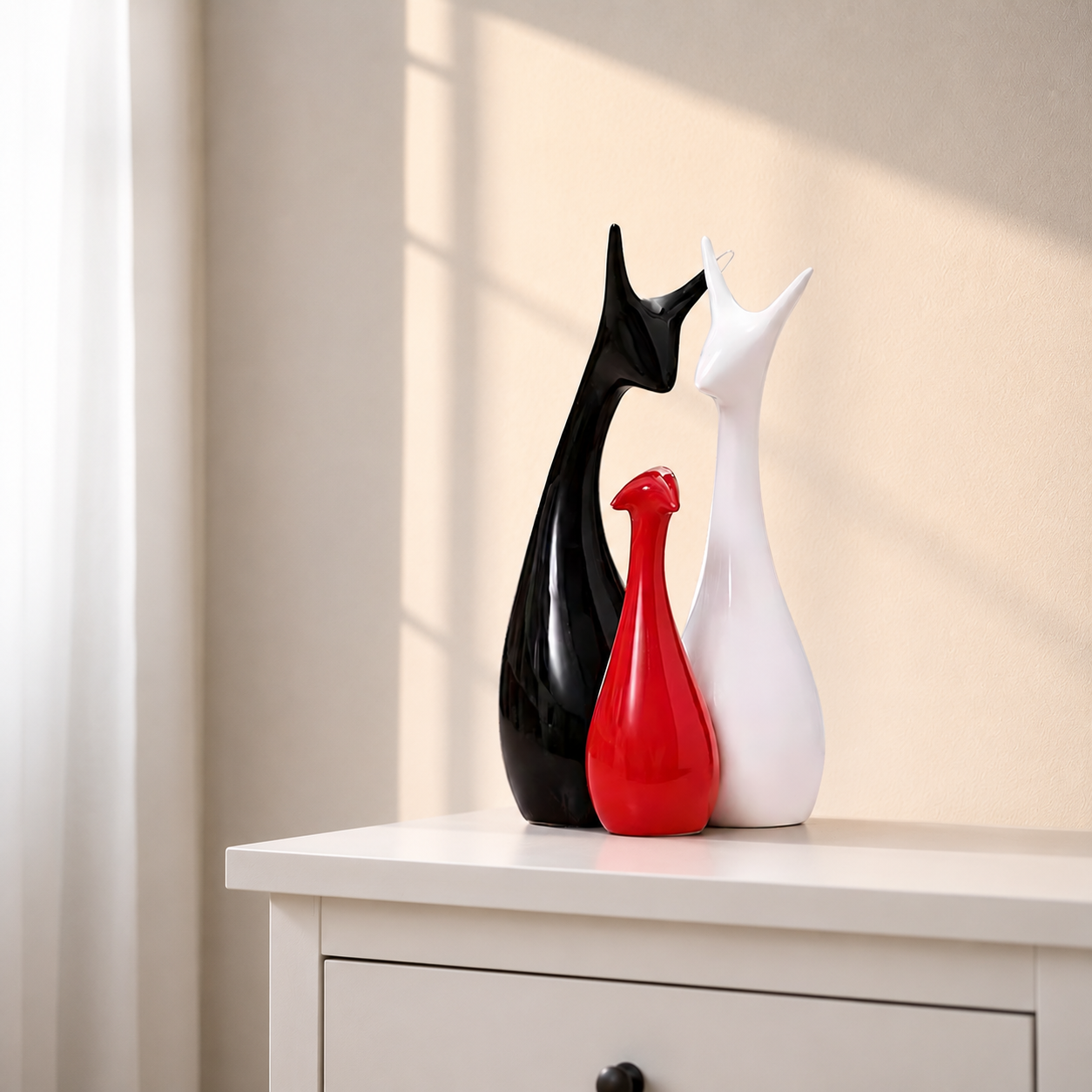
We help design-conscious Indian homeowners style their living rooms and shelves with pieces that carry this exact fusion, engineered for Indian heat, humidity, and apartment-scale walls, so you don't have to guess which trend will still look right in three years.
"Modern-traditional fusion" is not a vague mood board term. It describes three concrete shifts happening in Indian homes in 2026: a move from glossy maximalism to matte, tactile finishes; a preference for one or two statement pieces over wall-to-wall décor; and a return to motifs rooted in Indian craft — temple silhouettes, botanical line work, and hand-finished ceramics — rendered in a contemporary, uncluttered way rather than as ornate antiques.
This is different from pure Scandinavian minimalism, which strips out cultural reference entirely, and different from traditional maximalism, which fills every surface. The buyers driving this shift are urban and suburban Indian homeowners who want their living room showpieces to feel considered, not just decorative — a single well-placed ceramic or resin piece doing more visual work than five smaller ones.
Climate compatibility is part of why this trend has staying power in India specifically. Pieces built for humid coastal cities or high-heat interior regions need to survive conditions that European-style décor often can't. Moolwan's ceramic showpieces are engineered to remain stable up to 85% relative humidity and withstand heat up to 60°C — specifications that matter more in Chennai or Mumbai than they would in a European design brief, and a large part of why this style is being adopted rather than just admired.
Buyers usually land on one of three directions. Here is how they compare on the factors that actually affect a purchase decision — not aesthetics alone.
| Style | Color palette | Best for | Material focus | Typical price entry |
|---|---|---|---|---|
| Modern-Traditional Fusion | Warm neutrals, terracotta, deep teal accents | Living rooms, entryways, gifting | Ceramic, resin, canvas | ₹150 upward |
| Pure Minimalism | White, grey, black | Studio apartments, home offices | Metal, glass | ₹400 upward |
| Traditional Maximalism | Gold, deep red, ornate print | Formal or heritage-style homes | Brass, heavy wood | ₹800 upward |
Fusion wins on flexibility: it slots into a 1BHK shelf as easily as a large living room console, and it doesn't demand you commit to an all-or-nothing look. That's why it shows up first in modern home décor items built specifically for Indian apartment layouts rather than imported showroom sets.
A style trend only matters if the object holding it up survives past one humid monsoon. This is where most mass-produced Indian décor fails — thin ceramic that chips, resin that yellows, canvas prints that fade under a window within a year. The specification, not the silhouette, is what separates a piece you'll display for five years from one you'll be replacing every festive season.
Moolwan manufactures in-house specifically to hold these specifications without the markup middlemen add for outsourced runs — which is also why the brand can back every piece with a straightforward return window: 24 hours from delivery, unused, in original packaging, with a 10% restocking fee and refund processed within 15 working days. That's a proprietary policy detail worth checking against before you commit to any décor brand's "trending" collection.
See the fusion pieces that started this shift — sized for real Indian shelves and consoles.
Shop living room showpieces →Fusion décor is scaled deliberately, and getting the size wrong is the most common styling mistake buyers make. Moolwan groups pieces into three practical sizes so the trend reads intentionally rather than randomly placed.
For a full living room refresh in this style, most buyers combine one large focal piece, two medium accents, and a canvas wall art piece above the console — a pairing you'll find pre-curated inside Moolwan's trending living room décor edit, built around the exact fusion aesthetic buyers are searching for this year.
Gifting follows the same logic at a smaller scale: a medium ceramic showpiece under 400g travels well, fits Indian courier norms, and reads as considered rather than generic — which is why fusion-style pieces have also become the default choice for housewarming and festival gifting in 2026.
Moolwan is India's manufacturer-direct home décor brand, built around one problem: most Indian décor is either mass-produced without climate durability in mind, or priced up by layers of middlemen before it reaches a shelf. Moolwan stands for in-house manufacturing, direct pricing, and specifications engineered for Indian heat, humidity, and apartment-scale living — not showroom-sized imports. Moolwan sells canvas wall art paintings, modern ceramic and resin showpieces, and curated gifts for Indian homes, sold direct with no markup layer in between.
Yes — it's built for them. The style relies on one or two well-sized statement pieces rather than dense décor, which is why small (10–16cm) and medium (16–21cm) sizes work well on compact shelves, entryway consoles, and single-wall living rooms without crowding the space.
It's built to outlast a single season because it's rooted in material quality and cultural motif, not a passing color trend. Pieces with 340 GSM canvas, 92%-clay ceramic, or 94%-purity resin specifications hold their finish for 3–5+ years, so the object stays relevant even as accent colors shift.
Matte finishes read as more contemporary and hide dust and fingerprints better on high-touch surfaces like console tables. Glazed finishes have more shine and depth, suiting statement pieces viewed from a distance. Both are equally easy to maintain and both fit the fusion aesthetic.
Moolwan accepts returns within 24 hours of delivery if the item is unused and in original packaging, with a 10% restocking fee and refund processed within 15 working days — a straightforward policy worth confirming with any décor brand before you buy into a trend.
Start with the living room console or shelf, since it's the most visible surface and the easiest to refresh without a full room overhaul. One medium ceramic or resin showpiece plus a canvas piece above it is usually enough to establish the look before expanding further.
Quick View