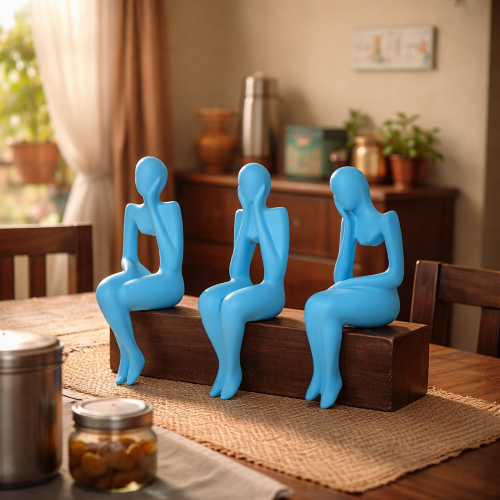
The Feng Shui Laughing Buddha, ceramic elephants, and brass or ceramic tortoises are the three most trusted good-luck showpieces for Indian homes — each tied to a specific intention: prosperity, strength and family stability, or long life and steady progress. Placement direction matters as much as the object itself.
We help Indian homeowners choose auspicious, Vastu-aligned décor that looks modern but carries real cultural meaning — not generic "lucky charm" clutter. Moolwan is a manufacturer-direct home décor brand that designs showpieces engineered for Indian climate, space, and symbolism, without the inflated pricing of middlemen retailers.
Not every lucky showpiece suits every room or intention. The table below breaks down the four most commonly chosen pieces by symbolism, ideal placement, and material — so you can match the object to your actual goal, not just the trend.
| Showpiece | Symbolises | Best Placement | Recommended Material |
|---|---|---|---|
| Laughing Buddha | Wealth, contentment | Living room, facing main door | Ceramic or resin |
| Elephant Pair | Strength, family stability | Entrance or living room shelf | Ceramic (trunk facing inward) |
| Tortoise | Longevity, steady progress | North direction, low surface | Brass or ceramic |
| Feng Shui Fish / Fish Bowl | Abundance, cash flow | Southeast corner | Ceramic, glazed finish |
Direction matters more than most buyers realise: a Laughing Buddha placed facing outward toward the entrance is believed to invite prosperity in, while an elephant pair with trunks turned inward is meant to keep that stability within the home rather than sending it away. If you're building a full display rather than a single piece, browse Moolwan's modern home decor items for curated groupings sized correctly for Indian shelves and console tables.
A good-luck showpiece that chips, discolours, or cracks within a year defeats its own purpose — durability is part of the auspiciousness. Moolwan's ceramic showpieces use a 92% clay composition, are heat-resistant up to 60°C, and are humidity-tolerant up to 85% RH, which matters directly for Indian homes near kitchens, balconies, or coastal cities where humidity and heat degrade lower-grade ceramic fast. Each piece is also drop-resistant from 15cm, reducing the everyday risk of a shelf-top accident undoing a "lucky" purchase.
For buyers who want the showpiece to double as everyday décor rather than a standalone "lucky item," pair it with wall accents — Moolwan's home decor hanging items collection includes wall art designed to complement Vastu-oriented shelf displays without visually competing with them.
If you're shopping with a specific budget or room in mind, you can buy showpieces for home decor directly from Moolwan's in-house manufactured range, priced without retail markup.
Shop Moolwan's curated good-luck showpieces — manufactured in-house, priced direct, and sized for Indian homes.
Yes, but Vastu practitioners generally recommend keeping symbols complementary rather than conflicting — for example, a Laughing Buddha and an elephant pair can coexist in a living room since both relate to prosperity and stability. Avoid clustering more than 2–3 symbolic pieces in one small space, as it can dilute the intended focus.
Material affects durability more directly than symbolism, but ceramic and brass are the two most traditionally trusted materials for auspicious pieces in Indian homes. Moolwan's ceramic range is built for 5+ year indoor lifespan, so the piece remains part of the home's energy and décor long-term rather than needing early replacement.
Avoid bathrooms, directly above doorways, or cluttered corners, since most Vastu guidance treats these as low-energy zones that undercut the showpiece's purpose. A clean, visible surface — a console table, shelf, or entrance table — is preferred.
For symbols like elephants, pairs are traditionally preferred since they represent partnership and mutual stability, while single pieces (like a solitary Laughing Buddha) are equally effective for individual intentions such as personal prosperity.
Auspicious symbolism and modern design aren't mutually exclusive — Moolwan designs its showpieces with minimal, contemporary finishes so they read as intentional décor first and symbolic pieces second, fitting naturally into modern Indian living rooms.
Written and reviewed by Ruchi Malhotra, Founder & CEO, Moolwan (Euphorica Ventures Pvt Ltd), Bangalore. Moolwan manufactures ceramic, resin, and canvas home décor in-house, selling directly to Indian homeowners without retail markup.
Quick View



