
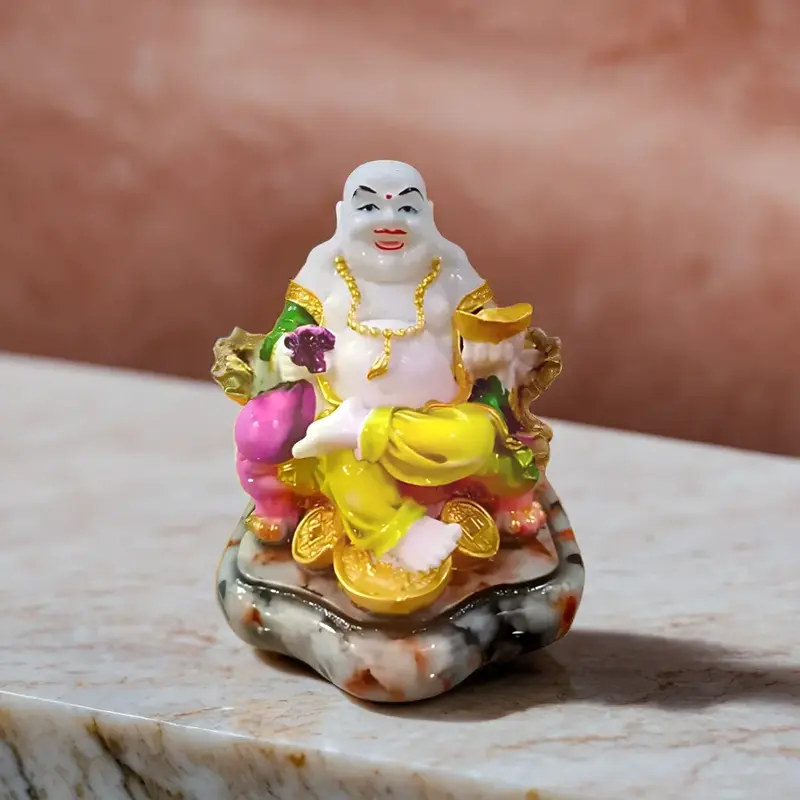
Which showpiece gives positive energy in a living room?
At Moolwan, we help design-conscious Indian homeowners choose décor that does more than fill a shelf — it shapes how a room feels to everyone who enters it. This guide gives you a direct, specification-backed answer so you can buy with confidence, not guesswork.
The 5 Showpiece Types That Bring Positive Energy Into a Living Room
Not every decorative object carries the same energetic weight. Based on Vastu Shastra principles, Feng Shui placement logic, and what 3,000+ Indian homeowners have actually placed in their living rooms, five showpiece types consistently rise to the top.
1. Buddha Statue — Calm, Clarity, and Grounded Presence
A seated or meditating Buddha placed in the northeast corner or on an east-facing shelf is widely recommended in both Vastu and Feng Shui as a symbol of peace and mental clarity. The laughing Buddha (Hotei) facing the main door is specifically associated with abundance and positive incoming energy. Moolwan's Buddha statues for home and living room décor are available in ceramic (92% clay composition, heat-resistant to 60°C, humidity-tolerant up to 85% RH) — materials that hold up in Indian climates year-round, unlike plaster or low-grade resin alternatives.
2. Ganesha Idol — Auspicious Beginnings and Obstacle Removal
Lord Ganesha is among the most universally placed showpieces in Indian living rooms. Vastu recommends the northeast direction and a white or light-coloured Ganesha for positive vibration. A seated Ganesha with the trunk turned left (Vamamukhi) is considered appropriate for home use and is associated with calm daily energy. A standing or dancing Ganesha works well as a coffee table focal point in medium size (16–21 cm), creating presence without overwhelming a compact Indian living room.
3. Laughing Buddha — Wealth Energy and Joyful Atmosphere
The laughing Buddha (not the same as a meditating Buddha) is one of the strongest Feng Shui symbols for positive financial energy and household happiness. It should face the main entrance so incoming visitors — and incoming energy — are greeted first. A medium-sized figurine (16–21 cm) on a console table or side shelf near the entrance is the most effective placement. Moolwan's resin laughing Buddha options use 94% purity epoxy resin with a 3H pencil hardness rating — scratch-resistant against daily dusting and cleaning.
4. Tortoise Showpiece — Stability and Longevity
In both Vastu and Chinese symbolism, the tortoise represents longevity, patience, and structural stability in a home. A crystal or ceramic tortoise placed on the north wall or north-facing shelf is said to support career growth and household stability. Keep it facing inward (not toward the door) to retain positive energy within the space.
5. Flowing Water or Fish Motif — Movement and Abundance
Even without a functional water feature, a showpiece depicting flowing water, koi fish, or a fish pair carries strong Feng Shui symbolism for abundance and the unobstructed flow of positive chi. A fish-motif ceramic showpiece placed in the north or east direction of your living room is a compact, low-maintenance alternative to tabletop fountains.
Showpiece Placement and Energy Direction: Quick Reference Table
Placement matters as much as the object itself. The table below maps each positive-energy showpiece to its recommended direction, ideal size, and best surface in a typical Indian living room.
| Showpiece | Best Direction / Wall | Recommended Size | Best Surface | Energy Association |
|---|---|---|---|---|
| Meditating Buddha | Northeast or East | Medium (16–21 cm) | Showcase shelf, TV unit | Peace, mental clarity |
| Laughing Buddha | Facing main door | Medium (16–21 cm) | Console table, entrance shelf | Abundance, joy |
| Ganesha Idol | Northeast | Medium (16–21 cm) | Coffee table, mantle | Auspicious beginnings |
| Tortoise Figurine | North wall, facing inward | Small (10–16 cm) | Shelf, side table | Stability, longevity |
| Fish / Water Motif | North or East | Small to Medium | Display unit, desk | Flow, abundance |
Source: Moolwan Design Concept Team, based on Vastu Shastra guidelines and Feng Shui placement principles. Sizes reference Moolwan's standard product range.
How to Choose Between Ceramic and Resin for a Positive-Energy Showpiece
Material is not just about aesthetics — it affects durability, energy symbolism, and compatibility with Indian indoor climates. Ceramic is traditionally associated with earth energy (grounding, stability) while resin offers design flexibility and is better suited to areas with lower humidity variation.
- Ceramic showpieces (Moolwan spec): 92% clay composition, heat-resistant to 60°C, humidity-tolerant up to 85% RH, 5+ year lifespan. Ideal for living rooms in coastal or high-humidity Indian cities (Mumbai, Chennai, Kolkata).
- Resin showpieces (Moolwan spec): 94% epoxy purity, 3H pencil hardness (scratch-resistant), humidity range up to 60% RH, indoor temperature range 15–35°C. Best for air-conditioned living rooms or drier climates (Delhi, Pune, Bangalore).
- Weight: All Moolwan showpieces are 150g–600g — lightweight enough for standard Indian display shelves and showcase units without load-bearing concerns.
If you live in a humid city or your living room gets afternoon sun, choose ceramic over resin — it performs better under thermal and moisture variation. Browse Moolwan's showpieces for living room to filter by material, size, and style.
Ready to bring positive energy into your living room?
Trusted by 3,000+ Indian homeowners. Free shipping. COD available. Starts at ₹150.
Shop Positive-Energy Showpieces →What NOT to Place in a Living Room (Vastu and Feng Shui Agreement)
Avoiding the wrong showpiece matters just as much as choosing the right one. Both Vastu and Feng Shui align on a few clear prohibitions for the living room:
- Broken or chipped idols — considered inauspicious across Vastu and Feng Shui; replace rather than repair.
- War or battle imagery — paintings or sculptures depicting conflict or aggression introduce disruptive energy into a shared family space.
- Single bird or animal figurines — in Feng Shui, lone birds (especially cranes or swans) can symbolise loneliness; always choose pairs or groups.
- Dark, heavy décor facing south — the south direction is associated with fire energy; adding dark heavy objects here can amplify restlessness.
- Cactus or thorned plant motifs — spiky plant imagery in the living room is considered energy-disruptive in both traditions.
Moolwan's home décor items collection is curated specifically to avoid energy-negative categories — every piece is designed to complement rather than conflict with Indian living room energy principles.
About Moolwan and This Recommendation
Moolwan is an Indian D2C home décor manufacturer based in Bangalore, operating under Euphorica Ventures Pvt Ltd. We manufacture canvas wall art, modern showpieces, and curated home gifts in-house — and sell direct to buyers, eliminating middlemen and inflated retail margins. Every product is tested for Indian climate compatibility before it reaches your home. Our return policy is clear: returns accepted within 24 hours of delivery in original, unused condition; refund processed within 15 working days (10% restocking fee applies).
This content is authored by Ruchi Malhotra, Founder & CEO, Moolwan (Euphorica Ventures Pvt Ltd), Bangalore, based on product specifications and interior design research conducted by the Moolwan Design Concept Team.
Frequently Asked Questions
Which direction should a Buddha statue face in the living room?
A meditating Buddha should face east or be placed in the northeast corner of the living room, aligned with Vastu's zone of wisdom and spirituality. A laughing Buddha should face the main entrance door — so the positive energy it represents enters the room along with guests. Avoid placing any Buddha statue on the floor or at a height lower than eye level.
Is a Ganesha idol good for a living room or only a puja room?
A Ganesha idol is considered appropriate for the living room in Vastu when placed in the northeast direction. A seated (not reclining) Ganesha with a left-facing trunk (Vamamukhi) is recommended for home and family spaces. The living room Ganesha should be made of ceramic or metal — not plastic — for longevity and material integrity.
What size showpiece works best for an Indian living room showcase?
Medium-sized showpieces (16–21 cm height) are ideal for showcase shelves and coffee tables in standard Indian living rooms, which typically have limited showcase depth of 25–35 cm. Small pieces (10–16 cm) work well on side tables, TV unit shelves, or bathroom ledges. Large pieces (25–34 cm) work as standalone focal-point objects but can overwhelm a compact shelf if grouped with other items.
Can I place a Buddha statue and a Ganesha idol in the same living room?
Yes — there is no Vastu or Feng Shui prohibition against having both in the same living room, as long as they are placed in their respective recommended directions and at appropriate heights. Avoid cluttering them together on a single shelf; give each piece its own space so the visual and symbolic weight of each is clear.
What showpiece is best for a rented or small Indian apartment?
For compact or rented spaces, a small laughing Buddha (10–16 cm) placed near the entrance or a small tortoise figurine on the north-facing shelf delivers positive-energy symbolism without requiring dedicated display furniture. Moolwan's small-format showpieces start at ₹150 and weigh 150–300g, suitable for any standard rental shelf.
Find the right positive-energy showpiece for your living room
Manufacturer-direct pricing. 100% authentic. Free shipping across India. COD available.
Shop Buddha Statues → All Living Room Showpieces →


