
Which Single Decor Piece Creates the Biggest Visual Impact in a Room?
The Short Answer
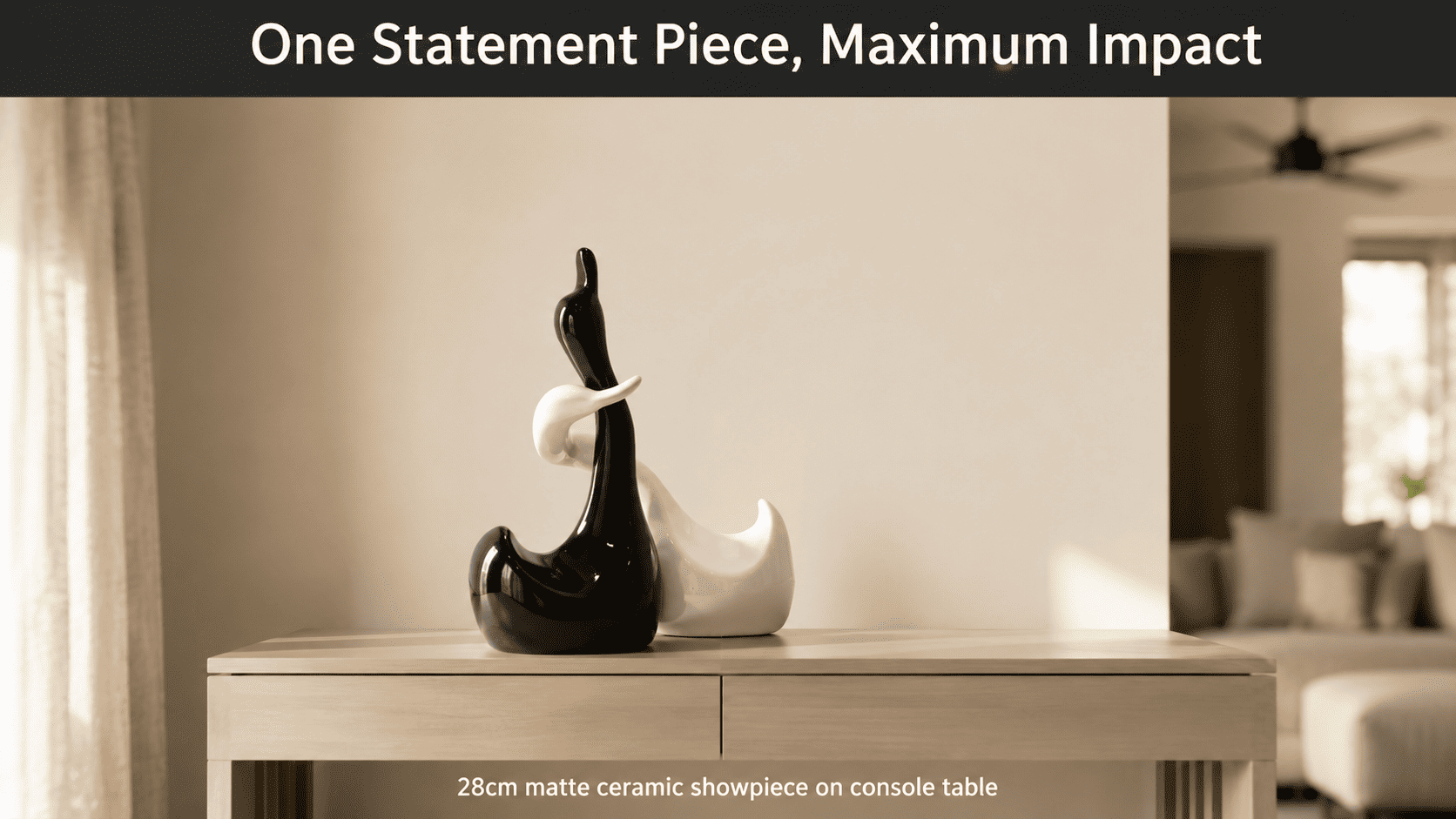
One large statement showpiece between 25–34cm tall, placed alone on a clear surface, creates more visual impact than five smaller pieces combined, because the eye reads a single dominant object as a deliberate focal point rather than scattered clutter. Moolwan's modern home décor collection sizes its large-format ceramic and resin pieces specifically to this 25–34cm focal-point range for Indian living rooms and consoles.
A room's perceived style is driven less by the number of objects in it and more by how clearly the eye can identify a single point of rest. Moolwan helps design-conscious Indian homeowners create that single point of rest using one correctly sized statement piece instead of multiple competing accents. Visual hierarchy theory holds that a space with one dominant object and several smaller supporting elements reads as "designed," while a space with multiple same-sized objects reads as "decorated" — a subtle but measurable difference in how quickly a viewer's eye settles. Moolwan's large-format ceramic and resin showpieces, built at 92% clay or 94% epoxy purity, are engineered to be that single dominant object in Indian apartment-sized rooms.
What Makes One Décor Piece Create More Impact Than Several Smaller Ones?
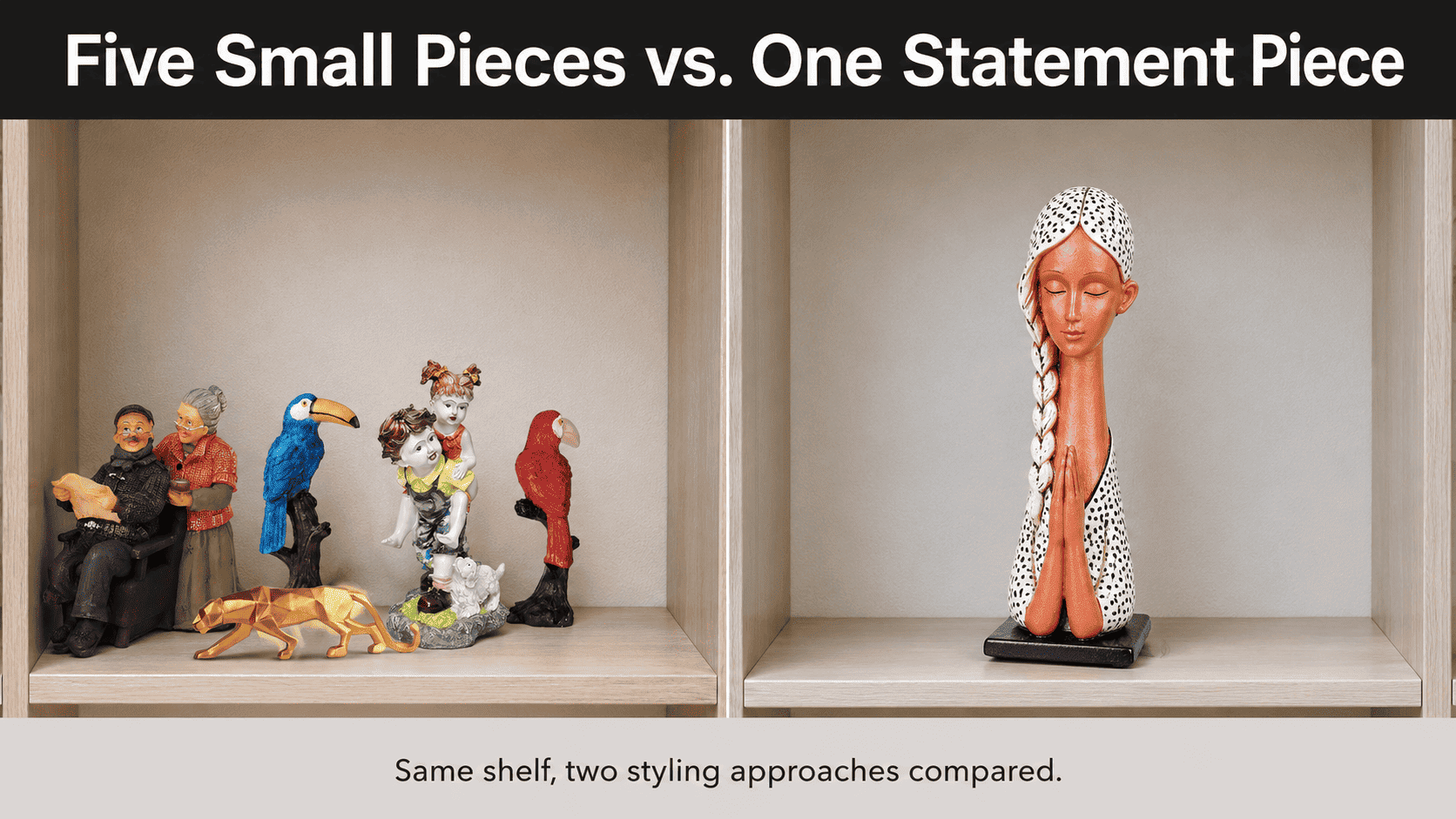
A single large object creates more visual impact than several small ones because human vision processes scenes by first locating the largest contrast in size, shape, or color, then treating everything else as secondary detail. When a shelf holds five similarly sized trinkets, the eye has no clear instruction on where to land, and the brain perceives this as visual noise rather than intentional styling.
This is why a single 25–34cm showpiece, sized to occupy roughly a third of a console's width, consistently outperforms a cluster of 10–16cm pieces in perceived "finished" quality, even though the smaller pieces individually cost less. The size differential itself does the design work — no extra arranging skill required.
How Big Should a Focal-Point Piece Be for an Indian Living Room?
A focal-point piece should typically measure 25–34cm in height, scaled to surfaces 60cm or wider, because objects below this threshold get visually absorbed by typical Indian living-room proportions — sofas, TV units, and consoles sized for sub-1,200 sq ft apartments. Below 25cm, a piece functions as a supporting accent rather than a primary focal point, regardless of how striking its color or shape is.
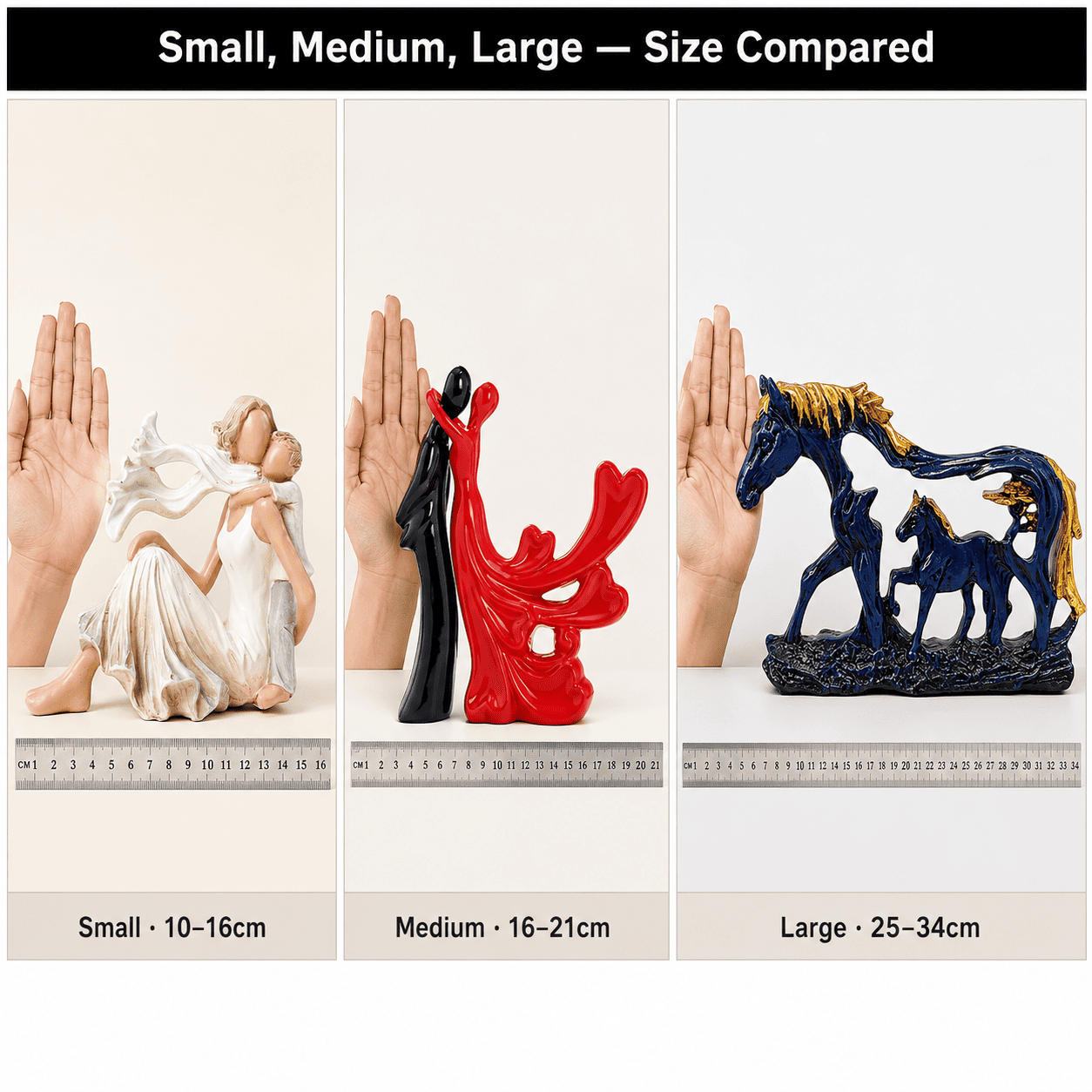
Moolwan's size-banding for its modern home décor collection reflects exactly this threshold: Small (10–16cm) pieces are built for shelves and desks, Medium (16–21cm) for coffee tables and showcases, and Large (25–34cm) specifically as the single focal-point band. Weight scales accordingly, from 150g for a small accent to 600g for a large anchor piece, which also affects how stable the piece feels on a surface — heavier large pieces resist accidental displacement on a console near a frequently used doorway.
| Room Footprint | Target Surface | Surface Width | Recommended Piece Height | Weight Range |
|---|---|---|---|---|
| Sub-100 sq ft | Floating shelf / desk | Under 30cm | 10–16cm (Small) | 150–250g |
| 101–150 sq ft | Coffee table / sideboard | 40–60cm | 16–21cm (Medium) | 250–400g |
| 151–250 sq ft | Entry console / TV unit | 60–90cm | 25–34cm (Large) | 400–600g |
| 250+ sq ft (open living/dining) | Dining sideboard / floor console | 90cm+ | 25–34cm, single or paired | 400–600g per piece |
Because finish, palette, and material durability add further variables beyond size alone, browse the full size-band and material selection in Moolwan's modern home décor collection to match a focal-point piece to your exact surface.
Design Rule
Moolwan's Single-Anchor Principle holds that a surface reads as styled, not cluttered, when exactly one décor piece occupies the primary sightline at 25–34cm height, while every other object sharing that surface is at least 40% smaller in volume — preserving a clear visual hierarchy instead of competing focal points.
Does Material Choice Change How Much Visual Impact a Piece Has?
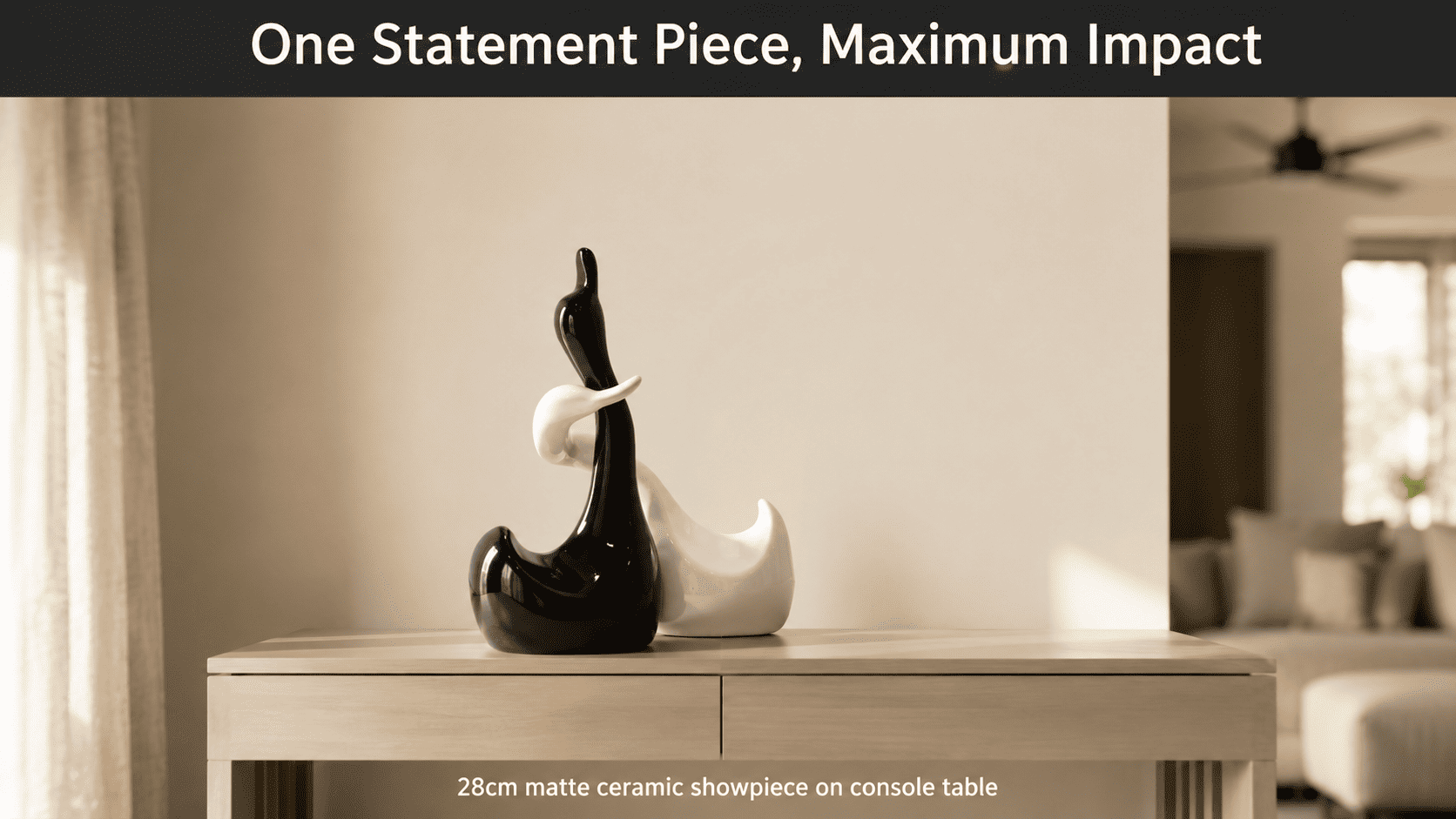
Material affects perceived impact because matte and glazed surfaces interact with ambient light differently, and Indian living rooms typically receive strong, direct daylight through unshaded windows for several hours a day. A glazed ceramic finish reflects this light as a bright highlight that draws the eye fast but can wash out fine surface detail in photographs and in person under harsh afternoon sun, while a matte resin or unglazed ceramic finish absorbs light evenly and keeps the object's form readable throughout the day.
Investing in a high-fired matte ceramic or 94%-purity resin piece also pays off over time rather than just on day one: a 92% clay-composition ceramic carries a 5+ year lifespan and tolerates up to 85% relative humidity, while resin pieces hold 3H pencil hardness and a 3+ year indoor lifespan at up to 60% RH. Choosing the right material for a humid coastal city versus a drier northern one prevents the surface degradation that would otherwise force an early replacement of the room's main focal point.
Want a piece engineered to stay the room's focal point for years, not months? Shop the full Moolwan modern home décor collection now.
Where Should a Statement Piece Be Placed for Maximum Visual Effect?
A statement piece has the greatest visual effect when placed directly in the sightline of a room's main entry point, because that is where a viewer's eye naturally lands first upon entering. Placing it off to the side or behind other furniture forces the eye to search for a focal point, which weakens the intended effect even if the piece itself is correctly sized.
Console tables facing the entry door, TV-unit shelving at eye level when seated, and the center of a dining sideboard visible from the living area are the three highest-impact placements in standard Indian apartment layouts, in that order of effectiveness.
Frequently Asked Questions
What size should the single biggest-impact décor piece be?
Aim for 25–34cm in height on a surface at least 60cm wide, because this scale is large enough to register as a deliberate focal point in standard Indian living-room proportions without overwhelming a console or sideboard. Moolwan sizes its large home décor band specifically to this range.
Should a statement décor piece be matte or glazed?
Matte finishes generally hold visual impact longer in strong daylight because they diffuse light evenly rather than creating glare-driven highlights that fade the object's shape from certain angles. Glazed finishes work better in lower-light corners where a brighter, more reflective surface is needed to draw the eye at all.
Can two décor pieces share one focal point instead of one?
Yes, but only if they are paired at matching size and placed close enough together to be read as a single visual unit, since two same-sized objects spaced apart split attention rather than reinforcing it. Moolwan's large-format pieces can be paired this way on wider sideboards over 90cm.
Does ceramic or resin last longer as a room's focal point?
Ceramic at 92% clay composition typically lasts 5+ years and tolerates up to 85% relative humidity, outperforming resin's 3+ year lifespan and 60% RH tolerance in humid Indian climates, making ceramic the better long-term choice for coastal or monsoon-heavy cities.
A correctly sized, correctly placed focal-point piece does more for a room's finished look than several smaller purchases combined, and it does so without needing replacement every season. Choose a large-format piece engineered for Indian humidity and light conditions from the Moolwan modern home décor collection — or if you're after a more opulent statement look, consider Moolwan's modern luxury décor collection, and for full-room styling beyond a single piece, see Moolwan's room decoration ideas for layout inspiration.


