
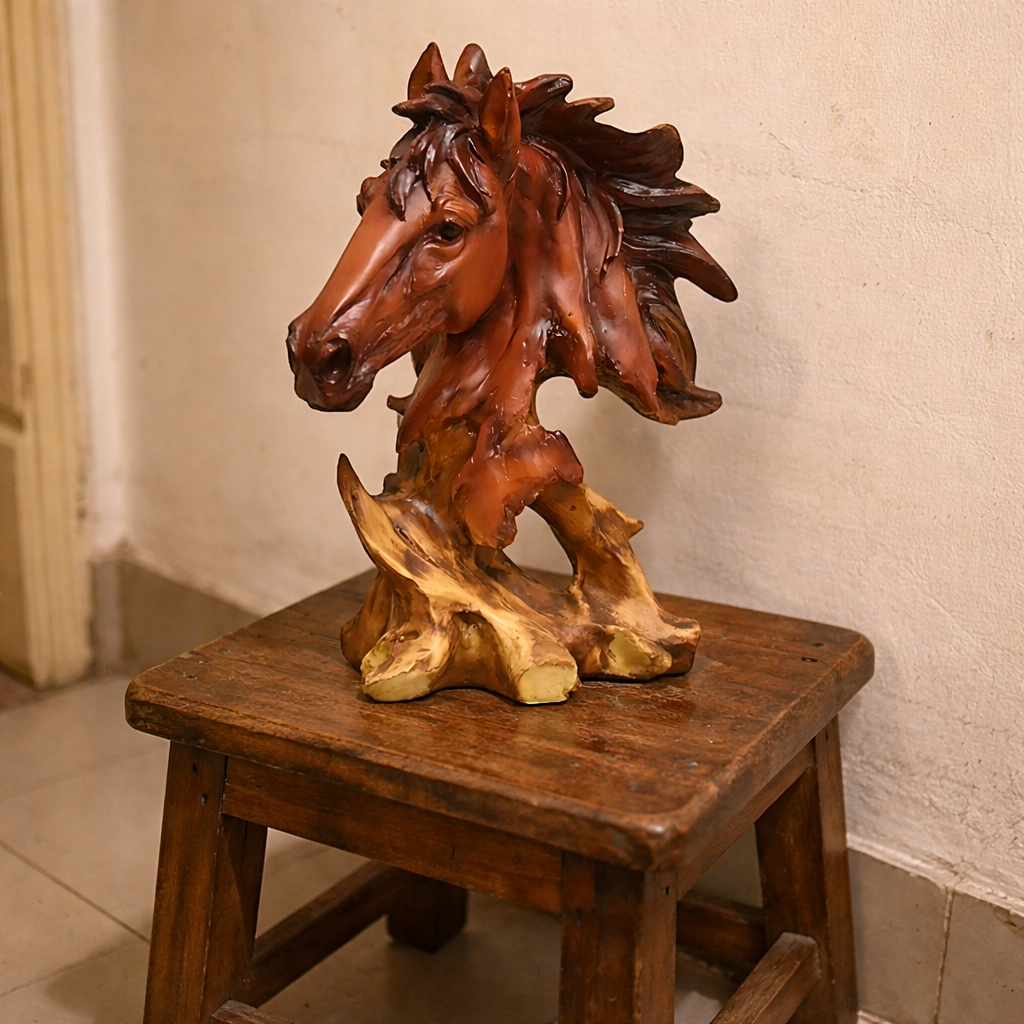
The best statues for home as per Vastu are Ganesha (entrance or north-east), Lakshmi (north or north-east), and Buddha (east-facing). Material matters equally: ceramic and resin statues are preferred over plastic because they are non-reactive and stable in Indian humidity and temperature. Placement direction, figure posture, and material quality together determine whether a statue brings positive energy or creates Vastu dosha.
At Moolwan, we help design-conscious Indian homeowners choose showpieces that honour both Vastu Shastra principles and contemporary home aesthetics — without compromising on quality or going over budget. Every statue in our range is engineered for Indian climate conditions, so you are not just buying a beautiful object; you are buying one that will last.
Why the Right Statue Matters More Than Just Placement
Vastu Shastra is a system of spatial science that links the energy of your home to the objects, materials, and directions within it. A statue is not a passive ornament — its form, material, and facing direction all send specific energetic signals. An incorrectly placed or low-quality statue can neutralise the intended benefit entirely. This is why "which statue" and "where to place it" must be answered together.
Most mass-market statues in India are made with inconsistent clay blends or low-grade resin that react poorly to summer heat, monsoon humidity, and ceiling-fan air circulation. Moolwan's ceramic showpieces use a 92% clay composition that is heat-resistant to 60°C and humidity-tolerant up to 85% RH — both critical thresholds for Indian interiors, especially kitchens and pooja rooms. If your statue is cracking, fading, or sweating in two monsoons, it is not Vastu-neutral; it has already degraded.
Best Vastu Statues for Each Room: A Placement Guide
1. Ganesha — Entrance, Living Room, Main Door
Lord Ganesha is the most universally recommended Vastu statue for Indian homes. The seated Ganesha (Lalitasana pose) with the trunk turned left is considered auspicious for home use. Place it in the north-east corner of the entrance, at eye level or above, facing the interior — never with his back to the main door. Do not place Ganesha in the bedroom or bathroom. A single, non-damaged idol is important; multiple Ganesha statues in the same room are considered Vastu-inauspicious.
2. Lakshmi — Living Room, Pooja Room, North Wall
Goddess Lakshmi statues are best placed on the north or north-east wall of the living room or inside the pooja room on a raised platform. The north direction is associated with wealth and new energy inflow in Vastu. Lakshmi should always face the living space, not a wall. Avoid placing Lakshmi near the shoe rack, bathroom wall, or south corner. A standing Lakshmi on a lotus is preferred over a seated variation for the main home shrine.
3. Buddha — Living Room, East Wall, Meditation Space
A Buddha statue in a calm, meditative pose (Dhyana Mudra) supports peace and mental clarity. Place it on the east wall of the living room or meditation area, facing west toward the family seating area. The laughing Buddha is a separate figure — it belongs near the entrance, facing the main door, to welcome abundance. Do not mix the two or place them in adjacent positions.
4. Horse Statues — Living Room, South Wall
Seven running horses facing inward (not toward a window or exit) represent energy, speed, and financial momentum. Per Vastu, place this on the south wall of the living room or home office. Ensure the horses face east or north — never toward the south or west. A ceramic or resin rendition in earthy or metallic tones works best with modern Indian interiors.
Looking for Vastu-aligned statues that also suit a modern Indian interior? Browse Moolwan's showpiece collection for home décor — curated for Indian spaces, climate-tested, and priced direct from the manufacturer.
Shop Vastu Showpieces at Moolwan →Statue Material Guide: What Works Best in Indian Homes
Material is the most overlooked factor in Vastu statue selection. Indian homes face unique material stress: summer temperatures above 40°C, monsoon humidity between 75–90% RH, and year-round dust. Choose your statue material accordingly.
| Material | Heat Resistance | Humidity Tolerance | Lifespan | Best For | Vastu Standing |
|---|---|---|---|---|---|
| Ceramic (Moolwan) | Up to 60°C | Up to 85% RH | 5+ years | Pooja room, living room showcase | Highly recommended |
| Epoxy Resin (Moolwan) | 15–35°C optimal | Up to 60% RH | 3+ years indoors | Living room shelf, study, office | Recommended (indoors only) |
| Brass / Metal | High | High | 10+ years | Pooja mandir, main shrine | Most auspicious traditionally |
| Plaster of Paris | Low | Very low (cracks) | 1–2 years | Short-term decoration only | Not recommended |
| Plastic / Synthetic | Very low | Low | <1 year aesthetically | Not suitable | Avoid — Vastu neutral at best |
Moolwan's ceramic showpieces are drop-resistant up to 15 cm and available in both matte and glazed finishes — both are easy to clean with a dry cloth, which matters when statues are placed near incense, diyas, or in high-dust rooms.
Size Guide: How Big Should Your Vastu Statue Be?
Vastu Shastra does not prescribe exact centimetre sizes, but the principle of visual proportion is embedded in the tradition: the statue must not dominate the room, nor be so small that it is treated carelessly or overlooked. Here is a practical size guide for Indian home spaces.
| Statue Size | Height Range | Ideal Placement | Room Context |
|---|---|---|---|
| Small | 10–16 cm | Desk, bathroom counter, study shelf | Personal workspace, compact rooms |
| Medium | 16–21 cm | Showcase cabinet, coffee table, mandir shelf | Living room secondary display, pooja unit |
| Large | 25–34 cm | Floor console, focal-point shelf, entrance | Main hall, large living room, entrance foyer |
Moolwan's full showpiece range spans 10–34 cm, weighing between 150 g and 600 g — lightweight enough for standard Indian wall-mounted shelves and showcase units without requiring reinforcement. You can browse Moolwan's modern home décor range to find the right size for your specific space.
What Vastu Says About Broken or Damaged Statues
This is one of the most important and most overlooked Vastu rules: a broken, chipped, or cracked statue must be removed from your home immediately. A damaged idol is considered inauspicious — it is believed to attract negative energy rather than positive. Replace it with an intact piece or immerse it in flowing water before disposal. This is also why material quality matters: a statue that chips, cracks, or fades in two years is not just aesthetically poor — it is a Vastu liability.
All Moolwan ceramic pieces are tested for 15 cm drop resistance because we know how Indian homes actually work: shelves get dusted, objects get accidentally nudged, children and pets are a reality. Durability is not a luxury — it is a Vastu investment.
Statues to Avoid in Indian Homes as per Vastu
- War or battle scenes: Statues depicting conflict or aggressive postures are considered Vastu-negative and should not be placed in living rooms or bedrooms.
- Weeping or sorrowful figures: These are considered emotionally inauspicious and should be avoided in the home entirely.
- Animals with open mouths or aggressive postures: Lion or tiger statues with open jaws facing the interior are considered threatening in Vastu. Calm, resting animal poses are preferable.
- Facing outward toward the main door: Any idol whose back is to the room and face is to the door is considered to be "leaving the home" — not auspicious.
- Damaged or incomplete idols: As noted above, any statue that is chipped, cracked, or missing a limb must be replaced.
For wall-mounted Vastu décor — such as Om symbols, Swastik hangings, or directional metal art — explore Moolwan's home décor hanging items, curated to complement your floor statues with cohesive Vastu-aligned wall energy.
Frequently Asked Questions
Can I keep a Ganesha statue in the bedroom as per Vastu?
No. Vastu Shastra and traditional practice both advise against keeping Ganesha or any deity idol in the bedroom. The bedroom is a space of rest and privacy; deity statues belong in the pooja room, entrance, or living room. If you want to add a spiritual element to the bedroom, opt for a symbolic or abstract showpiece rather than a deity figure.
Which direction should a Lakshmi statue face in the living room?
Lakshmi should face the interior of the room — ideally east or north — and should not have her back to the main entrance. Place her on the north or north-east wall of the living room at eye level or slightly above. She should be on a clean, raised surface, never on the floor or near footwear storage.
Is a resin statue Vastu-acceptable or should I only use brass or ceramic?
High-quality resin — such as Moolwan's 94% purity epoxy resin with 3H hardness — is Vastu-acceptable for interior display in living rooms and study spaces. The key principle is that the material must be durable, non-degrading, and aesthetically complete. Low-grade resin that yellows or cracks within a year is not suitable. Brass remains the gold standard for pooja mandirs; ceramic and quality resin are appropriate for living room and showcase use.
What size statue is right for a small Indian apartment?
For 1BHK and 2BHK Indian apartments, a medium statue (16–21 cm) placed on a showcase shelf or coffee table creates the right visual weight without overwhelming the space. Small statues (10–16 cm) work well on desks, bathroom counters, or as part of a grouped shelf arrangement. Avoid large focal-point statues (25–34 cm) in rooms smaller than 150 sq ft as they can make the space feel crowded rather than elevated.
How do I clean a Vastu statue without damaging it?
Ceramic showpieces can be wiped with a dry or lightly damp cloth — avoid soaking or submerging them. Resin pieces should be cleaned only with a dry cloth and kept away from direct sunlight to prevent yellowing. For statues near incense or diyas, wipe weekly to prevent soot accumulation. Never use chemical sprays on painted or glazed surfaces, as this degrades both the finish and the intent of the piece.
Find Your Vastu Showpiece at Moolwan
Every Moolwan showpiece is manufactured in-house, climate-tested for Indian homes, and priced direct — no middlemen, no markups. Choose from ceramic and resin statues in Vastu-auspicious sizes from 10 to 34 cm.
Shop Vastu Showpieces →


