
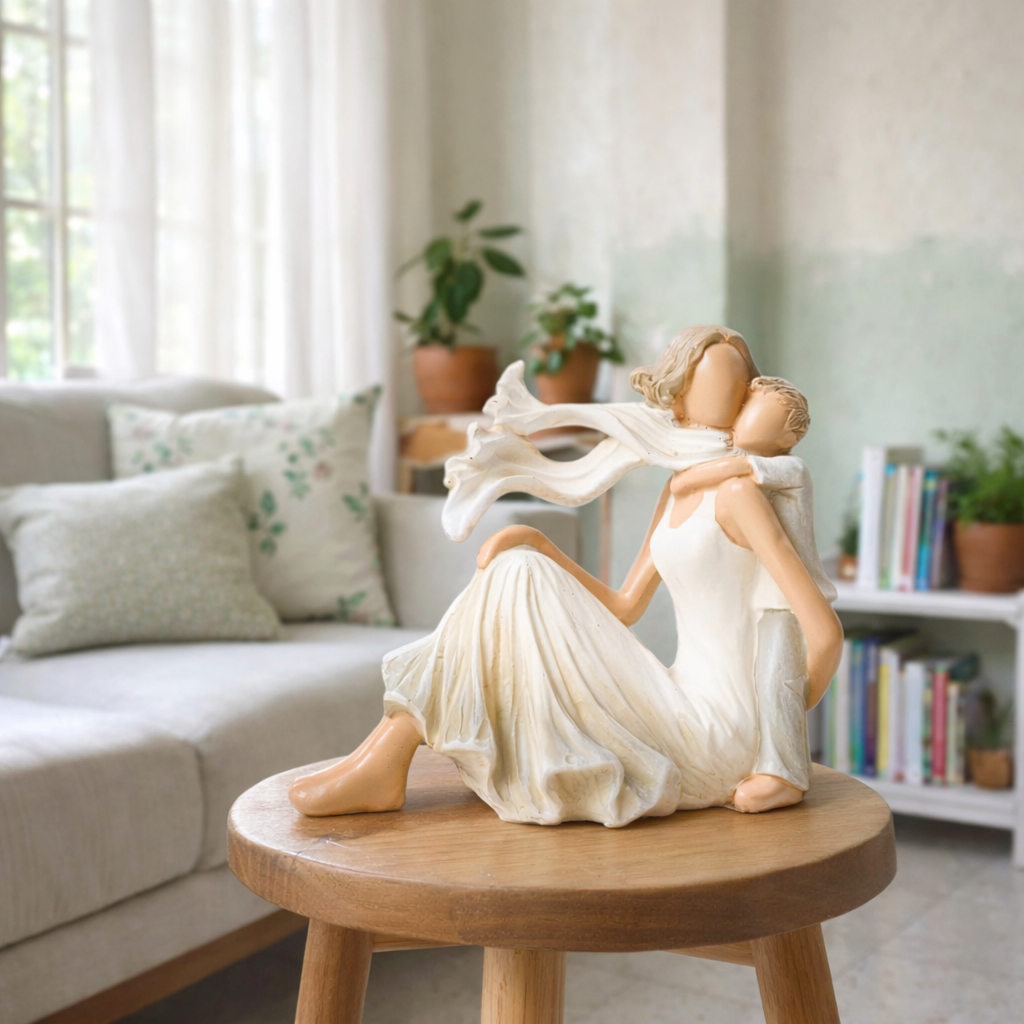
Which statue is best for home decoration?
At Moolwan, we help design-conscious Indian homeowners find statues that are beautiful, climate-engineered, and sized right for actual Indian apartments — not oversized showroom pieces that overwhelm a 10×12 room. This guide gives you a direct, room-by-room answer to which statue works best and why.
What types of statues work best in Indian homes?
Indian home décor sits at the intersection of the spiritual, the aesthetic, and the functional. The best statue for your home depends on three factors: placement room, material durability in your local climate, and cultural resonance. Here are the statue types that consistently perform across Indian homes:
- Ganesha statues: The most universally placed statue in Indian homes — at entrances, on TV units, or in pooja corners. Ceramic Ganesha statues with glazed finishes are easiest to maintain and carry strong Vastu significance.
- Elephant figurines: Associated with prosperity and strength, a pair of elephants near the main door or in the living room is both culturally meaningful and aesthetically neutral enough for modern interiors.
- Abstract human figures: For homeowners who prefer contemporary design, abstract figurines — dancers, meditating forms, couples — add sculptural interest without any specific religious association. These work well in living rooms and bedrooms.
- Bird statues (owl, peacock, crane): Owls signal wisdom, peacocks represent beauty and national pride, cranes evoke calm. These are safe choices for gifting and for spaces where you want a light, non-religious decorative accent.
- Buddha statues: Popular in meditation rooms, bedrooms, and study areas — particularly reclining or meditating Buddhas in matte ceramic finishes. Not limited to Buddhist households; widely used for their calming aesthetic.
Each of these types is available in Moolwan's modern home décor collection, engineered for Indian climate conditions — including heat tolerance up to 60°C for ceramic pieces and humidity tolerance up to 85% RH.
---Which statue material is best for Indian homes?
Material choice is where most buyers go wrong. A beautiful resin statue that warps in a Mumbai monsoon or a ceramic piece that chips at the first table bump is not décor — it is disappointment. Here is a direct comparison of the two most popular statue materials for Indian homes:
| Feature | Ceramic Statues | Resin Statues |
|---|---|---|
| Clay / Material Composition | 92% refined clay | 94% purity epoxy resin |
| Heat Resistance | Up to 60°C | Best at 15–35°C |
| Humidity Tolerance | Up to 85% RH | Up to 60% RH |
| Drop Resistance | 15 cm drop-safe | Moderate (less brittle than ceramic) |
| Surface Detail | Good — traditional forms | Excellent — sharp, fine detail |
| Lifespan (indoor) | 5+ years | 3+ years |
| Scratch Resistance | Glazed: high | 3H pencil hardness |
| Best For | Humid cities, pooja spaces, entryways | Living rooms, bedrooms, air-conditioned spaces |
| Weight | 250g–600g | 150g–400g |
Verdict: If you are in a high-humidity city (Mumbai, Kolkata, Chennai, coastal cities), ceramic is the safer long-term choice. For drier climates (Bangalore, Delhi, Chandigarh) or air-conditioned interiors, resin gives you finer detail at lighter weight.
---Which statue size works for which room?
Sizing is the most overlooked factor when buying decorative statues online. A statue that looks large on a white product background can disappear on a real shelf — and one that looks compact can dominate a small table. At Moolwan, we follow a size-to-space framework calibrated for standard Indian apartment dimensions:
- Small (10–16 cm): Ideal for bathroom counters, study desks, window sills, and bathroom shelves. These create accent moments without competing for attention.
- Medium (16–21 cm): The most versatile range. Works on showcase shelves, coffee tables, entryway consoles, and TV unit surfaces. Visible without being dominant.
- Large (25–34 cm): Designed for focal-point placement — the centre of a display cabinet, a standalone corner pedestal, or the main surface of a dining sideboard. One large statue is enough per zone.
For a standard 3 BHK Indian apartment, a medium statue at the entryway, a small one on the bedroom dresser, and a large statement piece in the living room showcase is a complete and balanced approach. Browse Moolwan's room decoration ideas for placement visuals and style pairings by room type.
---Which statue is best by room?
Living Room
The living room demands statues with visual weight. An elephant pair in glazed ceramic (medium to large, 20–30 cm) on either side of the TV unit is a classic that works across traditional and contemporary interiors. Abstract figurines in matte resin — dancers or contemporary human forms — work well on floating shelves. Avoid anything too small; in a living room, 10 cm statues get lost.
Entryway / Main Door
Ganesha statues are the default choice — and the right one. A ceramic Ganesha in 16–21 cm, placed at eye level or slightly above near the entrance, is both culturally grounded and aesthetically appropriate. Elephants with trunks raised are the runner-up choice. Both carry positive Vastu associations and require minimal styling around them.
Bedroom
The bedroom calls for calm. A meditating Buddha in matte ceramic (small to medium, 12–18 cm), a reclining figurine, or a small bird statue works better here than high-energy pieces like elephants or large dramatic forms. Keep the palette neutral — whites, creams, earthy tones — to match bedroom colour schemes.
Pooja Room or Spiritual Corner
For active pooja spaces, ceramic is strongly preferred over resin due to its humidity tolerance (up to 85% RH) and heat resistance (60°C). Statues of Ganesha, Lakshmi, or Saraswati in 16–21 cm are the most practical for standard pooja unit shelves. Avoid resin near agarbatti or deepak flames.
Explore the full range at Moolwan's home décor items collection — filtered by material, size, and room type to make the decision straightforward.
---Shop Moolwan's ceramic and resin statues — manufacturer-direct pricing, sized for Indian apartments, and engineered to last.
Browse Modern Home Décor Statues →
Frequently Asked Questions
Which god statue is best for the home entrance?
A Ganesha statue is the most widely recommended for Indian home entrances across both Vastu guidelines and design sensibility. A glazed ceramic Ganesha in the 16–21 cm range placed at or slightly above eye level near the main door is the standard recommendation. Elephants with raised trunks are the second most popular choice.
Is ceramic or resin better for statues in Indian homes?
Ceramic is better for humid climates and pooja spaces because it tolerates humidity up to 85% RH and heat up to 60°C. Resin is better for air-conditioned interiors and living rooms where finer surface detail matters. Moolwan's ceramic statues use 92% clay composition with a 5+ year indoor lifespan; resin statues use 94% purity epoxy with 3H pencil hardness scratch resistance.
What size statue should I buy for a living room shelf?
A medium statue (16–21 cm) is the most versatile for living room shelves in standard Indian apartments. For a showcase or display cabinet focal point, go up to the large range (25–34 cm). Anything below 16 cm tends to get visually lost on open living room surfaces.
Can I place an elephant statue at the home entrance?
Yes. A pair of elephants with raised trunks placed at the entrance is one of the most common and Vastu-aligned decorating choices in Indian homes. Ceramic elephant statues in the medium range (16–21 cm) are practical for entryway consoles or side tables due to their drop resistance (15 cm drop-safe) and humidity tolerance.
What is Moolwan's return policy on statues?
Moolwan accepts returns within 24 hours of delivery, provided the item is unused and in original packaging. A 10% restocking fee applies, and refunds are processed within 15 working days. This policy applies to all ceramic and resin statues purchased through the Moolwan website.
Find the right statue for your home — without guessing
Moolwan statues are manufactured in-house, priced direct, and built for Indian climate conditions. No middlemen. No inflated MRPs. Every piece is sized and finished for real Indian apartments.
Shop Statues at Moolwan →


