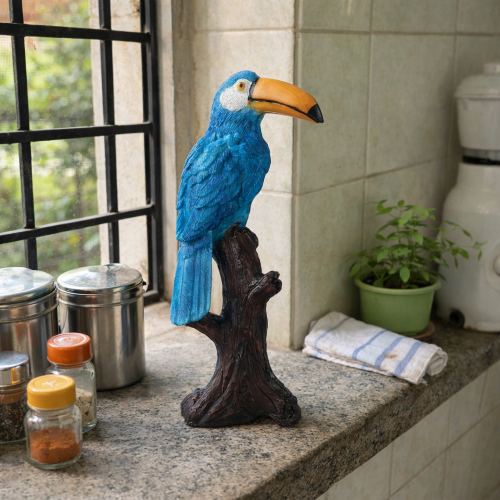
Vastu shastra generally advises against placing deity idols, ancestor photos, or war/aggressive figures in the bedroom, since this room is meant for rest, not worship. Vastu-compatible bedroom decor includes a pair of mandarin ducks (southwest, for marital harmony), rose quartz pieces, or neutral decorative showpieces without religious symbolism, placed away from the direct line of the bed.
We help design-conscious Indian homeowners choose bedroom décor that respects both Vastu principles and modern aesthetics — without turning the room into a shrine or leaving it visually flat. Moolwan is a manufacturer-direct home décor brand, and this guide reflects the placement logic most Vastu consultants recommend for bedrooms specifically, as opposed to living rooms or pooja spaces.
Vastu treats the bedroom as a space governed by rest, privacy, and marital harmony — not devotion. Most Vastu practitioners advise that idols of gods and goddesses, framed images of ancestors, and any statue depicting war, aggression, or sorrow (such as a crying figure or a battle scene) be kept out of the bedroom entirely. The stated reasoning is twofold: worship requires a wakeful, respectful posture that conflicts with a room used for sleep, and certain imagery is believed to carry heavy or restless energy into a space meant for calm.
This is a placement guideline rooted in traditional Vastu shastra, not a claim about religious practice itself. If you already keep a small idol in your bedroom for personal reasons, common advice is to cover or turn it away before sleeping, or better, relocate it to a dedicated pooja corner elsewhere in the home.
For couples specifically, a pair of mandarin ducks — one of the more commonly cited Vastu-friendly bedroom objects — is traditionally placed in the southwest corner of the room to represent partnership and fidelity. Rose quartz stones or hearts are another frequent recommendation, associated with warmth and emotional balance rather than worship. Neutral decorative showpieces — think abstract ceramic forms, nature motifs, or minimal sculptural pieces without religious or violent imagery — are considered safe across most Vastu interpretations, as long as they aren't placed directly facing the bed or above the headboard.
If you'd rather skip statues altogether, Vastu is generally more permissive about wall art in the bedroom than about idols on surfaces, provided the artwork avoids water scenes (linked to emotional instability in some interpretations) and depicts calm, uncluttered imagery. You can browse Moolwan's modern home décor items for pieces sized and finished for Indian bedrooms.
| Category | Vastu Guidance for Bedroom | Better Placement |
|---|---|---|
| Deity idols (Ganesh, Buddha, etc.) | Generally avoid | Pooja room or living room altar |
| Ancestor photographs/statues | Avoid | Hallway or dedicated memorial space |
| War, weapons, or aggressive figures | Avoid | Not recommended in home at all, per most consultants |
| Mandarin duck pair | Recommended for couples | Southwest corner |
| Rose quartz / neutral stone pieces | Considered safe | Bedside table, away from bed's foot |
| Abstract or nature-motif showpieces | Considered safe | Dresser or shelf, not facing the bed directly |
Beyond the Vastu question, most Indian bedrooms have limited surface space — a dresser, a bedside table, maybe a windowsill. Moolwan's showpieces are built in three size bands for exactly this constraint: Small (10–16 cm, 150–250 g) for a nightstand or windowsill, Medium (16–21 cm, 250–400 g) for a dresser top, and Large (25–34 cm, 400–600 g) as a single focal piece on a console. For ceramic pieces specifically, Moolwan uses a 92% clay composition rated to 85% relative humidity and 60°C heat resistance, which matters in bedrooms without regular airflow or in coastal Indian cities. You can explore sizing options in Moolwan's modern showpiece collection — the same size logic applies whether the piece sits in a living room or bedroom.
Looking for a Vastu-friendly showpiece that also fits your bedroom's scale? Moolwan ships pan-India with COD available and free shipping.
Shop Antique & Modern ShowpiecesMany Vastu consultants advise against it, since Buddha idols are considered devotional objects best suited to a living room, entrance, or meditation corner rather than a room used for sleep. If you want the calming aesthetic without the placement conflict, a neutral abstract or nature-themed piece serves the same visual purpose.
Vastu guidance generally avoids positioning any statue or showpiece so it directly faces the bed, particularly the foot of the bed. Southwest is the direction most often cited as favorable for couple-oriented pieces like mandarin ducks.
Not necessarily. The concern is specifically with religious idols, ancestor imagery, and aggressive or sorrowful figures. Neutral decorative showpieces without symbolic weight are widely considered acceptable.
The common recommendation is to relocate it to a dedicated pooja space or living area. If that isn't immediately possible, covering it before sleep is a frequently suggested interim step.
Yes — mirrors facing the bed are a separate but related Vastu caution, generally avoided for similar reasons around disrupted rest. It's worth addressing alongside statue placement when auditing a bedroom.
Reviewed by Ruchi Malhotra, Founder & CEO, Moolwan (Euphorica Ventures Pvt Ltd), Bangalore.
Quick View



