
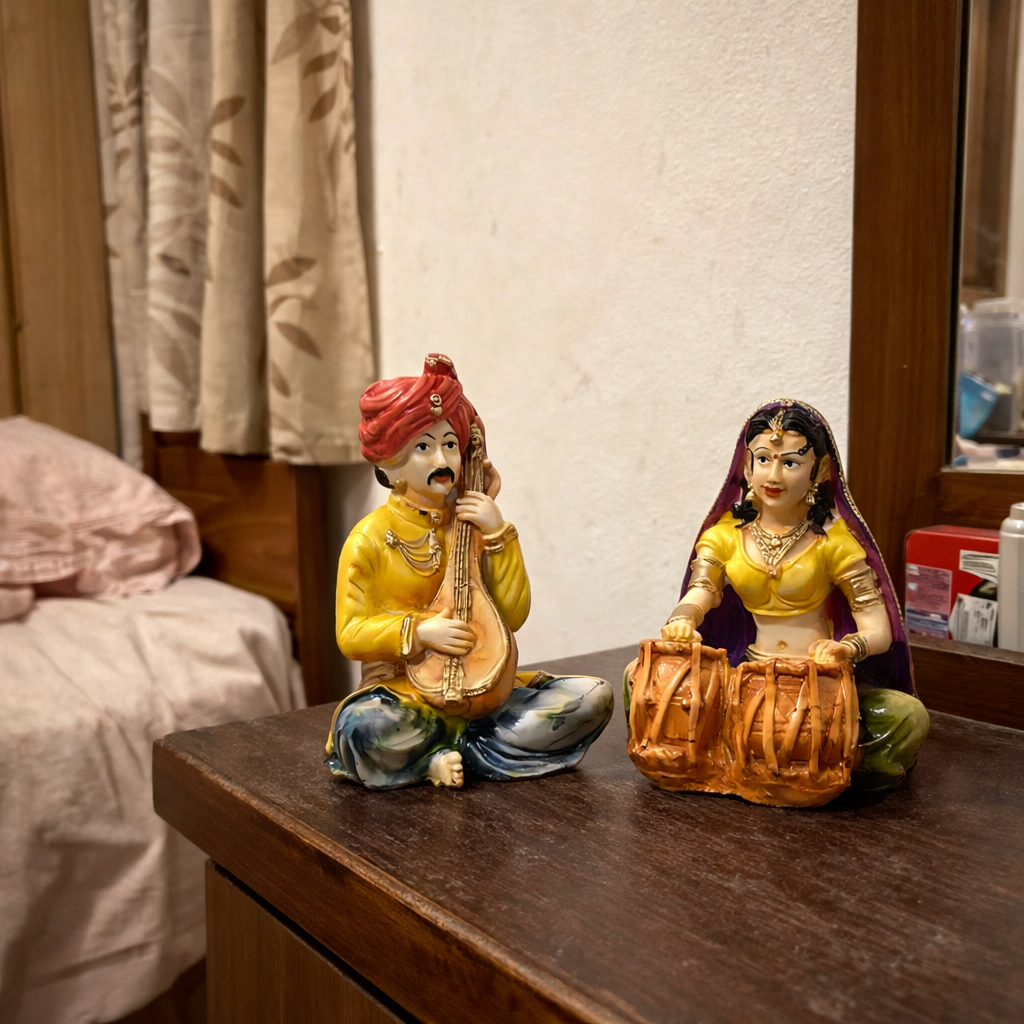
Which statue is lucky for home?
At Moolwan, we help design-conscious Indian homeowners choose decorative statues that are both spiritually meaningful and built to last in Indian climate conditions — without paying a middleman premium. Every statue in our collection is manufactured in-house and engineered for humidity, heat, and daily handling.
The Most Auspicious Statues for Indian Homes — and Where to Place Them
Vastu Shastra and Hindu tradition both offer clear guidance on which statues attract positive energy. The four most widely trusted choices in Indian homes are Ganesha, Lakshmi, Buddha, and Saraswati. Each deity carries a specific energy, and each works best in a specific zone of the home.
- Ganesha: Place at the main entrance, facing inward. Represents the removal of obstacles and the beginning of auspicious energy entering the home. Prefer a seated Ganesha with the trunk curving to the left for home use.
- Lakshmi: Place in the north or northeast corner of the living room or pooja space. Represents wealth, abundance, and domestic prosperity. Avoid placing near bathrooms or under staircases.
- Buddha: Place in the living room, entrance hall, or meditation corner. Represents stillness, clarity, and positive energy. A laughing Buddha facing the main door is believed to attract good fortune.
- Saraswati: Place in the study room, home office, or children's room. Represents knowledge, creativity, and focused learning energy.
If you are setting up a drawing room or entrance display, browse Moolwan's curated statue collection — each piece is available in sizes calibrated for Indian shelves, mantle displays, and console tables.
Lucky Statue Placement Guide: A Quick-Reference Table
| Statue | What It Attracts | Best Room | Best Direction | Avoid |
|---|---|---|---|---|
| Ganesha (seated, left trunk) | Obstacle removal, new beginnings | Main entrance, pooja room | Facing inward (east or north) | Bedroom, bathroom |
| Lakshmi (standing or seated) | Wealth, abundance, domestic peace | Living room, pooja space | North or northeast | Under staircase, south wall |
| Buddha (laughing or meditating) | Positive energy, calm, fortune | Living room, entrance hall | Facing the main door | Bedroom (meditating), floor placement |
| Saraswati | Knowledge, creativity, learning | Study, children's room, office | East or northeast | Kitchen, bathroom |
| Nataraj (dancing Shiva) | Transformation, energy, artistic flow | Living room, studio | South (controlled energy) | Bedroom, entrance (overpowering) |
For living room and drawing room display setups, explore Moolwan's decorative items for drawing rooms — curated for Indian apartment spaces with size, colour, and placement logic already built in.
Does the Material of a Lucky Statue Matter?
Yes — and this is where most buyers make an expensive mistake. A statue that looks beautiful in a showroom can crack, discolour, or degrade within months if the material is not suited to Indian indoor conditions (humidity up to 85% RH in monsoons, temperatures that spike to 40°C+ in summer).
Moolwan manufactures its ceramic statues with a 92% clay composition, heat resistance to 60°C, and humidity tolerance up to 85% RH — making them genuinely built for Indian monsoon interiors. Our resin statues use 94% purity epoxy resin with a 3H pencil hardness scratch-resistant surface and a rated indoor lifespan of 3+ years. These are not mass-produced import pieces — they are engineered for the specific conditions of Indian homes.
Weight is also a practical factor. Our statues range from 150g to 600g, making them safe for Indian shelves, console tables, and floating wall niches without structural concern.
Size Matters: Choosing the Right Scale for Your Space
A statue that is too small reads as clutter. One that is too large overwhelms a shelf. Here is how to match statue size to placement:
- Small (10–16 cm): Ideal for office desks, bathroom shelves, or compact pooja shelves. Works as an accent alongside other objects.
- Medium (16–21 cm): The sweet spot for showcase displays, coffee tables, and console tables. Commands attention without dominating the space.
- Large (25–34 cm): Designed as a room focal point — living room mantle, entrance console, or standalone display pedestal.
If you are combining statue displays with other decorative accents, see Moolwan's modern home décor collection for complementary pieces sized and styled specifically for Indian living rooms and apartments.
Ready to find your lucky statue?
Every Moolwan statue is manufactured in-house, climate-tested for Indian homes, and shipped directly to your door — no middleman markup.
Shop Moolwan's Lucky Statue Collection →Common Placement Mistakes That Reduce Auspiciousness
Even the right statue in the wrong spot can neutralise its symbolic benefit. These are the most frequent placement errors in Indian homes:
- Placing statues directly on the floor — all sacred statues should be elevated on a shelf, platform, or plinth. Floor placement is considered disrespectful in Vastu and most Hindu traditions.
- Facing a statue toward the wall or into a corner — statues placed so their face meets a wall block energy rather than circulating it through the room.
- Placing Ganesha or Lakshmi in bathrooms or near toilets — even a small statue on a bathroom shelf is considered inauspicious in Vastu.
- Mixing conflicting energies in one display — pairing a Nataraj (transformation/destruction energy) with Lakshmi (preservation/abundance) in the same display cluster is considered contradictory in traditional placement.
- Using broken or chipped statues — a damaged murti is believed to carry stagnant or fractured energy. Replace, do not repair and retain.
Content authored by the Moolwan Design Concept Team, under the direction of Ruchi Malhotra, Founder & CEO, Moolwan (Euphorica Ventures Pvt Ltd), Bangalore.
Frequently Asked Questions
Which direction should a Ganesha statue face at home?
A Ganesha statue placed at the main entrance should face inward — ideally toward the east or north — so that positive energy enters the home rather than faces outward. A seated Ganesha with the trunk curving to the left is the preferred form for domestic spaces, as the right-trunk variant is associated with more intense, ascetic energy and is typically reserved for temple installations.
Can I keep a Buddha statue at home if I am Hindu?
Yes. A laughing Buddha or meditating Buddha statue is widely kept in Hindu, Jain, and secular Indian homes as a symbol of positive energy, calm, and material good fortune rather than as a strictly religious object. It is placed in the living room or entrance hall — not in a pooja room alongside Hindu deities — to maintain respectful distinction between traditions.
Is a Lakshmi statue auspicious without a Ganesha?
Lakshmi statues are considered fully auspicious on their own for home display and are commonly kept in the north or northeast of the living room or pooja space. The pairing of Lakshmi and Ganesha is a traditional convention for festival-specific worship, but for everyday home décor and Vastu benefit, either deity can stand alone.
How do I clean a ceramic or resin lucky statue at home?
Moolwan's ceramic statues (92% clay composition, matte or glazed finish) can be wiped with a dry or very slightly damp cloth. Avoid submerging in water or using liquid cleaners. Resin statues (94% purity epoxy) have a scratch-resistant 3H pencil hardness surface — clean with a dry microfibre cloth. Neither material requires chemical polishing.
What is the return policy if a statue arrives damaged?
Moolwan accepts returns within 24 hours of delivery, provided the item is unused and in its original packaging. A 10% restocking fee applies. Refunds are processed within 15 working days. Photograph any damage at the time of unboxing and contact Moolwan support immediately — damage claims raised after 24 hours cannot be processed.
Find the right lucky statue for your home — manufactured in India, built for India.
Trusted by 3,000+ customers. Free shipping. COD available.
Browse Lucky Statues Shop Drawing Room Décor


