
Zen-tastic Framed Buddha Wall Art in Multi-Frame Magic
You may also like

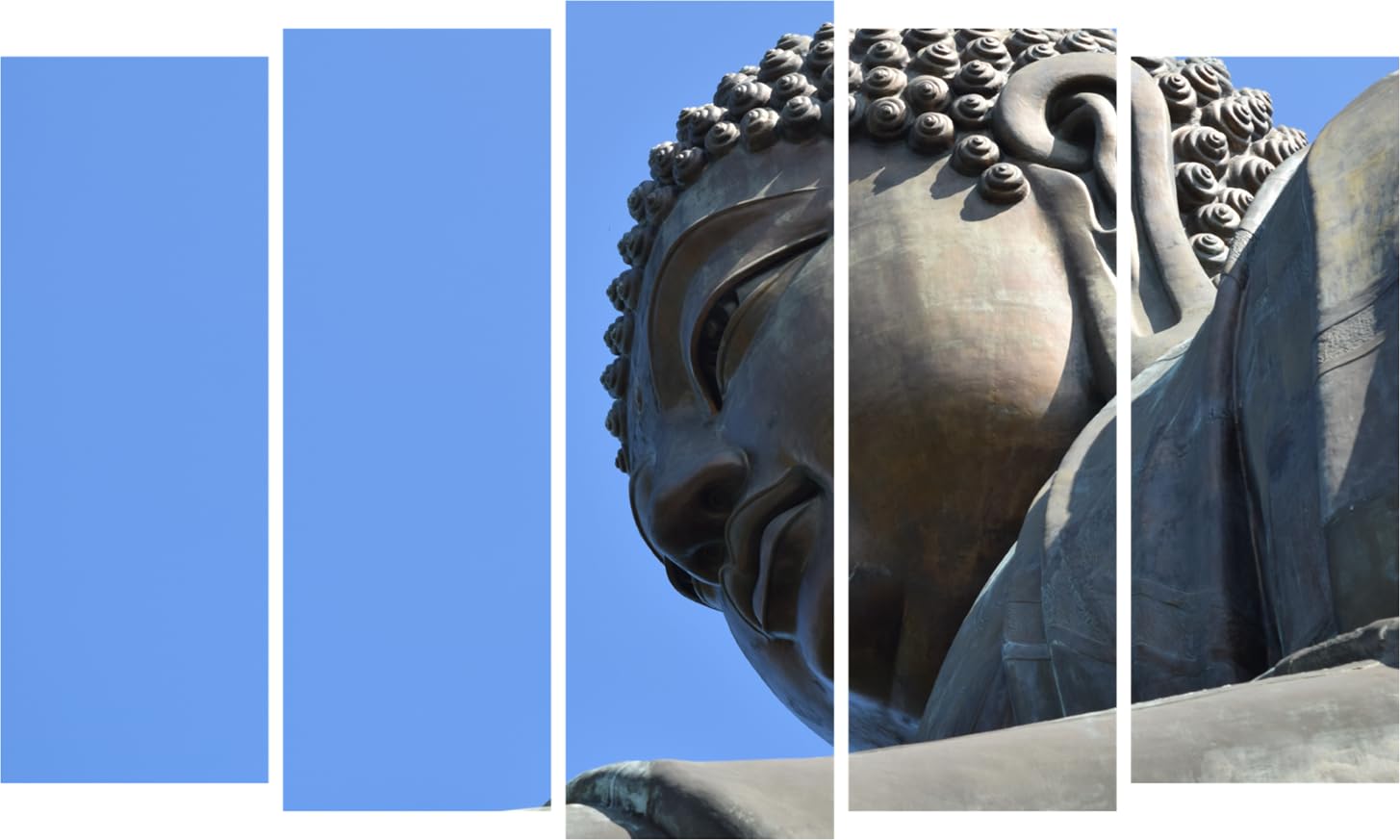
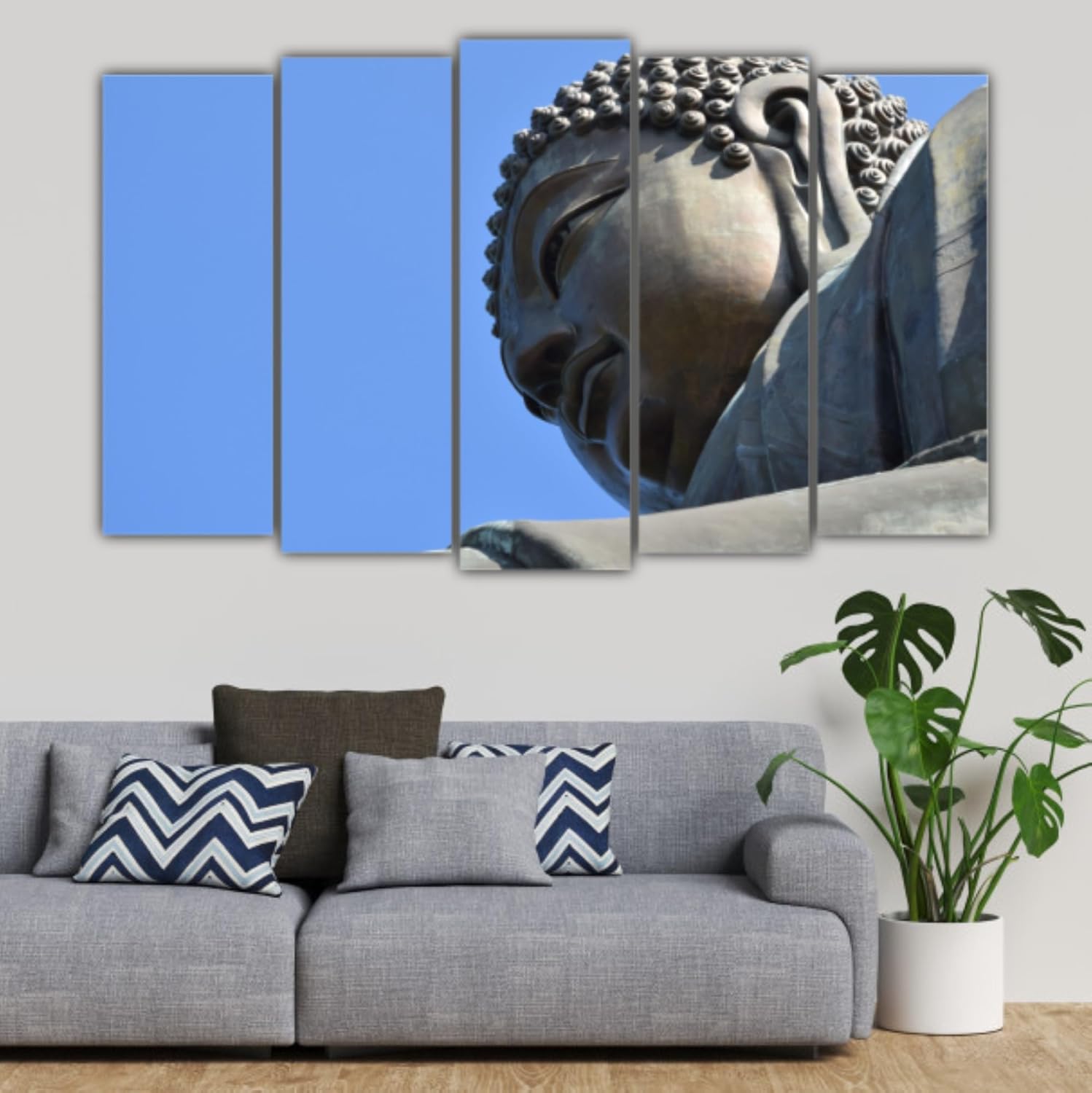
Moolwan 5-Panel Buddha Canvas Wall Art Painting (127x76cm) - Multi-Frame Spiritual Art
Three weekends of browsing. Twelve saved items. Eight open tabs. And you're still here because every time you get close to buying, the same question stops you: will this Buddha canvas look proportional above your sofa, or will it get lost on that 12-foot wall? You're not indecisive—you're careful. Because once this is on your living room wall, you'll see it daily. It needs to be right.
This 127cm Buddha canvas is engineered for exactly that scenario. On a standard 12-foot (360cm) wall, it covers 35% of the width—leaving 116cm breathing space on each side. That's the proportion interior designers call "balanced focal point." Not too small that it looks like an afterthought. Not so large that it overwhelms. Your wall probably has a 6-8 foot sofa centered underneath, and this canvas sits comfortably above it without crowding the edges or floating awkwardly.
The bronze Buddha tones work specifically with Indian home palettes. Your walls are probably cream, off-white, or that builder-grade peach. The metallic bronze creates warm contrast without clashing, while the blue sky backdrop adds depth without competing with your existing furniture. If you have wooden coffee tables or pooja shelves—common in most Indian homes—the bronze tones harmonize naturally.
Why 127cm Works on 12-Foot Walls (and What Happens If You Go Smaller or Bigger)
Let's do the actual math you've been trying to visualize. A 12-foot wall is 360cm wide. This 127cm canvas takes up exactly 35% of that width. The remaining 233cm is split: 116cm on the left, 116cm on the right. That's nearly 4 feet of empty space flanking the canvas—enough to let it breathe, not enough to make it look lonely.
If you go smaller to 100cm (like many alternatives you've probably seen), you drop to 28% coverage. That extra 27cm of wall space (13.5cm per side) might sound minor, but visually? The canvas starts looking undersized, especially if your sofa is 7-8 feet wide. Your eye expects something substantial above furniture that large.
If you go bigger to 150cm, you jump to 42% coverage. Now you're only leaving 105cm per side—less than 3.5 feet. On paper, it sounds fine. In practice, with windows, light switches, or adjacent furniture, that margin disappears fast. You risk the canvas feeling cramped, particularly if your room is the standard 12x14 feet with furniture on multiple walls.
The 127cm size hits the proportional sweet spot for most Indian living rooms: large enough to anchor the space, small enough to coexist with other elements. And at 76cm height, it fits comfortably in the 8-10 foot ceiling standard without requiring awkward high placement.
The Color Science: How Bronze and Blue Look Against Cream Walls
You've seen the product photos. Bronze Buddha, blue sky, perfectly lit. But you need to know what this looks like in your actual living room, with your tube lights and morning sunlight.
The bronze tones in this canvas have a matte metallic finish—not shiny like copper cookware, but subtly reflective. Against cream or off-white walls (which reflect 70-80% of light), the bronze reads as warm brown with golden undertones during daytime. It doesn't pop dramatically—it integrates. That's intentional. Spiritual art works best when it feels present but not aggressive.
The blue sky backdrop provides visual depth. Blue is a receding color—it makes the canvas feel deeper, like there's dimension beyond the Buddha figure. Against typical Indian wall colors (cream, light yellow, builder's peach), blue creates contrast without temperature clash. It's cool enough to balance the warm bronze, warm enough (sky blue, not electric blue) to coexist with warm-toned furniture.
If you have brown or beige sofas (most common in Indian homes), the bronze Buddha creates tonal harmony—same color family, different saturation. If you have wooden furniture with honey or walnut finishes, the bronze echoes those natural wood tones. The multicolor approach here means it adapts to varied decor without demanding a complete room redesign.
Evening lighting changes the equation. Under warm LED bulbs (2700-3000K, typical in Indian homes), the bronze deepens slightly, the blue softens. The canvas becomes more meditative—appropriate for spiritual art. Under harsh white tube lights (which many older homes still have), colors stay truer to what you see in product photos. The eco-solvent inks maintain color accuracy across lighting conditions better than cheaper poster prints.
Rental-Friendly Mounting: How to Hang Without Losing Your Deposit
This weighs 3 kilograms across 5 panels. That's about 600 grams per panel—lighter than a textbook. You're not drilling into concrete or worrying about load-bearing walls. Standard picture hooks (the kind rated for 2kg) handle this easily.
Most rental agreements prohibit large holes or wall damage. Here's what works: adhesive picture hooks rated for 3kg (brands like 3M Command make versions specifically for Indian walls). Each panel gets two hooks. Total wall contact: 10 small adhesive strips. When you move, they peel off cleanly—no paint damage, no plaster chips, no deposit deductions.
If you're in an older building where walls are textured or slightly damp (common during monsoons with 70-85% humidity), mechanical hooks work better. Use thin steel nails (1.5mm diameter) angled slightly upward. The holes they leave are smaller than a pencil tip—easily filled with toothpaste or wall putty before final inspection.
The splash-resistant coating means you can hang this in semi-open areas like lobbies or near balcony doors without moisture damage. The 340 GSM canvas has moisture-resistant treatment specifically for India's monsoon climate. You're not risking warp or mold like you would with uncoated canvas or paper prints.
Installation takes 15-20 minutes even if you've never hung wall art before. The 5-panel layout comes with alignment marks. You hang the center panel first (using a bubble level app on your phone), then work outward. Each panel has pre-installed hanging hardware—no assembly required.
How This Compares to Other Sizes You've Been Considering
You've probably looked at 100cm canvases (₹2,496) and maybe 150cm versions (₹3,296). Here's the honest trade-off.
The 100cm version costs ₹300 less and is easier to ship (lower dimensional weight). But at 28% wall coverage on a 12-foot wall, it reads visually small—especially above a 7-8 foot sofa. You gain ₹300, you lose presence. If your living room is compact (10x12 feet or smaller), the 100cm might be proportionally better. But for standard 12x14 foot rooms, it undershoots.
The 150cm version gives you 42% coverage—definitely a statement piece. It costs ₹500 more, and here's what that extra investment buys: 23cm more canvas (11.5cm per side). Is that worth ₹500? Depends on your wall. If you have a clear 12-foot wall with no adjacent windows or doors, the 150cm fills space beautifully. If you have interruptions—a light switch at 5 feet, a doorway at 10 feet—the 127cm size navigates those obstacles better.
Most buyers land on 127cm because it's the "safe bold" choice. Bold enough to make impact, safe enough to fit varied layouts. And at ₹2,796, it's positioned exactly mid-range for premium canvas art—not cheap marketplace prints (₹800-1,200, which use thin canvas and fade within months), not luxury gallery pieces (₹5,000+, which often just mean thicker frames).
The 5-panel design here also matters. Single-panel canvas at this size (127cm) would look flat. The multi-panel construction creates dimensional depth—each panel is slightly offset, catching light differently throughout the day. You get visual interest without needing multiple separate artworks.
What This Will Look Like in Your Living Room (Not Just Online Photos)
Product photos are shot in controlled lighting with neutral backgrounds. Your living room has windows, furniture shadows, and varying light throughout the day. Here's what changes.
Morning sunlight (6-10 AM) through windows makes the blue sky backdrop glow—the canvas appears lighter, more vibrant. The bronze Buddha takes on golden highlights where light hits directly. This is when the art looks closest to product photos, but slightly brighter.
Afternoon indirect light (11 AM-4 PM) when curtains are partially drawn: colors appear truest to what you see online. The bronze reads as warm brown, the blue stays medium-toned. This is the baseline appearance.
Evening artificial light (LED bulbs at 2700-3000K): the bronze deepens into richer brown, the blue softens toward muted navy. The canvas becomes more subdued—which actually enhances the meditative quality of Buddha imagery. It's not a negative shift, just different from daytime.
Viewing distance matters. From your sofa (8-10 feet away), you see the complete composition—Buddha's serene face, the 5-panel flow, the balanced negative space. From closer (3-4 feet), you notice the canvas texture, the slight depth variation between panels. Both perspectives work. The art is designed for primary viewing from furniture distance, but it holds detail for close inspection.
The splash-resistant coating gives a very subtle matte sheen—not glossy like laminated posters, but not completely flat like uncoated fabric. Under direct light (if you have spotlights or wall washers), there's minimal glare. Under ambient ceiling lights, the surface stays non-reflective.
If your walls have texture (many Indian homes have light stippling or "luxury texture" finishes), the canvas won't sit completely flush. There's 0.6cm depth to the frame, so it projects slightly—this is normal and actually helps the art stand out from the wall plane. It doesn't look like a sticker; it has physical presence.
One realistic expectation: this is canvas print, not hand-painted original. Up close, you can see the digital print dots if you look for them. From normal viewing distance (6+ feet), the image appears continuous. This is standard for all canvas wall art in the ₹2,000-4,000 range. Hand-painted versions start around ₹8,000 and take weeks for custom production.
Quick Specifications
- Dimensions: 127cm (W) × 76cm (H) × 0.6cm (D)
- Panel Configuration: 5-panel multi-frame design
- Weight: 3000 grams (3kg total, ~600g per panel)
- Canvas Material: 340 GSM cotton, moisture-resistant coating
- Frame: 1.5" kiln-dried pinewood (12% moisture content)
- Inks: Eco-solvent, UV-resistant for color longevity
- Surface Finish: Splash-resistant, semi-matte
- Color Palette: Bronze/metallic Buddha, blue sky backdrop
- Subject: Buddha in meditation (spiritual/contemporary art)
- Mounting: Pre-installed hanging hardware, rental-friendly
- Price: ₹2,796
- Delivery: 5-6 days metro cities, 6-8 days tier-2/3 cities
- Brand: Moolwan