
5 Dining Room Décor Styles Trending in Indian Homes This Year
The Short Answer
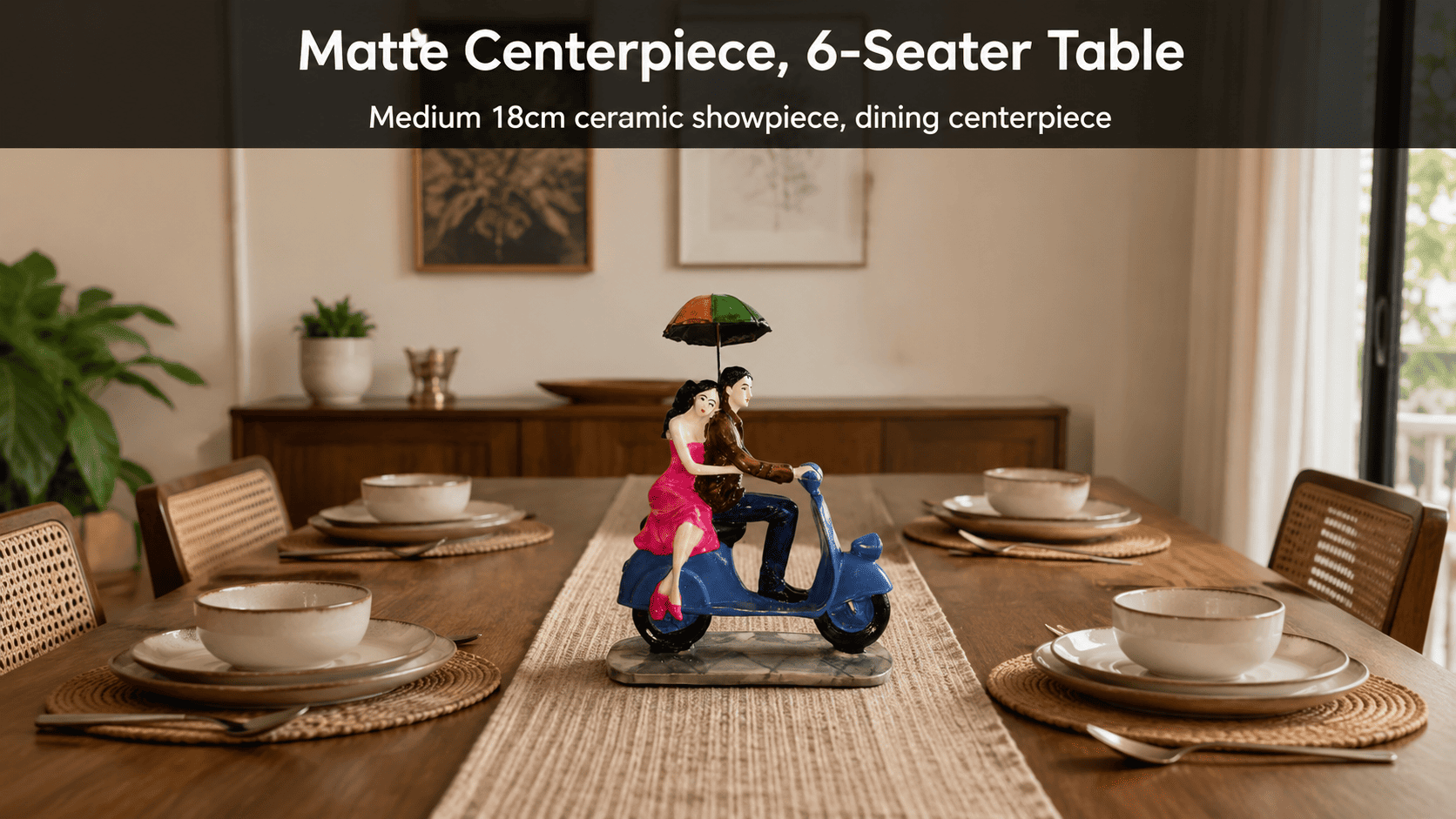
Matte ceramic centerpieces, warm-earth palettes, and low-profile console clusters are leading dining room décor this year because Indian dining tables average 90–100 cm in width, leaving little clearance for tall or glossy pieces. Moolwan's Medium (16–21 cm) matte ceramic collection is sized specifically for this footprint.
Indian dining tables in apartment layouts under 1,200 sq ft typically seat four to six and measure between 75 cm and 100 cm across, which limits centerpiece height to roughly a third of the table's shortest dimension before sightlines across the table are blocked. Moolwan helps design-conscious Indian homeowners style dining spaces that feel curated rather than cluttered, using pieces engineered to these exact table proportions rather than décor scaled for larger Western dining formats.
Why matte finishes are replacing glossy centerpieces this year
Matte ceramic and resin finishes are overtaking glossy centerpieces because dining tables sit directly under overhead lighting for hours each evening, and glossy surfaces bounce that light back at eye level, creating glare that competes with tableware. Matte surfaces diffuse the same light across a wider angle, keeping the piece visible without becoming a distraction during meals.
This shift also holds up better over time. Moolwan's ceramic collection is built to a 92% clay composition with a 5+ year lifespan and drop-tested resilience to 15 cm falls, which matters on a dining table where a piece gets nudged during serving far more often than décor placed on a shelf.
Which centerpiece sizes actually work on Indian dining tables
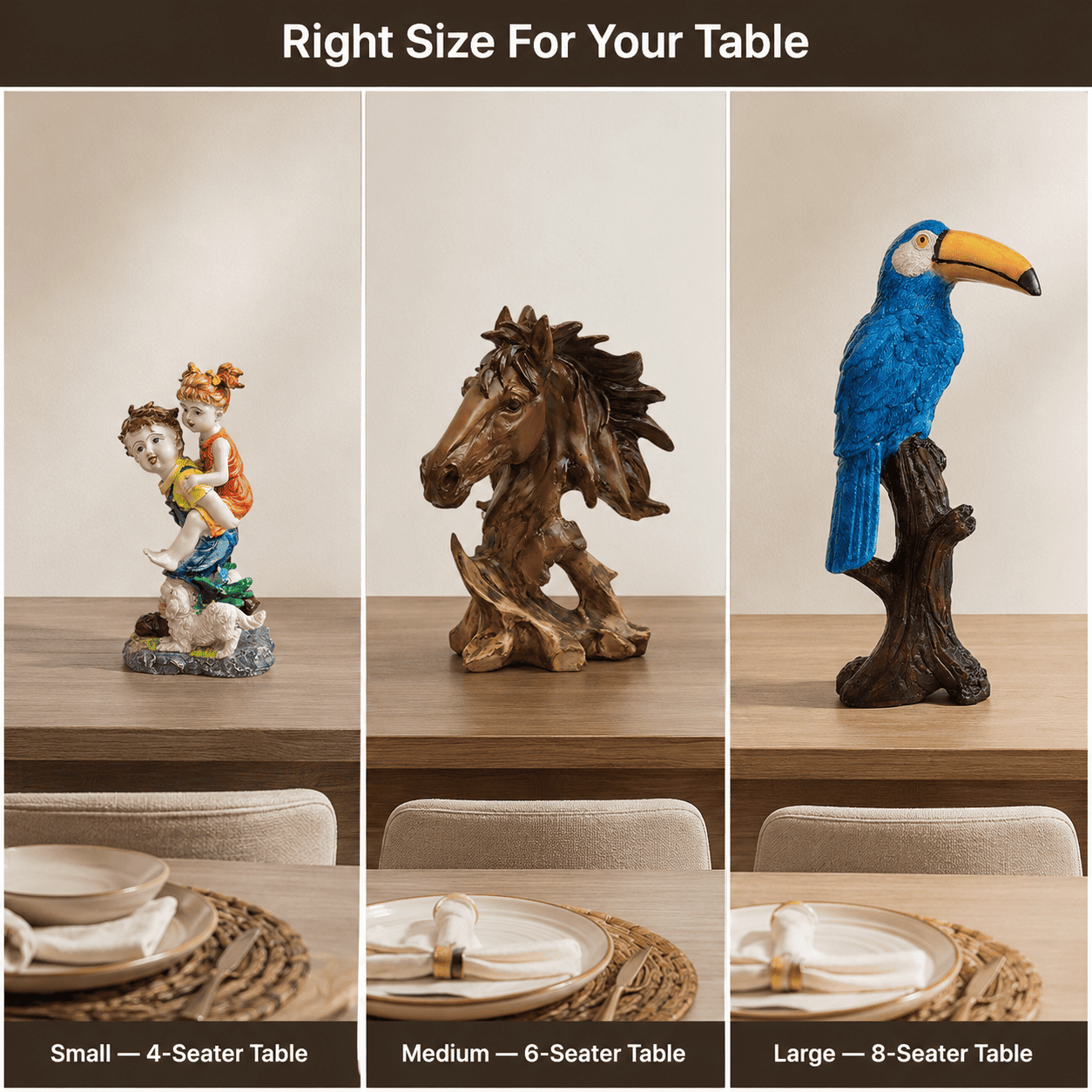
The right centerpiece height depends on table width, not personal preference. On a 4-seater table under 90 cm wide, anything over 16 cm starts to block eye contact between seated guests, which is why Small (10–16 cm) pieces suit compact tables while 6-seater and 8-seater tables can carry Medium (16–21 cm) to Large (25–34 cm) pieces without disrupting sightlines.
Weight matters too. A centerpiece under 250 g shifts easily when a table is bumped, while Moolwan's Medium and Large ceramic and resin pieces are weighted between 250 g and 600 g specifically to stay stable through everyday dining use.
| Table Length | Target Surface | Surface Width | Recommended Décor Height |
|---|---|---|---|
| 4-seater (under 150 cm) | Sideboard / console | Under 40 cm | Small 10–16 cm |
| 6-seater (150–180 cm) | Dining table centerpiece | 90–100 cm | Medium 16–21 cm |
| 8-seater (180 cm+) | Dining table, dual placement | 100 cm+ | Large 25–34 cm |
Because table shape, seating count, and lighting height all shift the ideal centerpiece size, browse the full size and finish selection in Moolwan's modern home décor collection to match a piece to your own table dimensions.
Design Rule
Dining centerpieces should follow Moolwan's 1/3 Centerpiece Rule: a piece's height should not exceed one-third of the table's shortest dimension, preserving clear sightlines across the table while still giving the surface a visual anchor.
How console and sideboard styling is trending alongside the table itself
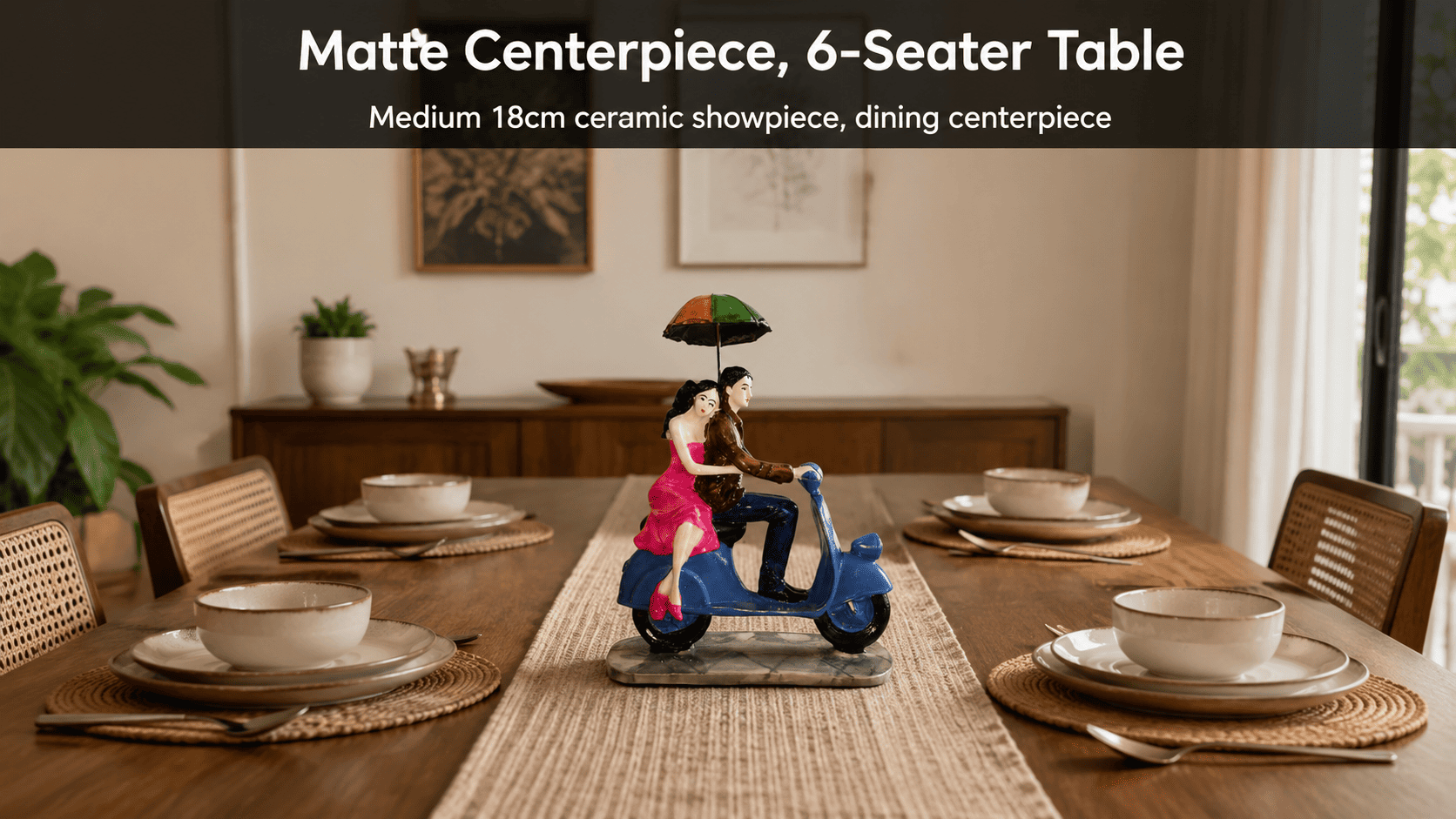
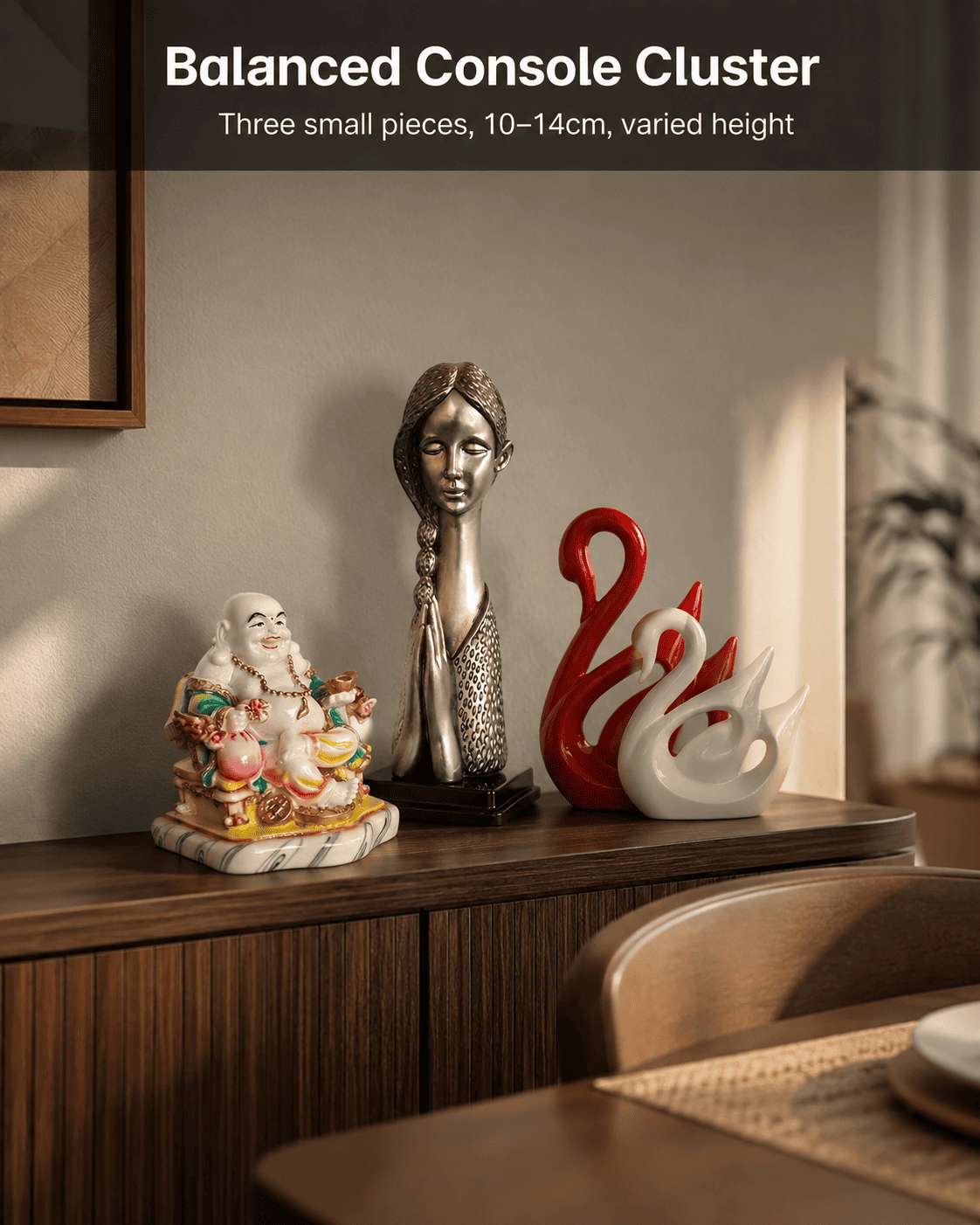
Dining rooms this year are being styled beyond the table, with consoles and sideboards carrying their own smaller compositions. Because sideboard surfaces in Indian apartments typically run under 40 cm deep, pieces in that zone are capped at Small (10–16 cm) so nothing overhangs the edge when doors or drawers are opened.
Clustering three small pieces of varying height on a console reads as intentional, whereas a single mismatched piece looks like an afterthought — grouping distributes visual weight evenly across the surface instead of concentrating it in one spot.
Want a centerpiece sized correctly for your table on the first try? Shop the full Moolwan modern home décor collection now.
Which palettes are dominating dining spaces this year
Warm-earth and muted neutral palettes are replacing high-contrast dining décor because dining rooms in Indian apartments are frequently open to the kitchen and living area, and a palette that clashes with adjoining rooms breaks the sense of a continuous space. Warm earth tones sit close enough to common Indian wall colours — greige, warm white, terracotta — to read as coordinated rather than themed.
This also protects the investment over time. Because a strong seasonal palette dates faster than a neutral one, choosing warm-earth or muted tones now avoids the cost of re-styling the dining space every year or two.
Frequently Asked Questions
What size centerpiece is right for a small Indian dining table?
For tables under 90 cm wide, a Small (10–16 cm) piece is correct because anything taller starts to block sightlines between guests seated across from each other. Moolwan's Small ceramic pieces are sized to this exact range for compact 4-seater tables.
Are glossy finishes out for dining room décor this year?
Glossy finishes aren't gone, but matte is trending ahead of them for centerpieces specifically because overhead dining lighting reflects directly off glossy surfaces at eye level, while matte finishes scatter that light and stay visually calm during meals.
Can the same décor piece work on both the dining table and a sideboard?
Only if it's sized for the smaller of the two surfaces. Sideboards are typically under 40 cm deep, so a piece under 16 cm can move between both surfaces, whereas a Large piece meant for a wide dining table will overhang a narrower sideboard.
How often should dining room décor be refreshed?
Because Moolwan's ceramic pieces carry a 5+ year lifespan and resin pieces a 3+ year lifespan, there's no durability reason to refresh often — most refreshes happen for palette or trend reasons rather than wear, which is why choosing a neutral base palette now extends the piece's relevance.
Ready to bring home a dining centerpiece sized for your actual table? Choose from Moolwan's climate-rated, manufacturer-direct pieces in the modern home décor collection — or if you're styling beyond the dining room, explore the broader home décor range or the unique décor accents collection for adjoining spaces.


