
Home Decor Items That Add the Most Value When Staging a House to Sell
The Short Answer
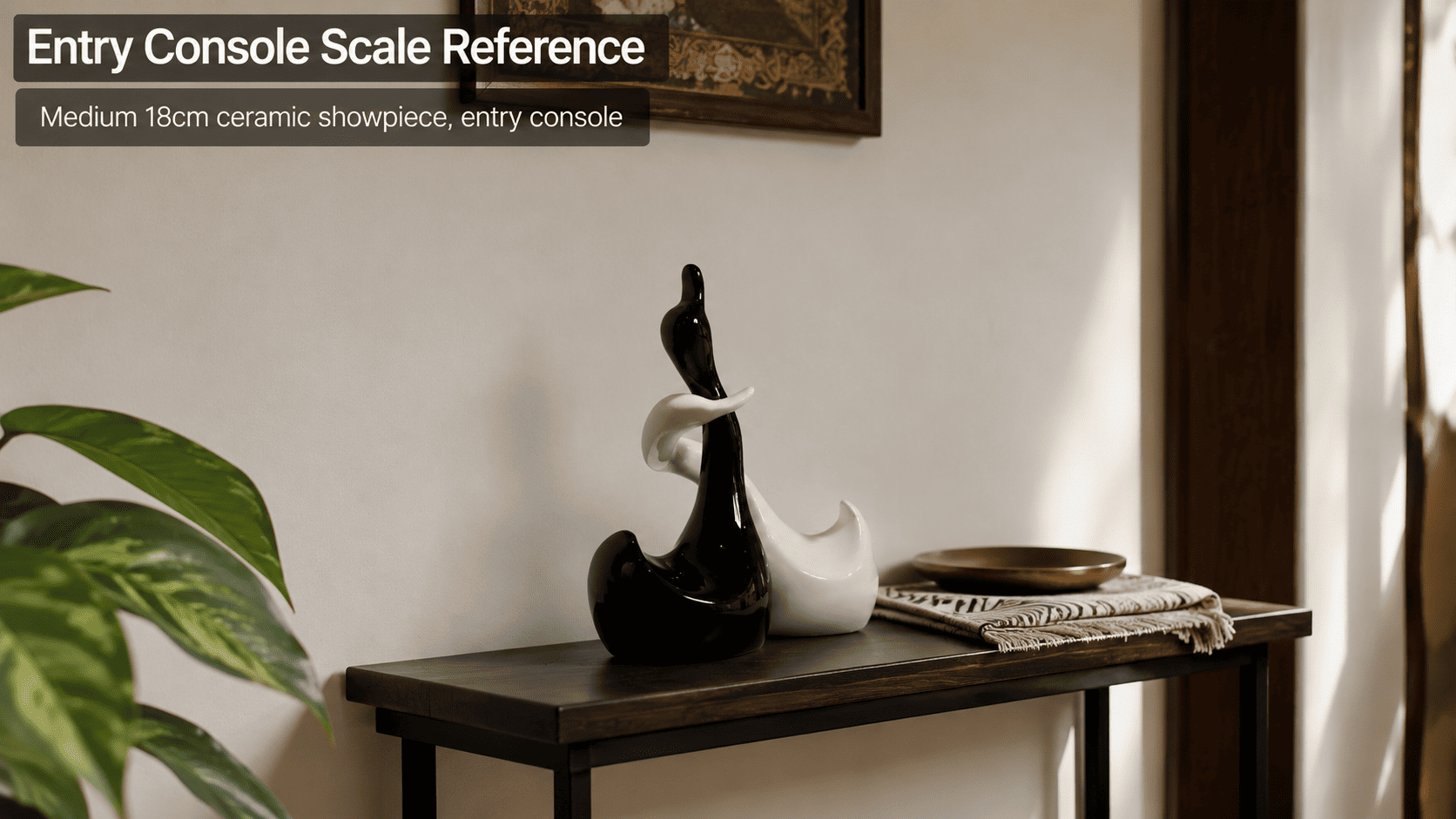
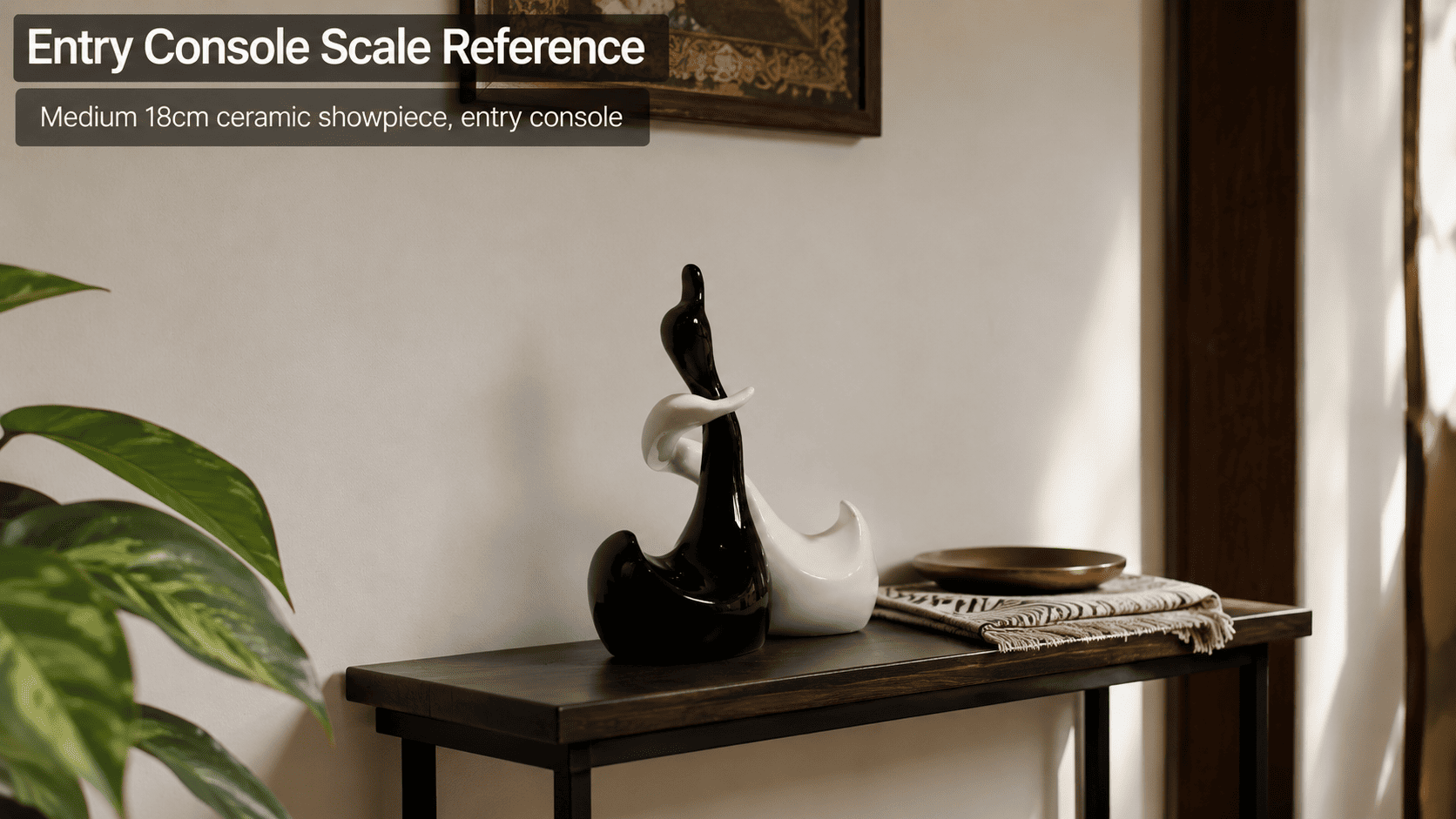
The décor pieces that add the most resale value are matte ceramic and resin showpieces sized 16–21cm placed on coffee tables and entry consoles, because neutral mid-sized pieces read as staged focal points without personalizing the room. Moolwan's modern home décor collection is engineered to this exact staging-friendly scale, finish, and palette range.
Real estate agents across Indian metros report that professionally staged homes sell faster than vacant or over-personalized ones, largely because neutral, curated décor lets prospective buyers picture their own belongings in the space instead of the seller's. Moolwan helps design-conscious Indian homeowners stage rooms with décor collections built for exactly this purpose: neutral palettes, standardized sizing across pieces, and durable finishes that photograph well and survive dozens of walkthrough viewings without visible wear.
Why Staging Decor Choices Influence a Buyer's First Impression
A buyer forms a lasting impression of a home within the first 90 seconds of walking through the front door. This happens because the human brain processes visual scenes holistically before it processes individual details, meaning cluttered surfaces or mismatched décor register as "unfinished" or "poorly maintained" before a buyer consciously notices why.
Over-personalized décor — religious icons, family photo walls, collectibles tied to a specific taste — actively works against a sale because it forces buyers to mentally subtract the seller's identity from the room instead of adding their own. Moolwan's staging-suited pieces are deliberately neutral in form and palette so a buyer's eye reads "well-kept space" rather than "someone else's home."
Empty rooms create the opposite problem: with no scale reference, buyers consistently misjudge room dimensions, usually underestimating them. A single well-placed showpiece on a console or shelf gives the eye a size anchor, which is why fully staged homes tend to photograph and show as more spacious than identical vacant ones.
Which Home Decor Items Deliver the Most Value at Resale
The décor categories that influence buyer perception most are surface showpieces, not wall-mounted pieces, because walkthrough buyers scan horizontal surfaces (consoles, coffee tables, dressers, shelves) far more directly than they scan wall height — surfaces are where the eye naturally rests during a slow walk-through pace.
Within surface décor, matte-finish ceramic and resin pieces outperform glossy or brightly colored pieces for staging specifically because matte surfaces diffuse ambient light evenly across a room, avoiding the harsh reflective glare that glossy finishes throw under staging photography and open-house lighting. Moolwan's ceramic collection uses a 92% clay composition and its resin collection uses 94% purity epoxy, both formulated to hold a consistent matte finish rather than developing an uneven sheen over repeated handling during showings.
Weight and durability also matter more in a staging context than in everyday home use, because staged homes are shown to dozens of strangers across weeks or months. A piece in the 250–400g range with drop-tested construction withstands repeated handling by curious visitors without chipping in a way that would force a mid-listing replacement.
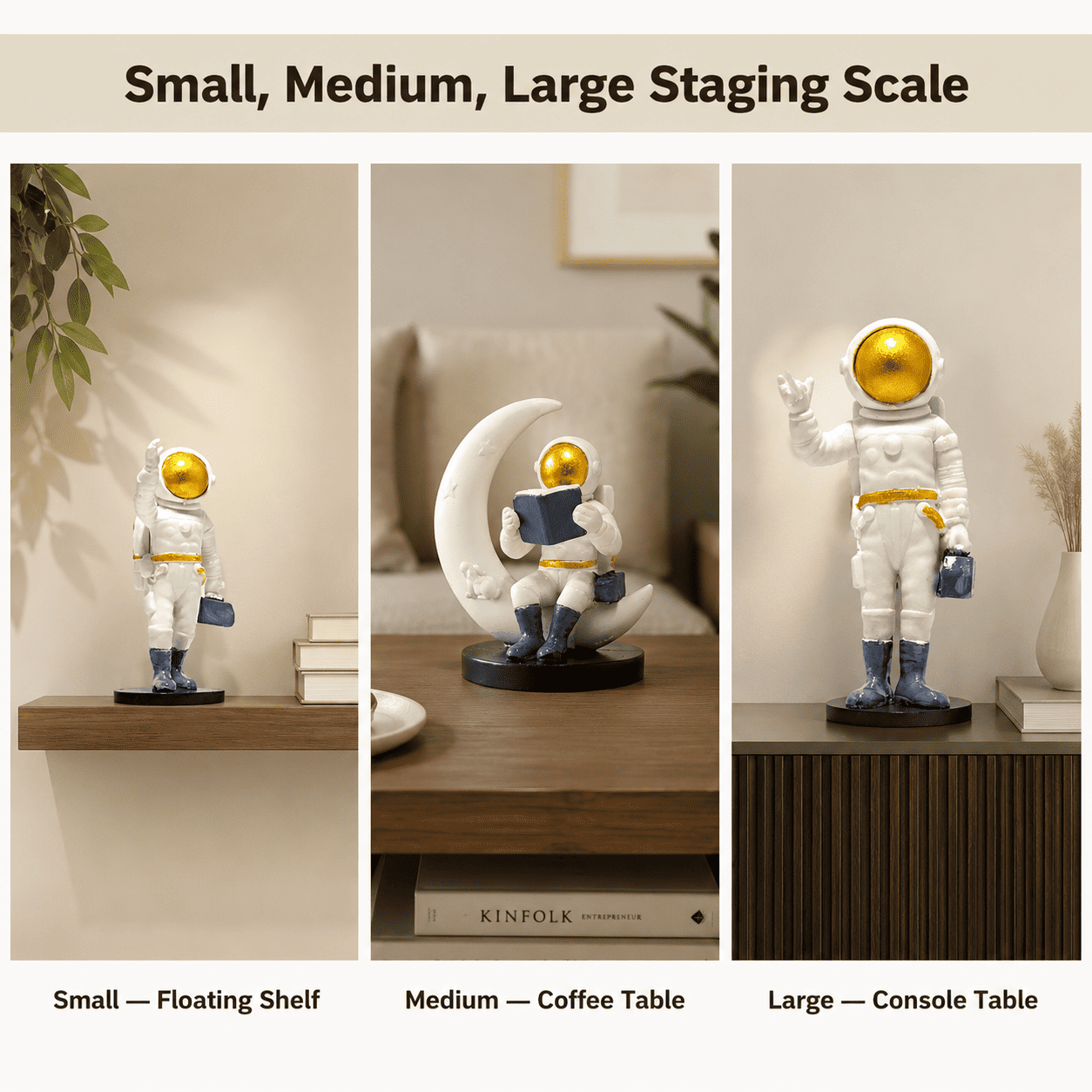
| Room Footprint | Target Surface | Surface Width | Recommended Décor Height |
|---|---|---|---|
| Sub-100 sq ft | Entry console / floating shelf | Under 30 cm | 10–16 cm (Small) |
| 101–150 sq ft | Coffee table / bookshelf | 40–50 cm | 16–21 cm (Medium) |
| 151+ sq ft | Console table / dining sideboard | 60 cm+ | 25–34 cm (Large) |
Because staging surfaces vary by room type, ceiling height, and natural light exposure, browse the full size-and-finish selection in Moolwan's home décor collection to match pieces to your specific walkthrough surfaces.
Design Rule
Moolwan's 3-Surface Staging Rule holds that a room should carry exactly three styled focal surfaces — one entry point, one seating-adjacent surface, and one shelf or console — because buyer walkthroughs average under eight minutes per home, and cognitive load research shows people reliably register only three to four focal points per room scan. Concentrating décor onto three deliberate surfaces creates memorable visual anchors without tipping into the visual clutter that reads as "lived-in mess" to a walkthrough buyer.
How Many Decor Pieces Are Enough Without Overstaging
The right number of décor pieces per room is three to five, not a dozen. Fewer than three leaves surfaces feeling incomplete and unphotographed; more than five starts to read as clutter that competes with the architecture buyers are actually there to evaluate.
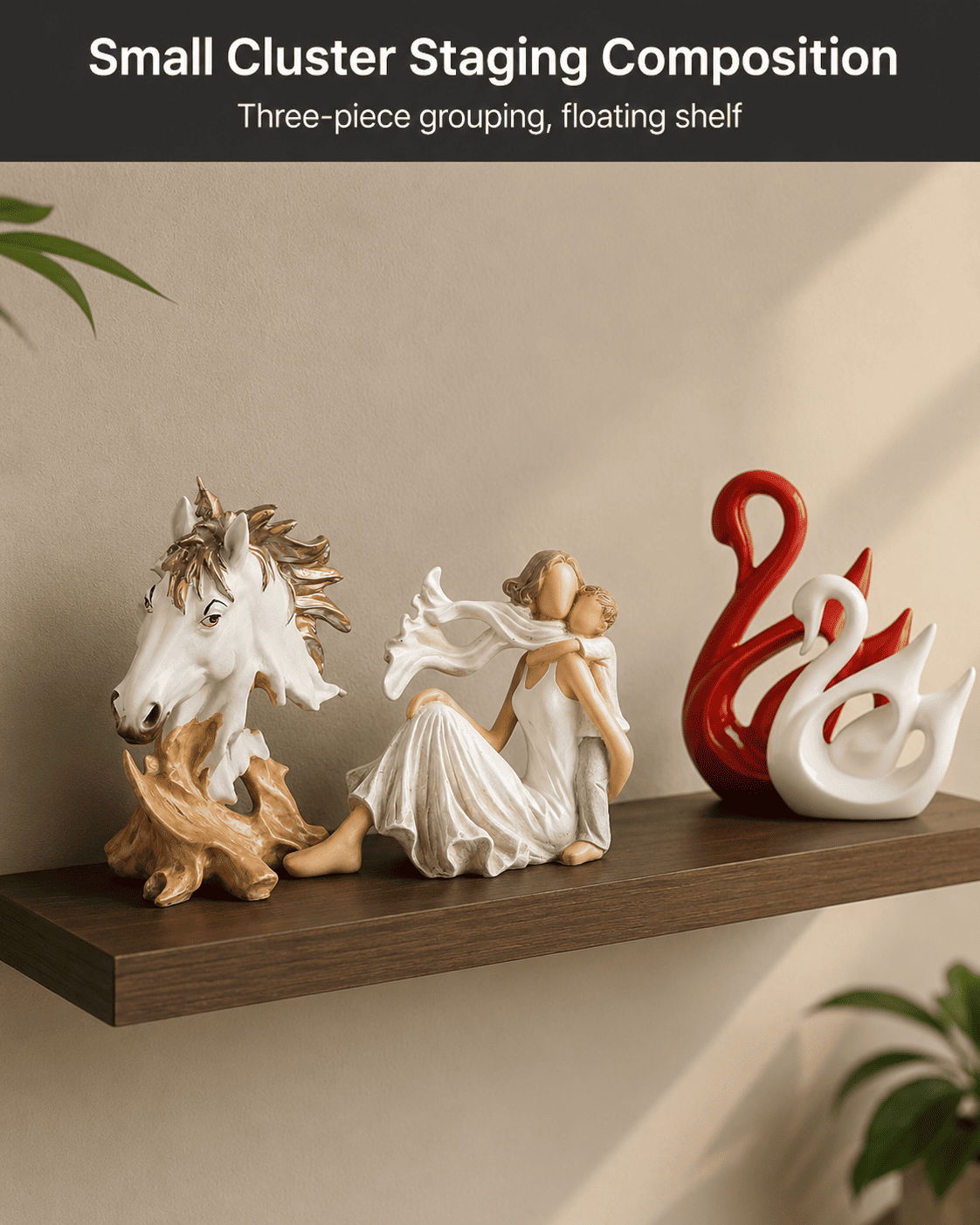
Grouping matters as much as count: odd-numbered clusters of two or three pieces at staggered heights photograph better than single centered objects because asymmetric groupings create depth in listing photos, whereas a single centered piece can look sparse or accidental in wide-angle shots.
Palette discipline compounds this effect. Sticking to one or two neutral tones — warm earth or muted greige — across all staged pieces in a room prevents any single item from pulling a buyer's attention away from the space itself, which is the entire point of staging décor as opposed to personal-use décor.
Want to stage rooms that photograph well and sell faster? Shop the full Moolwan home décor collection now.
Matching Finish and Material to a Neutral Buyer Palette
Ceramic and resin serve different staging roles because of how each material behaves under light and handling. Ceramic's 92% clay composition holds a heavier, more grounded matte finish suited to console tables and shelving where a buyer's eye needs a stable anchor point, while resin's 94% purity epoxy formulation takes fine detail and a lighter weight better suited to bookshelves or narrower surfaces where excess weight risks looking precarious in photos.
Both materials are humidity-rated for Indian conditions — ceramic to 85% RH and resin to 60% RH — which matters during a listing period because staged homes often sit with windows closed and air conditioning cycling on and off, creating humidity swings that can warp décor not engineered for the Indian climate before the sale even closes.
Frequently Asked Questions
Does adding decor actually increase a home's sale price?
Staged homes don't gain value from the décor itself, but they tend to sell faster and closer to asking price because well-placed pieces help buyers visualize the space as move-in ready. Moolwan's neutral-palette pieces are designed for exactly this staging function rather than as a direct value-add line item.
Should I remove all personal decor before showings?
Yes, most personal or highly specific décor should be removed because it forces buyers to mentally edit out the seller's taste before picturing their own. Replacing it with a small number of neutral pieces from Moolwan's collection keeps surfaces from looking bare while avoiding the same distraction.
What decor finish works best for staging photography?
Matte finishes photograph more consistently than glossy ones because they diffuse light evenly instead of creating hotspots or glare under listing photography and open-house lighting, which is why Moolwan's ceramic and resin showpieces default to a matte surface treatment.
Can the same decor pieces be reused after the sale closes?
Yes — because staging pieces are sized and finished as everyday home décor rather than single-use props, sellers commonly move them into their next home once the sale closes, making them a reusable investment rather than a one-time staging expense.
Ready to stage a room buyers remember for the right reasons? Bring home climate-rated, manufacturer-direct pieces from the Moolwan home décor collection — and if you're staging a specific room type, also consider the modern home décor edit or the modern home décor items range for additional neutral-palette options.


