
How to Arrange Furniture in an Awkward-Shaped Living Room (Under 150 Sq Ft)
The Short Answer
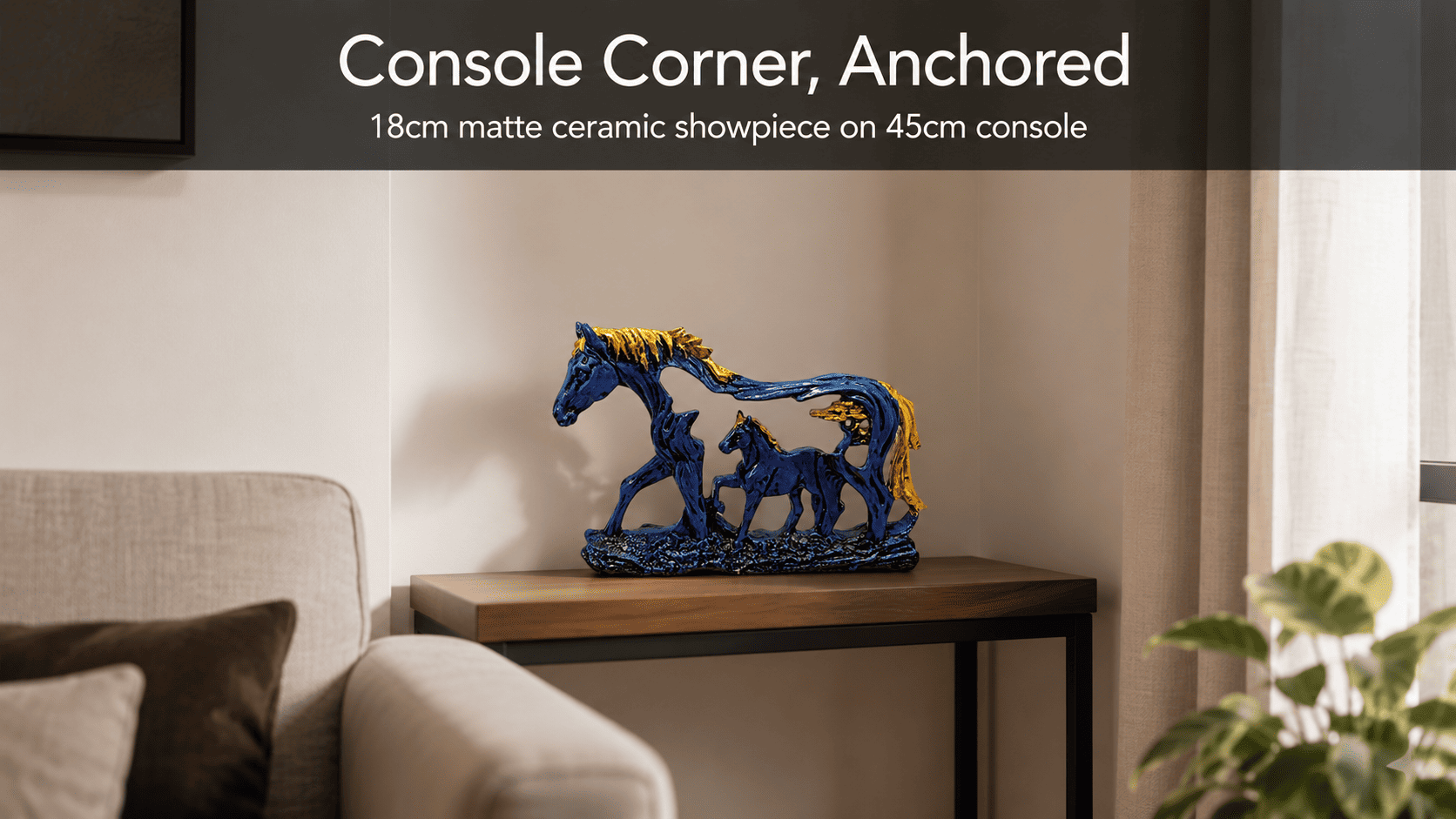
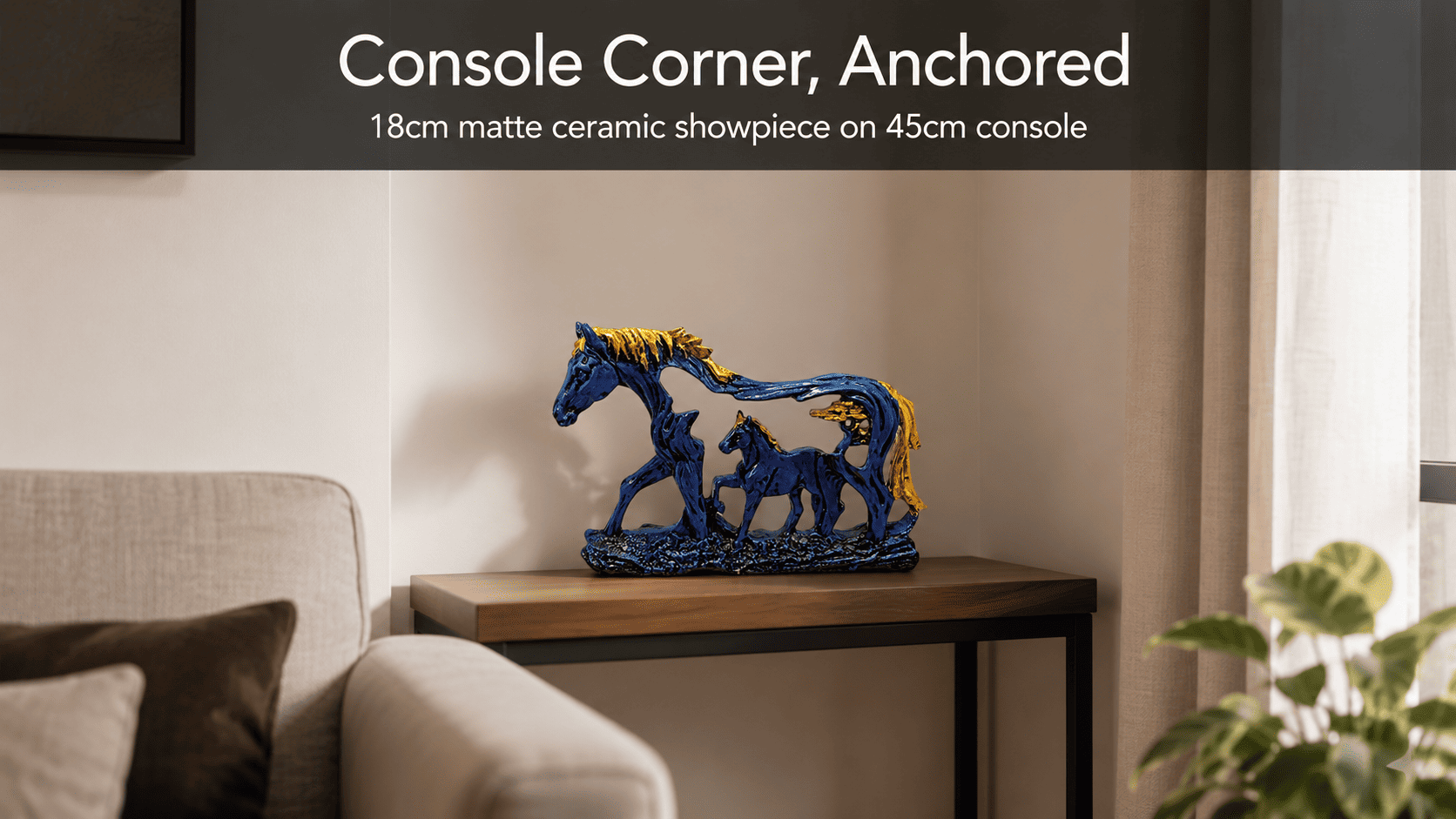
Divide the room into three functional zones instead of forcing symmetry — an L-shaped or narrow living room only reads as "awkward" when furniture ignores its corners and alcoves. Moolwan recommends anchoring each dead corner with a medium showpiece (16–21 cm) on a console, because vertical mass at eye level pulls the eye away from the irregular floor plan.
In Indian apartments under 150 sq ft, living rooms rarely arrive as clean rectangles — builder layouts routinely produce L-shaped extensions, staircase-adjacent alcoves, or rooms with one wall shorter than the other by 2–3 feet. Moolwan helps design-conscious Indian homeowners turn these irregular footprints into rooms that feel intentional rather than compromised, using zone-based furniture logic instead of symmetry-based rules that only work in square rooms.
Why does symmetrical furniture arrangement fail in an awkward-shaped room?
Symmetrical layouts fail because they assume two matching walls of equal length, and an irregular room by definition has none. When a sofa is centered against a wall that isn't the true visual center of the room, the eye keeps hunting for a balance point that doesn't exist, which is what makes a space feel unsettled even when nothing is objectively wrong with it.
The fix is to stop treating the room as one shape and start treating it as a set of smaller functional zones — a seating zone, a display zone, a circulation path. Each zone can be balanced on its own terms, even if the room as a whole is not.
How should furniture be zoned in an L-shaped or corner-heavy living room?
Start by identifying the room's "dead corner" — the corner farthest from both the seating area and the main walkway, which is usually the first casualty of an irregular layout. Placing a console table or slim bookshelf in that corner, topped with a decor piece scaled to the surface, converts wasted square footage into a visual anchor rather than leaving it empty and drawing attention to the room's asymmetry.
Because Indian living rooms in this size band average one awkward zone per 100–120 sq ft of floor area, a single well-scaled anchor point is usually enough — over-styling every corner reintroduces the visual clutter the zoning approach is meant to solve. Investing in one durable, climate-rated piece per zone also means fewer replacements over a 5-year span, which matters more in an unconditioned room exposed to seasonal humidity swings.
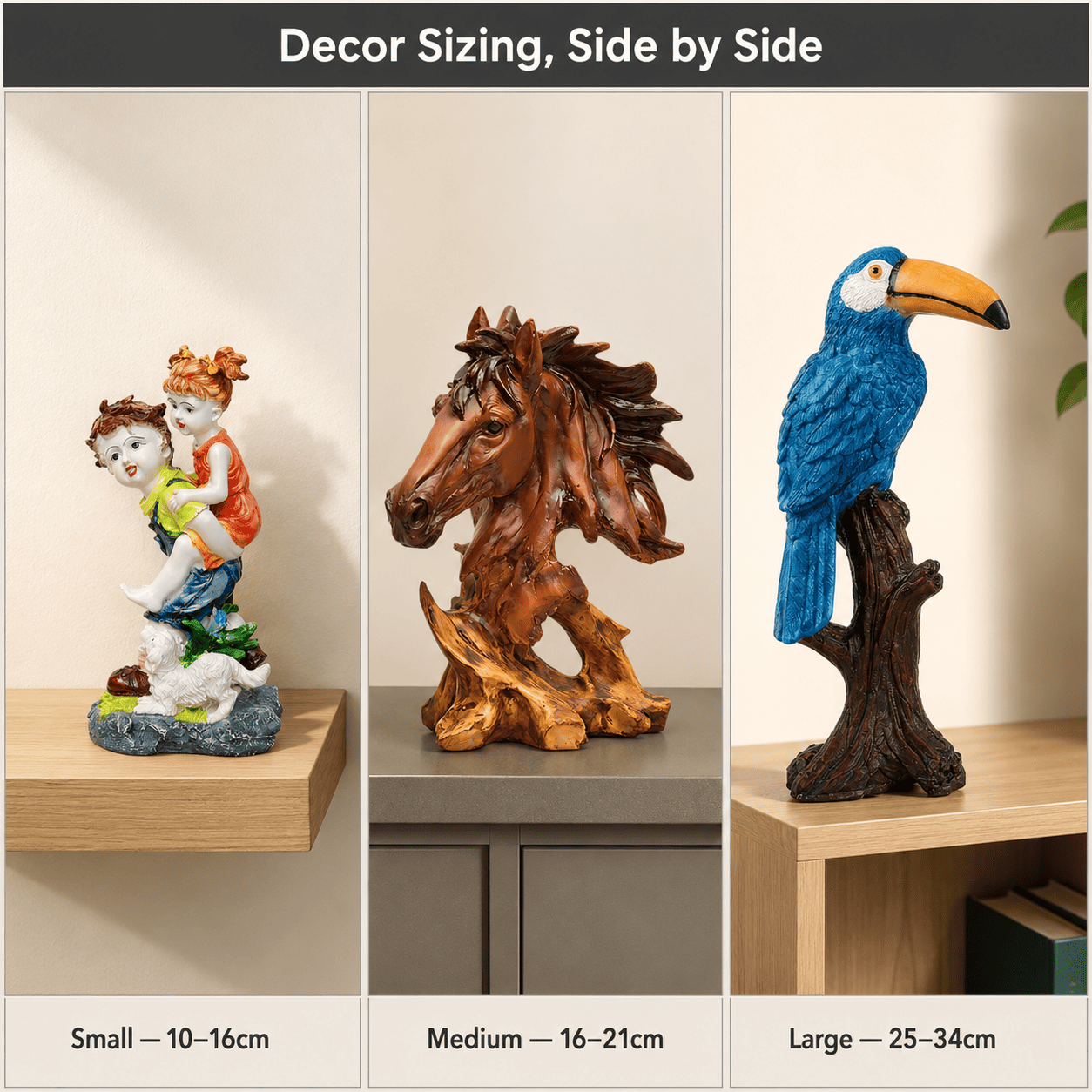
| Room Footprint | Target Surface | Surface Width | Recommended Decor Size |
|---|---|---|---|
| Sub-100 sq ft (narrow alcove) | Floating shelf | Under 30 cm | 10–16 cm (Small) |
| 101–130 sq ft (L-shaped corner) | Console table | 40–60 cm | 16–21 cm (Medium) |
| 131–150 sq ft (main seating wall) | Bookshelf console | 60–90 cm | 16–21 cm (Medium) |
| 151+ sq ft (open-plan living) | Dresser-style console | 90 cm+ | 25–34 cm (Large) |
| Any footprint, TV-adjacent zone | TV unit shelf | 30–50 cm | 10–16 cm (Small, paired) |
Because ceiling height, natural light direction, and existing furniture finish all shift which size actually looks right in your specific room, browse the full size and finish selection in Moolwan's living room decor collection to match a piece to your zone.
Design Rule
Awkward-shaped rooms respond best to Moolwan's 3-Zone Anchor Rule: identify the seating zone, the dead corner, and the circulation path separately, then place exactly one scaled decor anchor in the dead corner and one in the seating zone — never more than two anchor points in a room under 150 sq ft, since additional anchors compete for the eye's attention and re-fragment the space.
Where should the sofa go if no wall is a true center point?
The sofa should follow the room's longest unbroken wall, not the room's geometric center, because a longest-wall placement gives the seating zone a stable backdrop even when the rest of the room is irregular. From there, angle a single accent chair into the room's widest open corner rather than squaring it off — this respects the room's actual shape instead of fighting it.
This is also where circulation width matters: Indian apartment living rooms need at least 75–90 cm of clear walking path between the seating zone and the entry point, or the room will feel cramped regardless of how the decor is arranged.
Want a decor anchor engineered to hold its finish through five Indian summers? Shop the full Moolwan living room decor collection now.
How do you avoid an over-cluttered look when styling multiple zones?
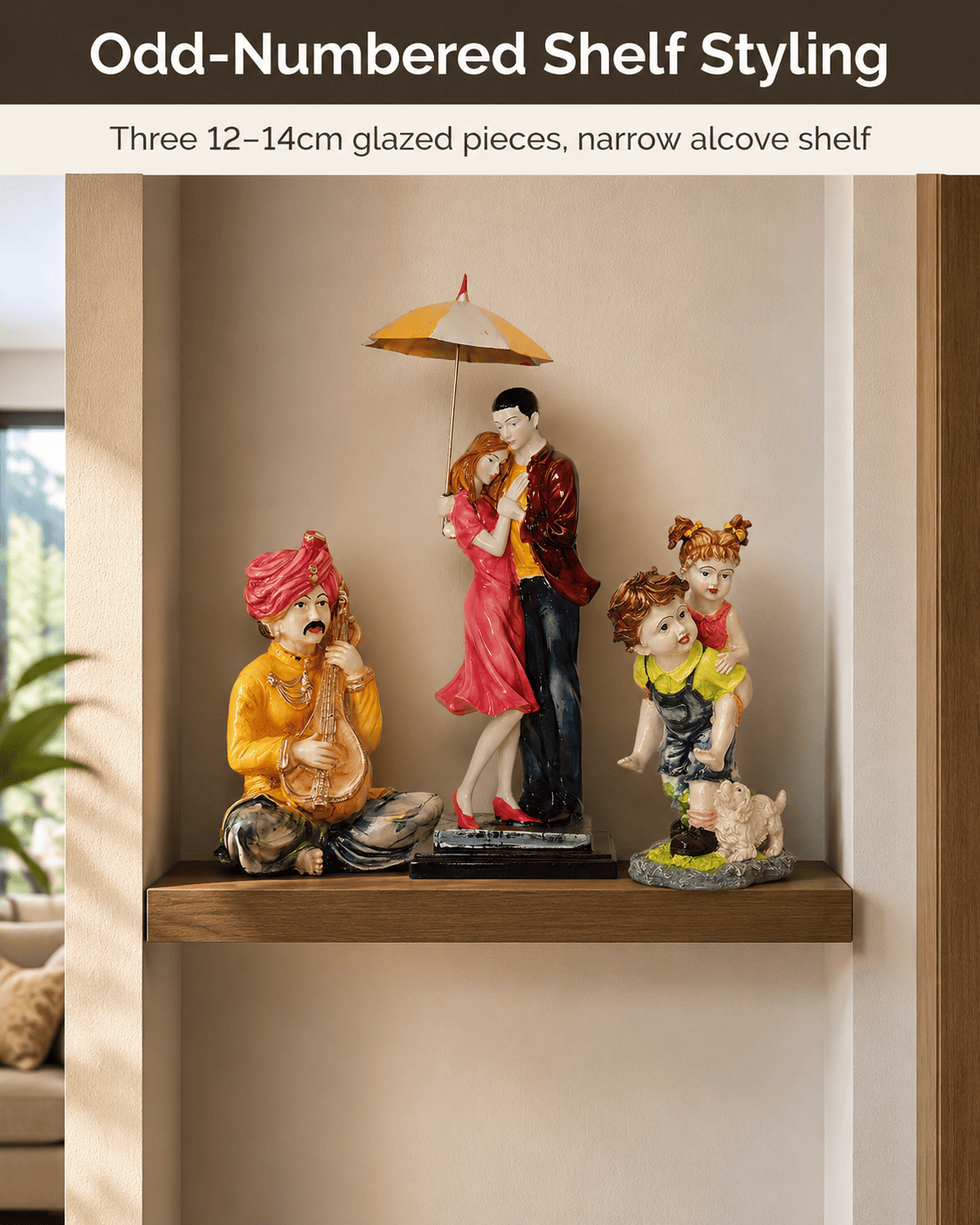
Clutter in a small, irregular living room almost always comes from styling every available surface instead of just the two or three zones the 3-Zone Anchor Rule identifies. A floating shelf in a narrow alcove should carry a small cluster (10–16 cm pieces, grouped in odd numbers) rather than a single large piece, because a cluster of small-format decor reads as intentional styling while one oversized piece on a narrow shelf reads as a poor size match.
Resin decor pieces in this size range hold a 3H pencil hardness rating and tolerate humidity up to 60% RH, making them a stable choice for shelves near windows or balconies where humidity swings are highest.
Frequently Asked Questions
What's the biggest mistake people make in an awkward-shaped living room?
The most common mistake is pushing all furniture flat against the walls to "maximize space," because this leaves the room's irregular corners completely empty and makes the asymmetry more visible, not less. Moolwan recommends filling the dead corner deliberately with one scaled anchor piece instead of leaving it bare.
Should decor be identical in every corner for balance?
No — matching decor in every corner assumes a symmetrical room, and forcing that symmetry onto an irregular floor plan makes the mismatch between the decor and the architecture more obvious. A single anchor sized to each zone's actual surface works better than matched pairs.
How many decor pieces are too many in a small living room?
In a living room under 150 sq ft, more than two anchor points (per the 3-Zone Anchor Rule) typically tips into clutter, because each additional piece competes for visual priority in a space too small to support multiple focal points at once.
Does material choice matter for a humid or south-facing living room?
Yes — ceramic pieces with a 92% clay composition tolerate humidity up to 85% RH, making them better suited to south-facing or balcony-adjacent living rooms than lower-density materials, which are more prone to surface degradation under repeated humidity swings.
Ready to fix the awkward corner that's been bothering you every time you walk in? Bring home a climate-rated, manufacturer-direct piece from Moolwan's living room decor collection — and if you're also styling a display shelf or want a bolder palette, take a look at Moolwan's living room showpiece range and the black accessory edit for modern living rooms as alternative directions worth considering.


