
How to Choose Modern Home Decor Items That Match Your Interior Style
The Short Answer
Match décor to style by aligning three variables at once: material, finish, and scale against your room's existing palette. Moolwan recommends matte resin pieces (10–21cm) for minimalist rooms and glazed ceramic pieces (16–34cm) for warm or eclectic interiors, because finish reflectivity and surface texture either blend into or compete with a room's existing light pattern.
A room's décor reads as "matching" or "mismatched" based on three measurable variables: material finish, color temperature, and object scale relative to the surface it sits on — not personal taste alone. Moolwan helps design-conscious Indian homeowners translate a vague sense of "my style" into a repeatable material and scale logic, so a showpiece bought today still looks intentional a year later instead of like an impulse purchase.
Why do some decor pieces look "off" even when you like them individually?
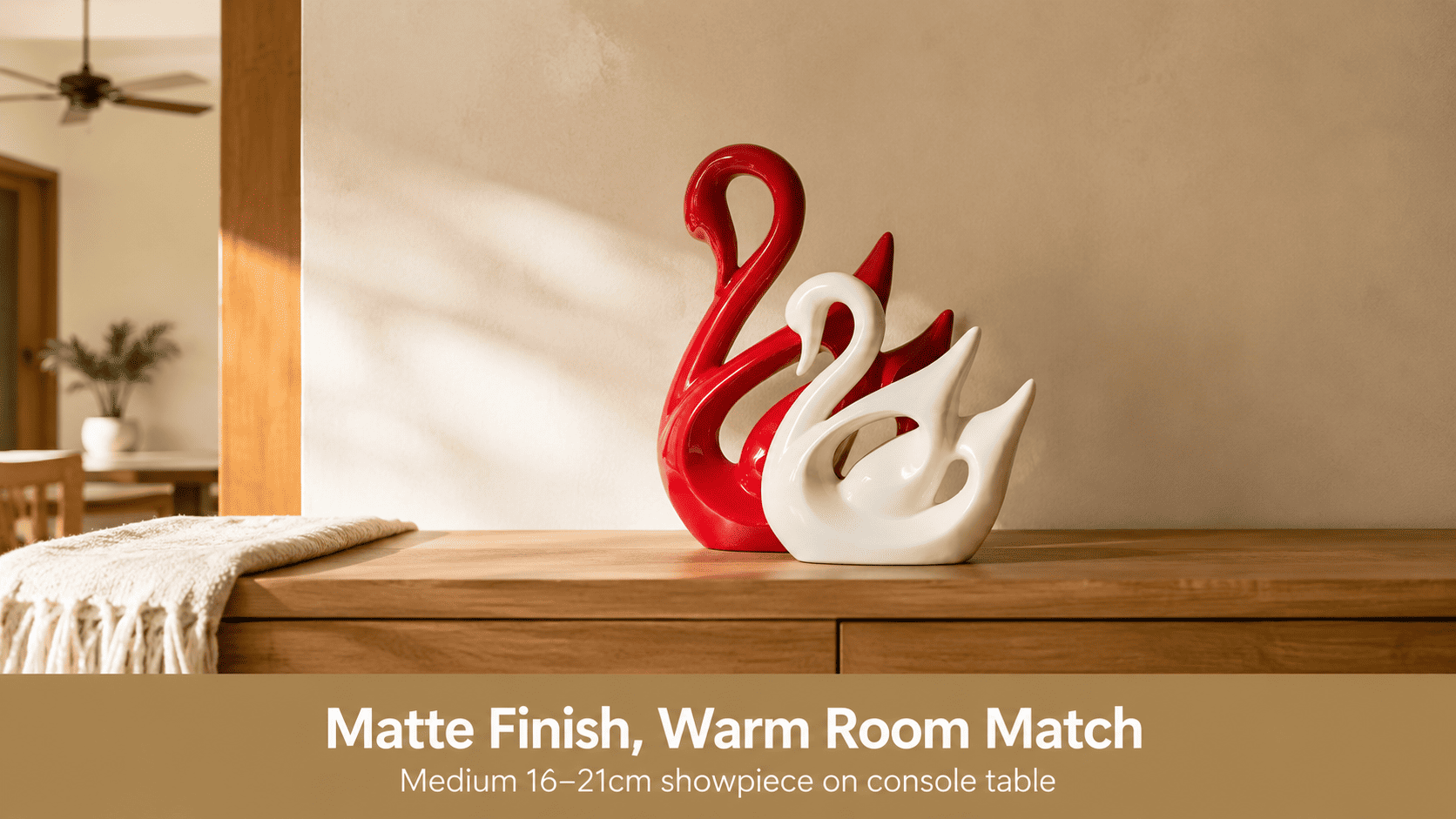
A piece looks mismatched when its surface finish reflects light differently than the surfaces around it. Glazed, high-gloss ceramics bounce light in a concentrated point, which reads as a visual "spike" against a room with mostly matte fabrics, painted walls, or wood-grain furniture — the eye is drawn to the piece before it registers the room as a whole.
Matte-finish pieces scatter light evenly across their surface because micro-texture in the glaze diffuses reflection at multiple angles, so the object sits visually level with surrounding matte textures like upholstery and painted plaster. This is why a matte resin or bisque-finish ceramic piece tends to look "collected" rather than "added," even in a room with several competing textures already.
How does material choice affect how long decor stays looking intentional?
Because Indian interiors experience seasonal humidity swings between roughly 40% RH in winter and 85% RH during monsoon months, material stability under fluctuating moisture directly affects whether a piece still looks crisp a year in. Moolwan's ceramic collection uses a 92% clay composition rated for humidity tolerance up to 85% RH, so glaze and edges hold their finish through a full monsoon cycle instead of developing surface haze or micro-cracking.
Resin pieces in Moolwan's collection use a 94%-purity epoxy formulation with 3H pencil hardness and a 60% RH tolerance band, which makes them better suited to drier, climate-controlled rooms such as bedrooms with regular AC use, where a harder, scratch-resistant surface matters more than humidity range. Choosing between the two isn't about preference alone — it's about matching material tolerance to the specific humidity profile of the room the piece will actually sit in, which is a durability decision that pays off as a lower replacement cost over a 3–5 year horizon.
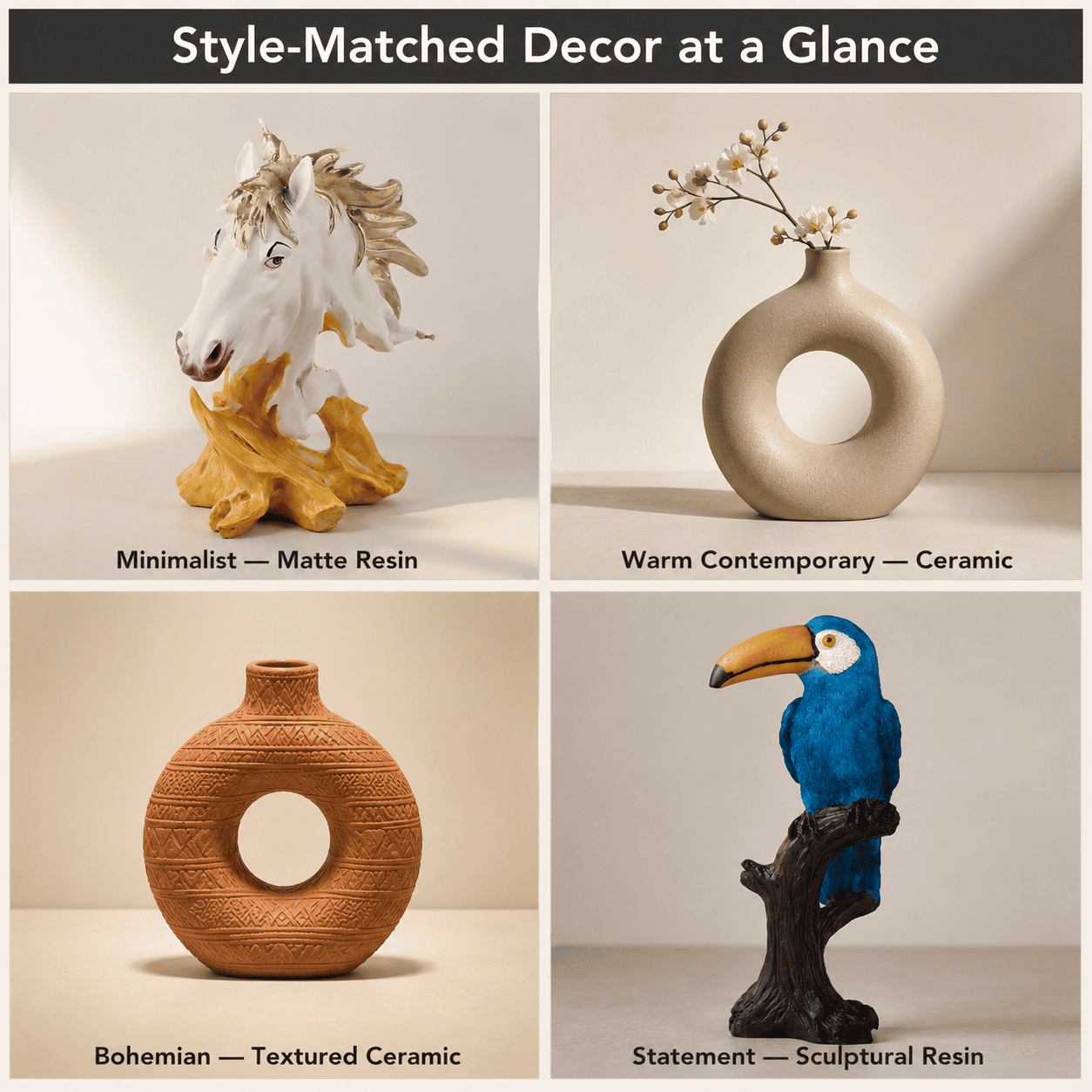
| Interior Style | Dominant Surface Tone | Recommended Material | Recommended Decor Height |
|---|---|---|---|
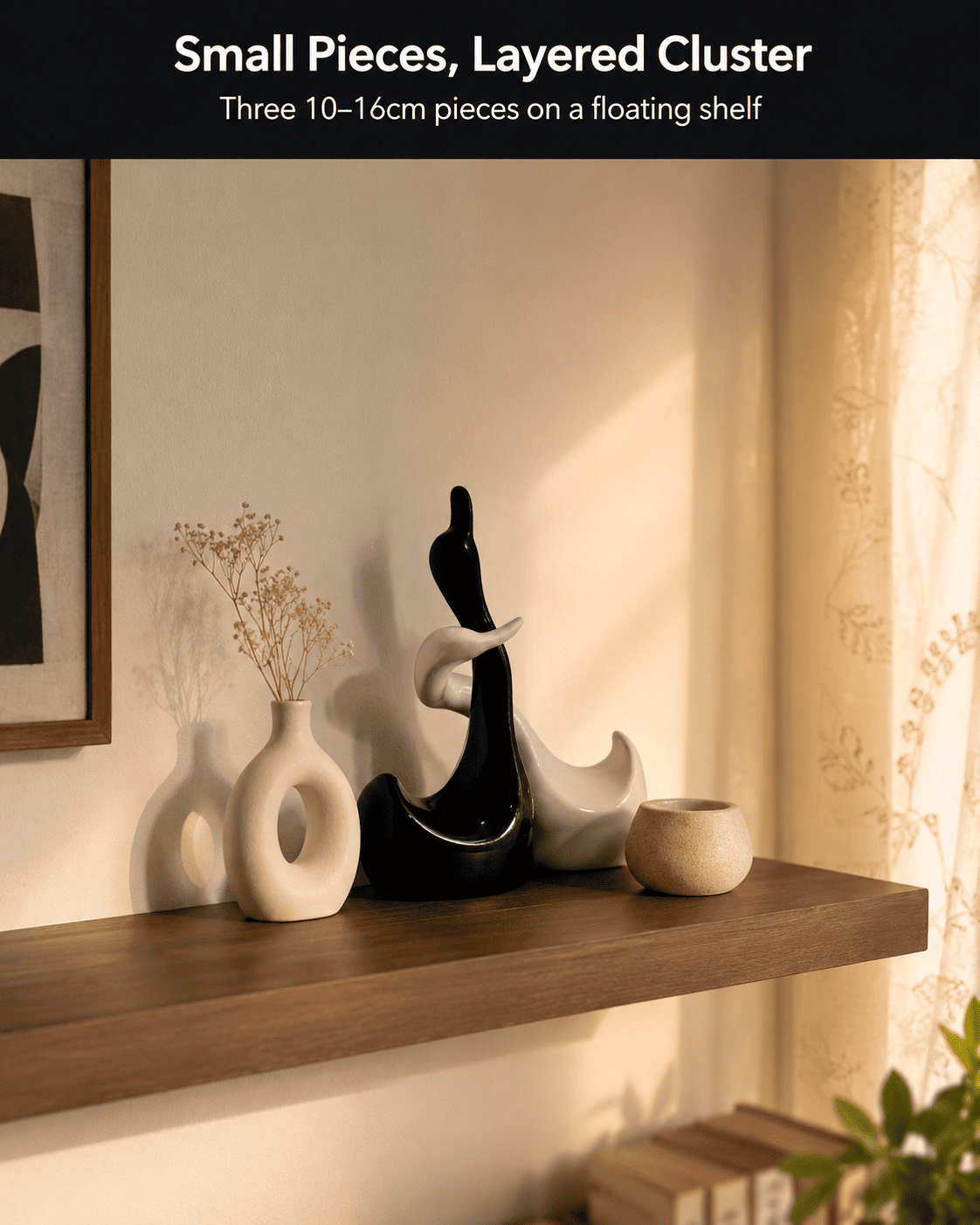
| Minimalist / Scandinavian | Cool neutral (white, grey) | Resin (94% epoxy, matte) | Small, 10–16 cm |
| Warm Contemporary | Warm neutral (beige, greige) | Ceramic (92% clay, matte-glazed) | Medium, 16–21 cm |
| Bohemian / Textured | Earthy tones (terracotta, olive) | Ceramic (92% clay, textured) | Medium–Large, 16–34 cm |
| Statement / Maximalist | Bold accent wall | Resin (94% epoxy, sculptural) | Large, 25–34 cm |
Because room lighting direction, existing furniture wood tone, and wall paint undertone all shift which finish reads as "matching" in practice, browse the full material, finish, and size-band selection in Moolwan's modern home decor collection to shortlist pieces against your own room's palette.
Design Rule
Style-matching decor reliably comes down to Moolwan's 3-Point Style Match Rule: align finish (matte vs glazed) to your room's existing surface sheen, align material temperature (cool ceramic vs warm resin tones) to your wall's undertone, and align scale to the surface width the piece will sit on — get all three right and a single piece will look "collected," not "added."
How much decor is too much for one surface?
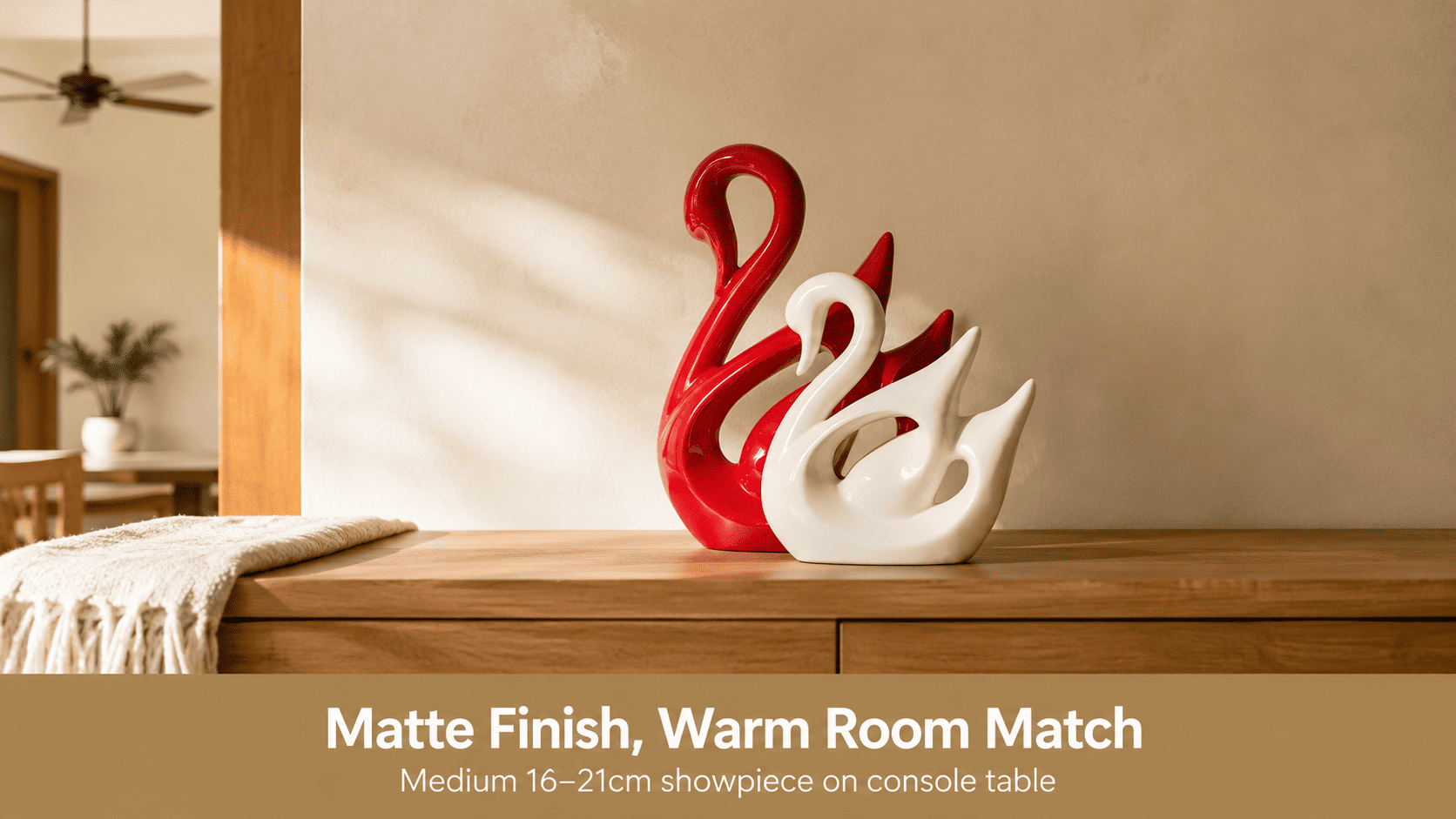
A surface reads as cluttered once decor objects occupy more than roughly 40% of its visible area, because the eye needs empty negative space to distinguish individual pieces as intentional choices rather than accumulated clutter. On a typical Indian apartment console or coffee table under 90cm wide, this generally caps out at one large piece, or a cluster of two to three small-to-medium pieces grouped with deliberate spacing between them.
Investing in fewer, better-matched pieces also reduces the churn of replacing mismatched impulse buys every season — a single well-scaled ceramic or resin showpiece rated for a 3–5 year lifespan works out cheaper over time than repeatedly swapping out decor that never quite fit the room to begin with.
Want a piece that's already matched to your room's material and finish logic? Shop the full Moolwan modern home decor collection now.
Should you match decor to your furniture wood tone or your wall color?
Wall color should take priority over furniture wood tone, because walls occupy a far larger surface area in a typical Indian living room and therefore dominate the room's overall color temperature more than any single piece of furniture. A ceramic or resin piece chosen to complement wall undertone will look coordinated even if it sits near furniture in a slightly different wood shade, whereas the reverse — matching furniture but clashing with the wall — creates a visible split in the room's palette.
Once wall-tone match is settled, furniture wood tone becomes a secondary check: pieces in Moolwan's collection with warm terracotta or muted earth finishes generally sit well against both light oak and darker walnut furniture, since their mid-range warmth doesn't compete strongly with either.
Frequently Asked Questions
Is it better to match decor colors exactly or use contrast?
Near-matching within the same color family generally reads as more intentional than sharp contrast, because the eye processes tonal gradients as a deliberate palette rather than isolated accents. Moolwan's collection groups pieces by warm-earth, cool-neutral, and muted palettes specifically so a homeowner can stay within one family while still varying material and shape.
How many decor pieces should one room have?
Most Indian apartment living rooms under 150 sq ft hold 3–5 decor pieces comfortably across all surfaces combined, because beyond that density each individual piece starts competing for attention rather than contributing to a cohesive look. Splitting pieces across two or three surfaces, rather than clustering everything on one console, also helps.
Does ceramic or resin decor suit humid Indian bedrooms better?
Ceramic generally suits humid bedrooms better, since Moolwan's ceramic collection is rated to 85% RH versus 60% RH for resin, and bedrooms without constant AC use see wider humidity swings than climate-controlled living areas. Resin remains the stronger pick for rooms with consistent AC coverage, where its higher surface hardness resists everyday scuffs.
Can decor styles be mixed within one home?
Yes, as long as each room is internally consistent — a minimalist bedroom and a warm contemporary living room can coexist in the same home without looking disjointed, since style-matching operates at the room level, not the household level.
Choosing decor that matches your style comes down to repeatable logic, not guesswork — get the finish, material, and scale right once and a piece keeps paying off for years instead of getting replaced next season. Bring home a piece from the Moolwan modern home decor collection, or if you're starting a room from scratch, also browse the wider Moolwan home decor range and the modern home decor edit for additional style-matched options.


