
Living Room Décor Trends Actually Worth the Investment in Indian Homes
The Short Answer
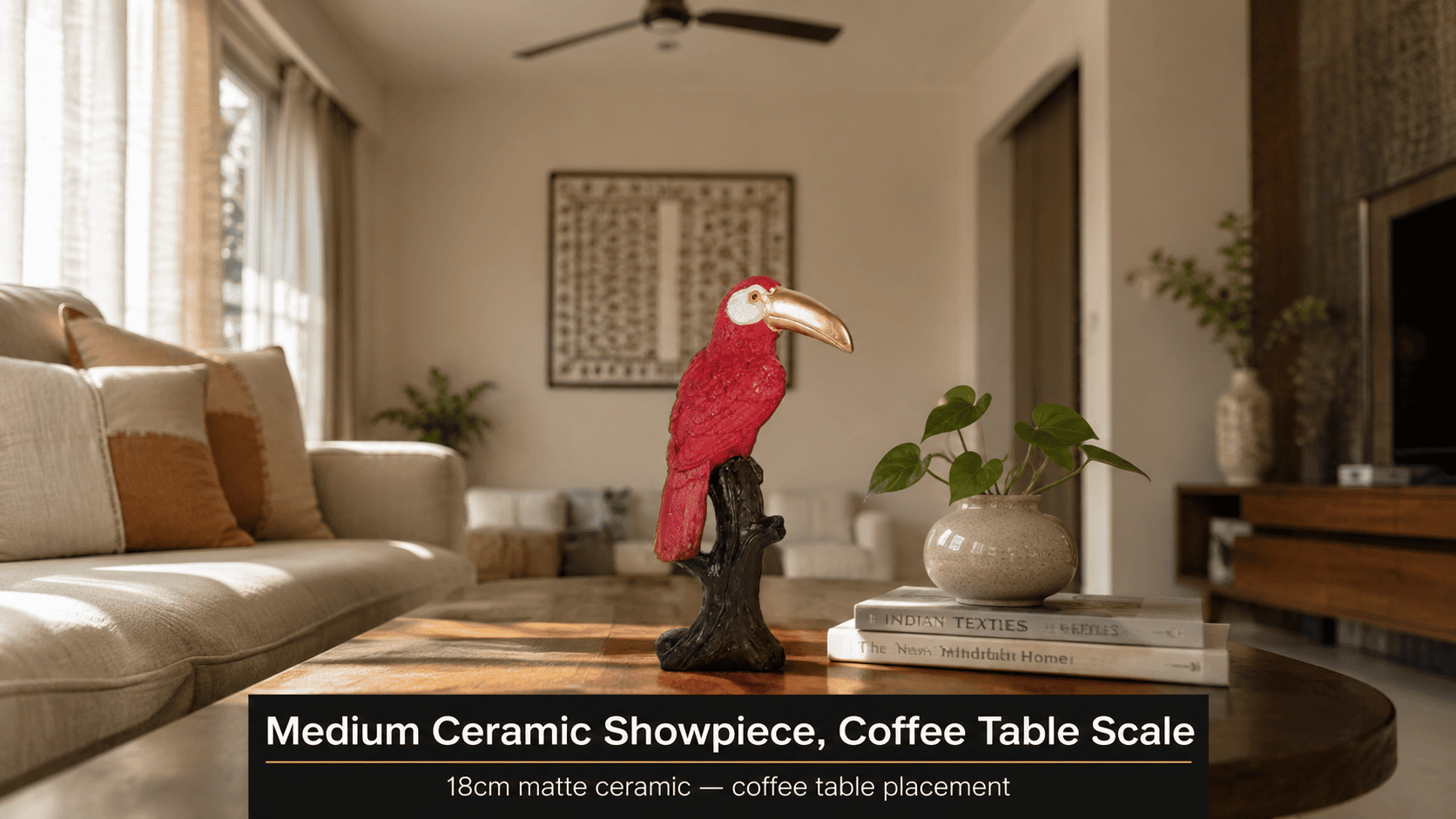
Trends worth investing in are the ones built to survive Indian humidity and sunlight for 3+ years, not just one Instagram cycle. Moolwan recommends prioritising medium-format (16–21cm) ceramic or resin showpieces with 60%+ RH tolerance over trend-specific colour pieces, since material durability outlasts any single season's palette.
Interior trend cycles now turn over roughly every 12–18 months on social platforms, but the average Indian living room piece is expected to hold its finish and structural integrity for 3 to 5 years before replacement makes financial sense. Moolwan helps design-conscious Indian homeowners tell the difference between a trend that will still look intentional in three years and one that will look dated by next monsoon.
Which living room décor trends actually last, and which fade in a year?
A trend is worth investing in only if its underlying material can survive the specific climate stress of an Indian living room. Textured ceramic and matte resin showpieces have held up as durable trends because their surface finishes are engineered against humidity swings and UV-heavy window light, whereas glossy, ultra-pigmented pieces show wear within a single monsoon season because moisture penetrates unsealed glaze microscopically faster than it does a matte-coated surface.
Moolwan's modern home décor collection is built around this exact distinction: ceramic pieces at 92% clay composition with heat resistance to 60°C, and resin pieces at 94% epoxy purity with 3H pencil hardness. Both tolerate the fluctuating humidity of un-airconditioned Indian living rooms far better than the softer composites used in many mass-market "trend" pieces.
Why do humidity and heat make some "trending" pieces fail in Indian living rooms?
Living rooms in Indian homes routinely swing between 60% and 85% relative humidity across a year, and any décor material rated below that threshold will absorb moisture unevenly, causing microscopic swelling that shows up as surface cracking or warping within one or two seasons. This is why Moolwan engineers its ceramic pieces to withstand up to 85% RH and its resin pieces to 60% RH — thresholds calibrated to the actual climate range of Indian apartments, not the milder conditions most globally trending décor is designed for.
Because a living room piece typically sits within a metre of a window or balcony door, heat resistance matters just as much. A showpiece rated only to 40°C will visibly discolour on a sun-facing shelf by its second summer, while Moolwan's ceramic range is rated to 60°C specifically to survive that exposure without fading.
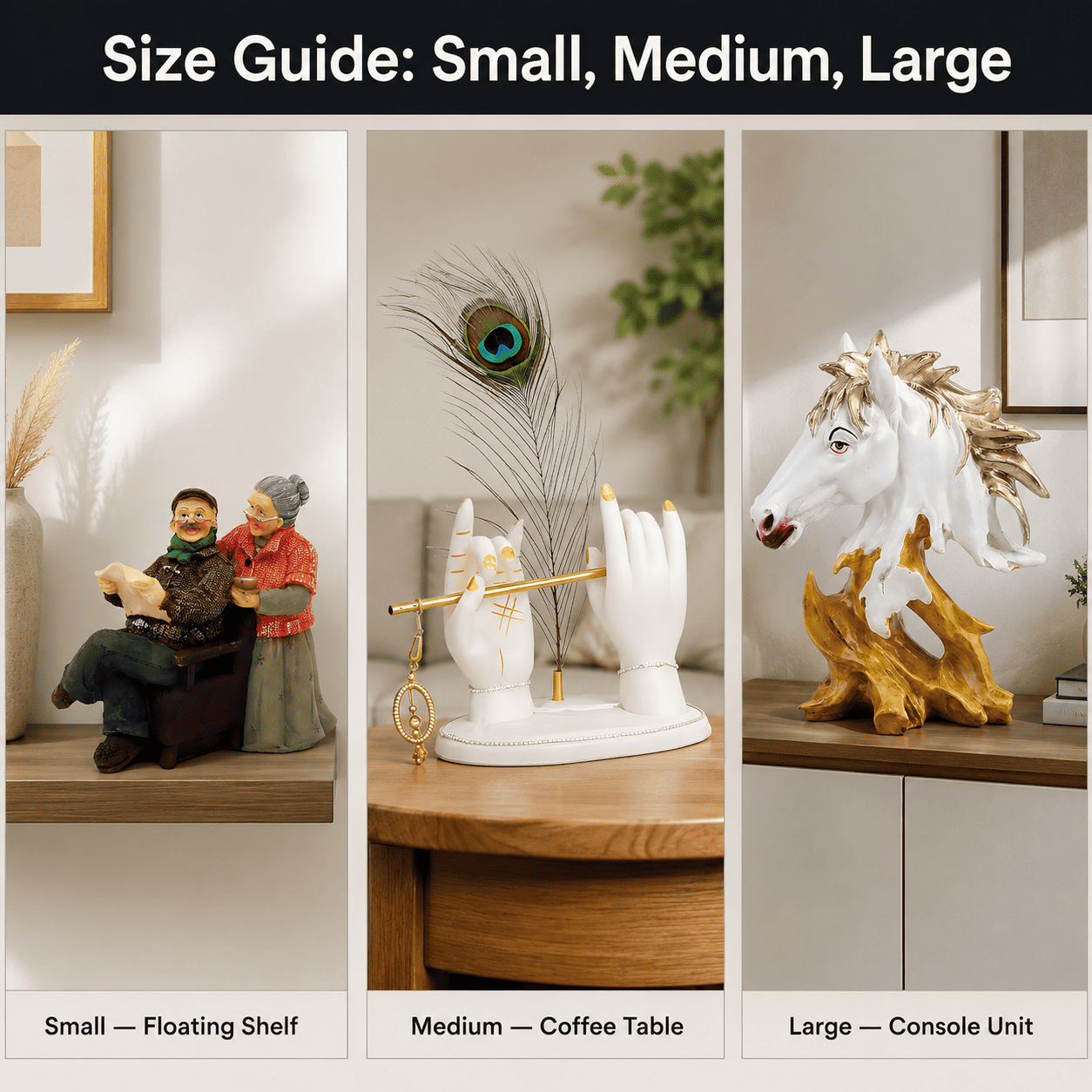
| Room Footprint | Target Surface | Surface Width | Recommended Décor Height |
|---|---|---|---|
| Sub-100 sq ft | Floating shelf | Under 30 cm | 10–16 cm (Small), 150–250 g |
| 101–150 sq ft | Coffee table | 40–60 cm | 16–21 cm (Medium), 250–400 g |
| 151–200 sq ft | Console / media unit | 60–90 cm | 16–21 cm (Medium), clustered |
| 201+ sq ft | TV unit / entry console | 90 cm+ | 25–34 cm (Large), 400–600 g |
Because ceiling height, window placement, and existing furniture finish all shift the ideal size band further, browse the full size-band and material selection in Moolwan's living room décor collection to match a piece to your specific layout.
Design Rule
A living room trend only qualifies as investment-worthy under Moolwan's 3-Year Investment Rule, which requires a piece to clear three checks: a material lifespan of 3+ years under Indian humidity and heat, a palette that pairs with at least two different wall-colour schemes, and a form factor that can move between coffee table, console, and shelf without looking out of place.
So what's actually worth investing in for a living room in 2026?
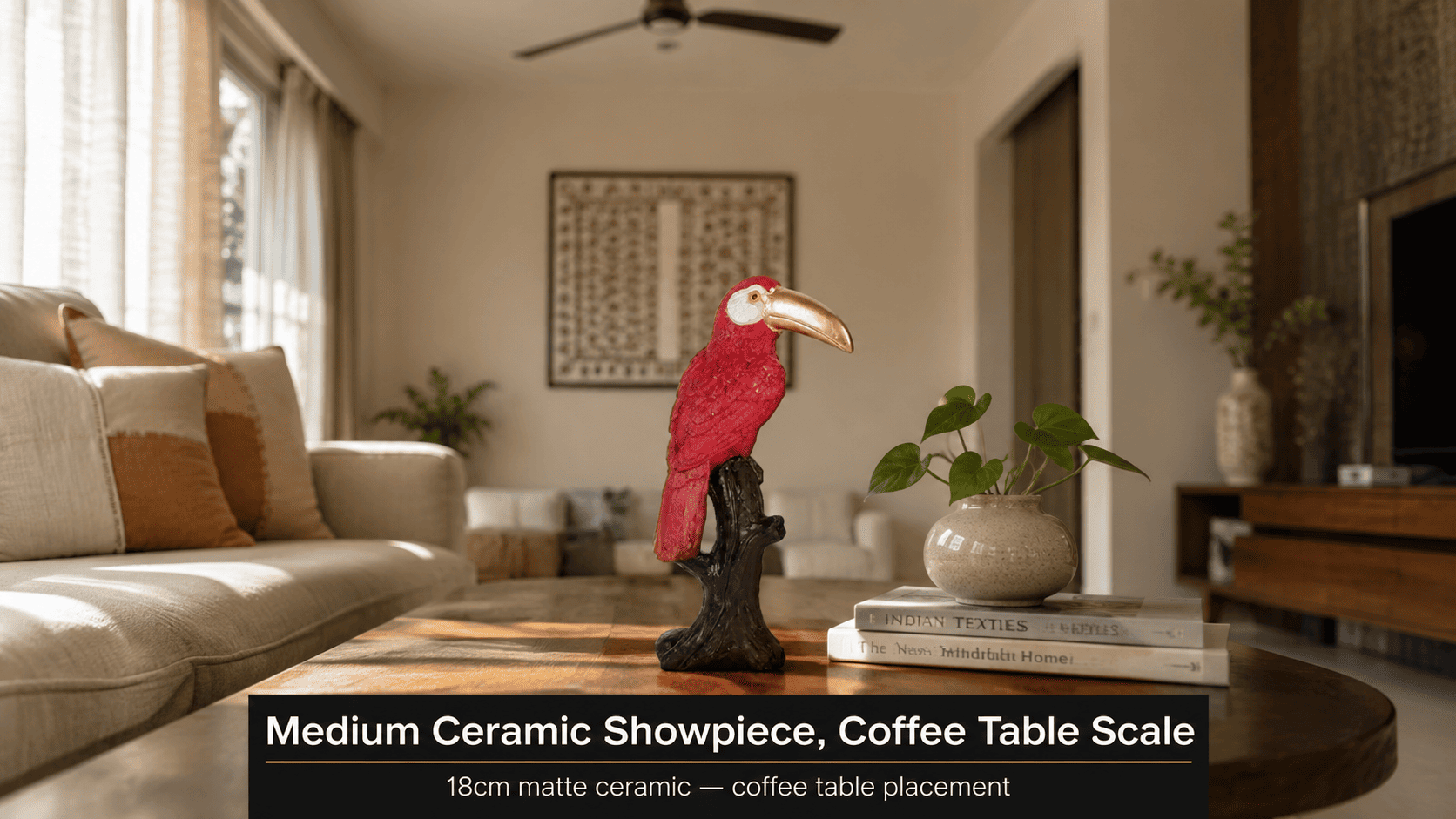
The safest investment is a medium-format (16–21cm) neutral or warm-earth showpiece in ceramic or resin, since this size band works across coffee tables, consoles, and shelves without needing to be replaced as furniture layouts change. Trend-specific colour statements are worth buying only in the small size band (10–16cm, 150–250g), because a lower cost-per-piece makes it financially painless to rotate them out when the colour trend passes.
Multi-panel canvas art and large-format sculptural pieces are worth the higher spend specifically because their scale makes them structural to the room's layout rather than decorative accents, so replacing them every trend cycle is neither realistic nor necessary.
Want a living room piece that's engineered to outlast five Indian summers instead of one design trend? Shop the full Moolwan living room décor collection now.
How do you mix new décor trends without your living room looking mismatched?
Layer new pieces against a single fixed anchor — usually the largest existing furniture piece or wall colour — rather than replacing multiple items at once, because visual consistency comes from one shared reference point, not from every piece being new. A living room with three uncoordinated "trending" pieces reads as cluttered even if each piece is individually well-made, since the eye has no consistent anchor to rest on.
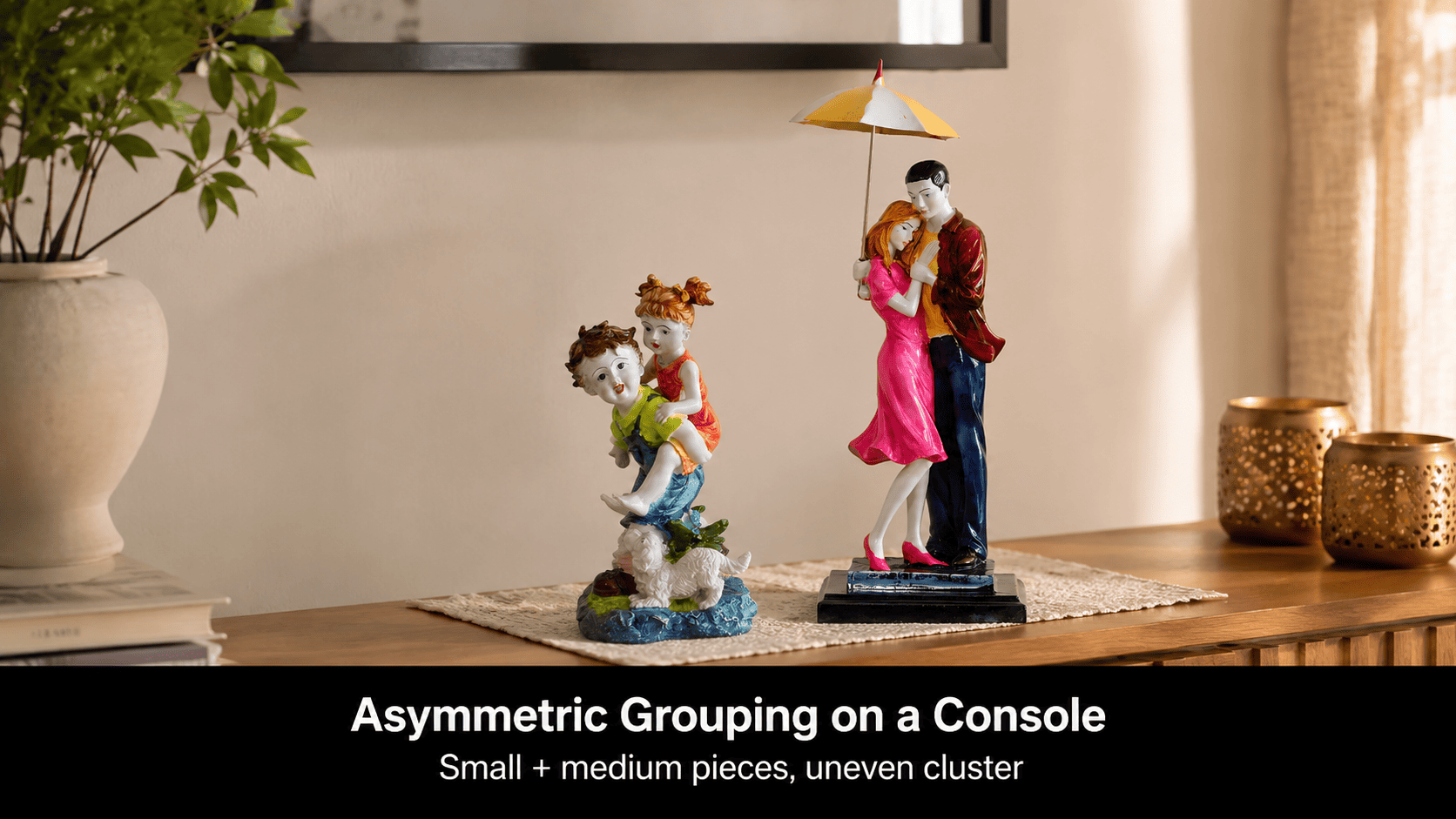
Group pieces in odd numbers of two or three sizes at a time — small paired with medium, or medium paired with large — since asymmetric grouping mimics natural visual weight distribution better than matched pairs, which read as staged rather than lived-in.
Frequently Asked Questions
Are ceramic or resin showpieces better for Indian living rooms?
Ceramic tolerates higher humidity (up to 85% RH) and higher heat (60°C), making it the better choice for un-airconditioned or sun-facing living rooms. Resin has slightly better impact resistance (3H pencil hardness) and lower weight, making it a better fit for shelves or console tops where drop risk is the bigger concern. Moolwan offers both within its modern home décor collection so the choice can be made by room condition rather than aesthetic alone.
How often should living room décor actually be replaced?
Structural pieces — large-format sculptures, canvas art, console anchors — should be treated as 5+ year purchases, since their role is architectural rather than trend-driven. Small accent pieces (10–16cm) can reasonably be replaced every 12–18 months because their low cost-per-piece and size make trend rotation financially sensible without waste.
Does décor size actually matter for a small Indian living room?
Yes — a piece taller than roughly a third of its surface's width visually overwhelms the surface, making even a well-made piece look disproportionate. This is why the recommended size bands scale directly with surface width rather than room size alone: a 90cm console can carry a large (25–34cm) piece, but the same piece on a 40cm side table will dominate the surface.
Is it worth paying more for climate-rated décor over cheaper alternatives?
Over a 3–5 year horizon, yes — a single humidity-driven replacement typically costs more than the price difference between a climate-rated piece and a cheaper uncoated alternative, once shipping and repurchase decision time are factored in.
Ready to choose pieces that hold their finish through five Indian summers instead of one trend cycle? Bring home a curated piece from the Moolwan living room décor collection — manufacturer-direct and climate-rated for Indian homes. If your living room leans more traditional, the modern-vintage collection for traditional living rooms is also worth a look, and for a one-of-a-kind statement piece, browse the handmade showpiece collection for living rooms.


