
Living Room Decor Trends vs Timeless Design Choices for Indian Homes
The Short Answer
Trend-led décor pieces typically get replaced within 2–3 years as aesthetics shift, while pieces engineered to an 85% RH and 60°C durability threshold outlast several redecorating cycles. Moolwan recommends anchoring a living room with one or two timeless ceramic or resin pieces sized 16–34 cm, then rotating smaller accents around them as trends change.
Interior trend cycles in India now turn over roughly every 18–24 months, driven by social media exposure to global styling, which means any décor purchased purely for a trend has a short useful life before it looks dated. Moolwan helps design-conscious Indian homeowners tell the difference between a piece worth building a room around and a piece worth swapping out next season, so their living room budget goes toward what actually lasts.
What actually separates a "trend" piece from a "timeless" piece?
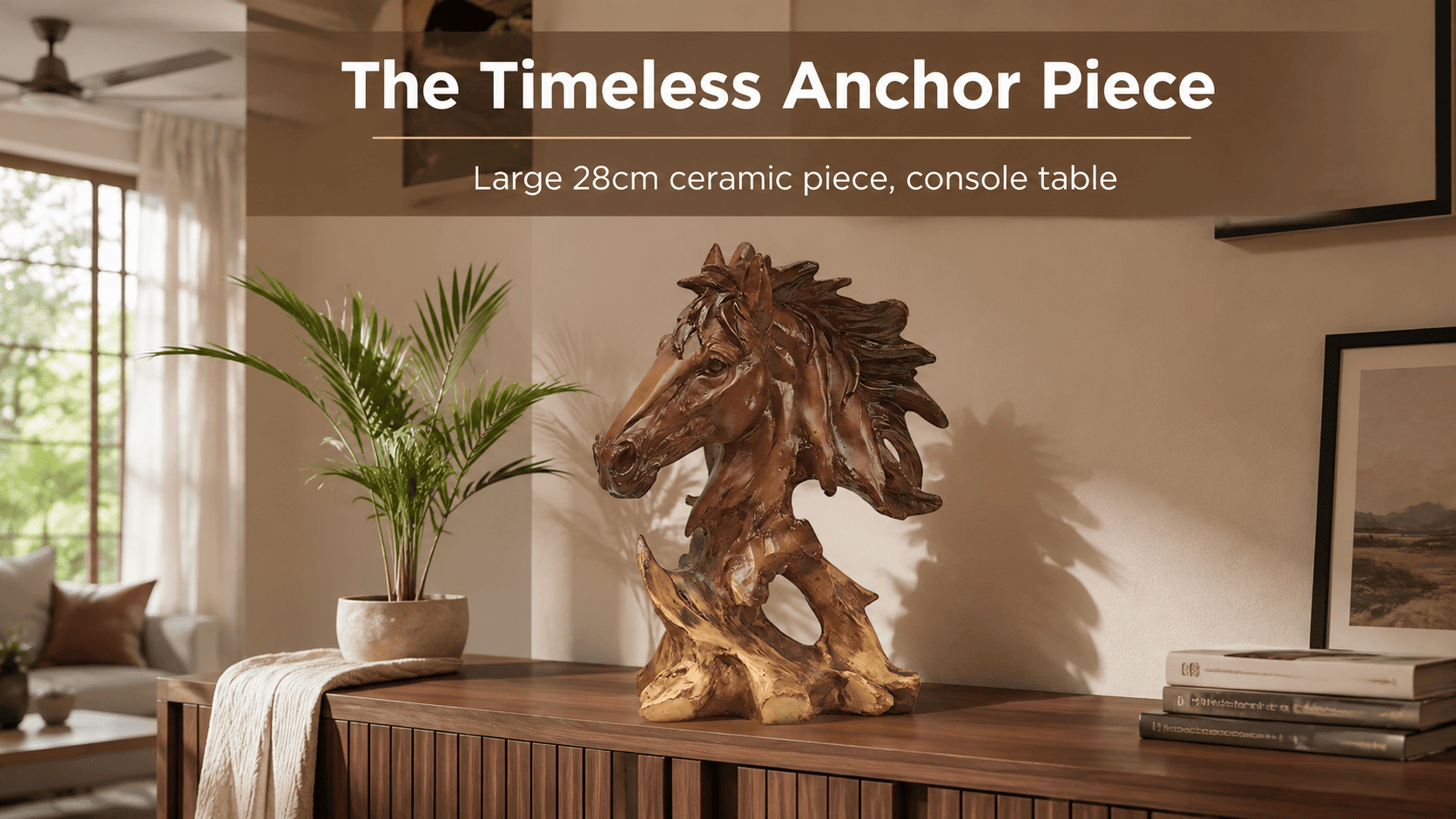
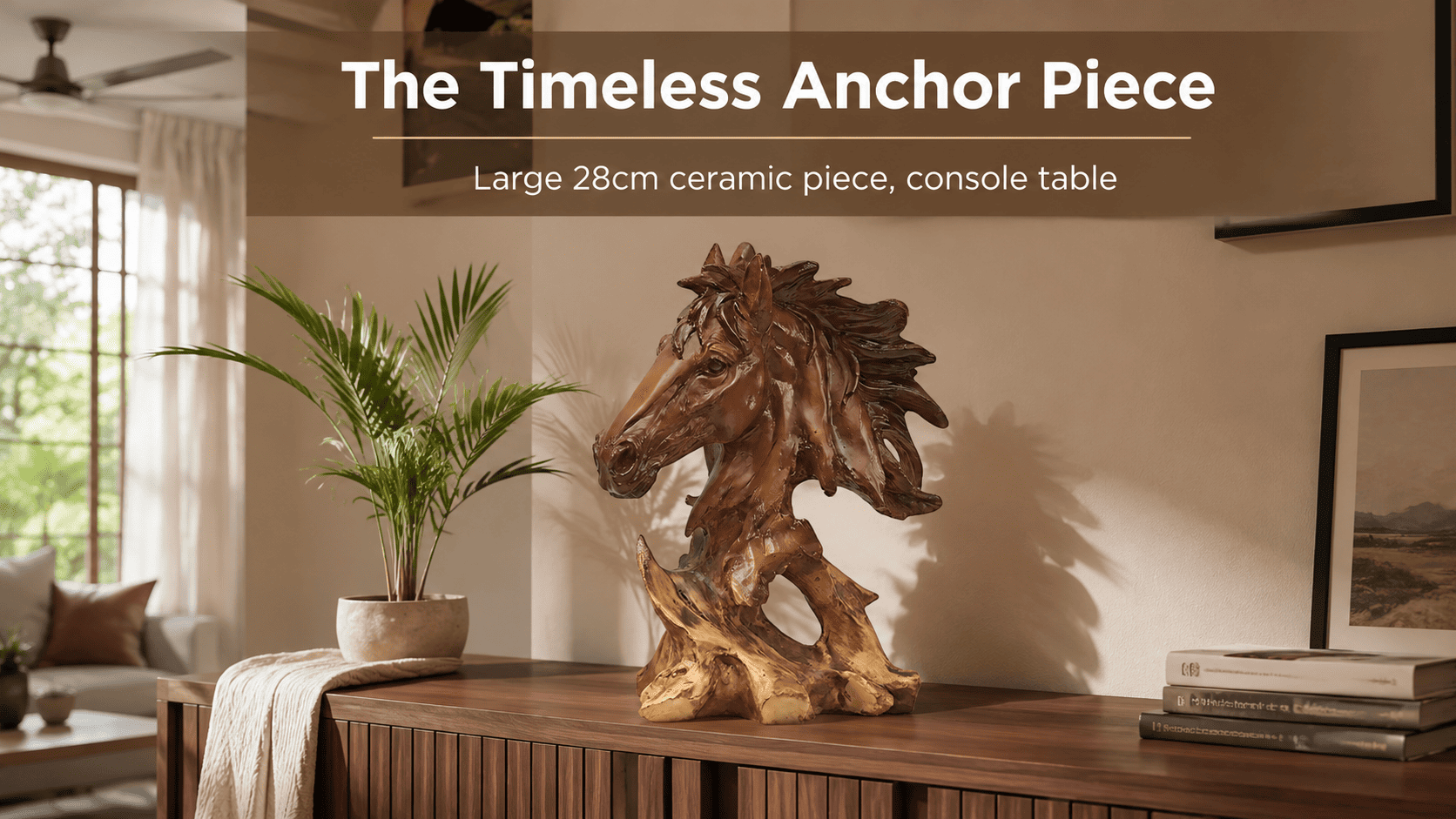
A timeless piece is defined by material durability and proportional restraint, not by a specific colour or motif. Neutral-toned ceramic and resin objects with clean silhouettes photograph and age consistently because their form doesn't rely on a single seasonal palette to look intentional. A trend piece, by contrast, is usually defined by a bold colour, pattern, or motif tied to a specific style moment — which is exactly what makes it feel dated once that moment passes.
This isn't a subjective call. Moolwan's modern home décor collection separates pieces by two measurable factors: finish neutrality (does the colour/pattern reference a specific trend cycle) and material lifespan (ceramic rated for 5+ years vs. lower-grade materials that degrade faster under humidity and UV exposure).
Why do some living room pieces age better than others?
Material composition, not styling, is the real driver of how a piece ages in an Indian home. Ceramic décor built from a 92% clay composition resists heat up to 60°C and survives drops from up to 15 cm without chipping, which matters in living rooms exposed to direct sunlight and daily foot traffic. Resin pieces at 94% epoxy purity hold a 3H pencil hardness rating, meaning the surface resists scuffing from regular dusting and handling over years, not months.
Because Indian living rooms swing between AC-cooled and monsoon-humid conditions across the year, a piece that can't tolerate at least 60% relative humidity will visibly warp or dull within a single season regardless of how "timeless" its design looks on day one.
| Design Approach | Recommended Material | Piece Size Range | Durability Profile |
|---|---|---|---|
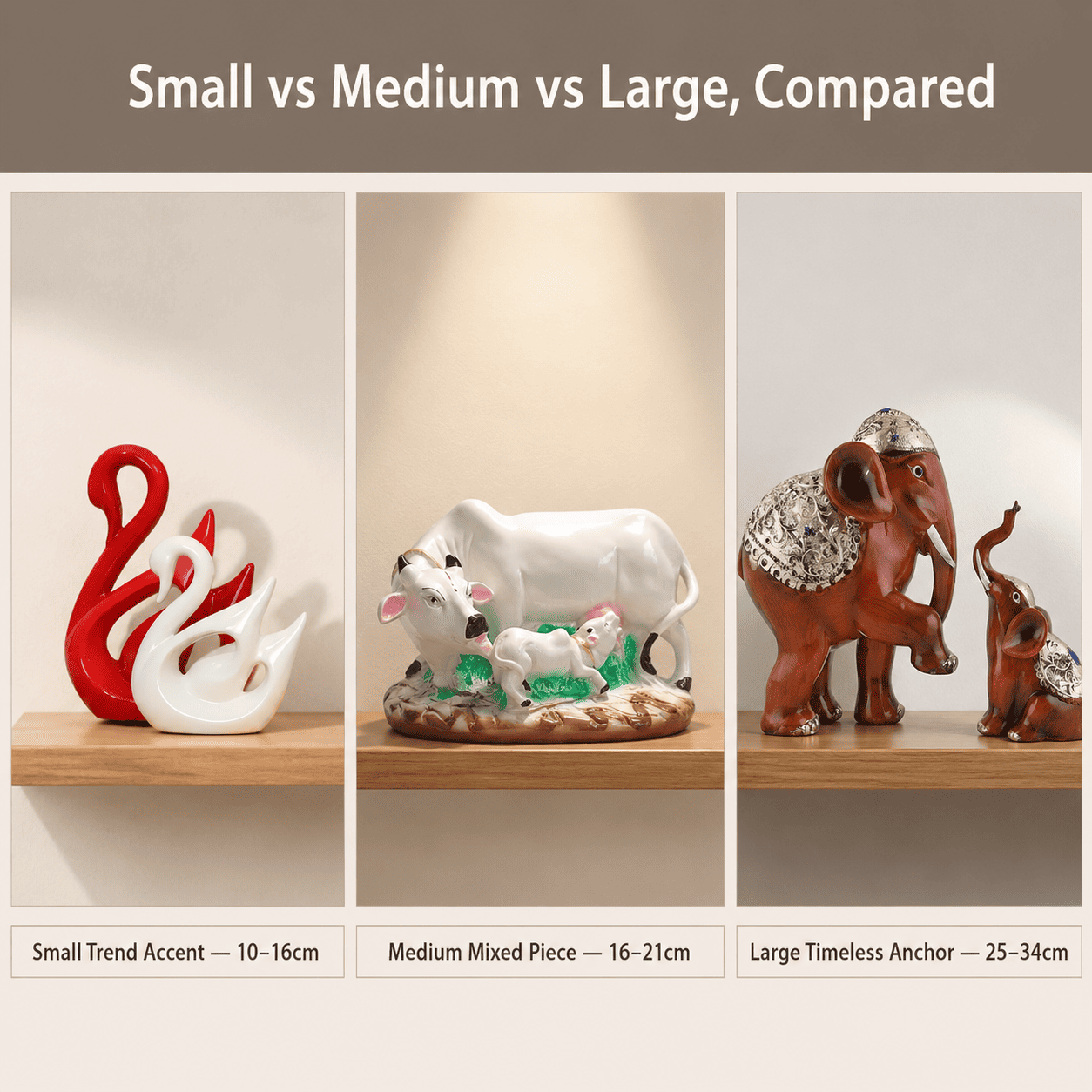
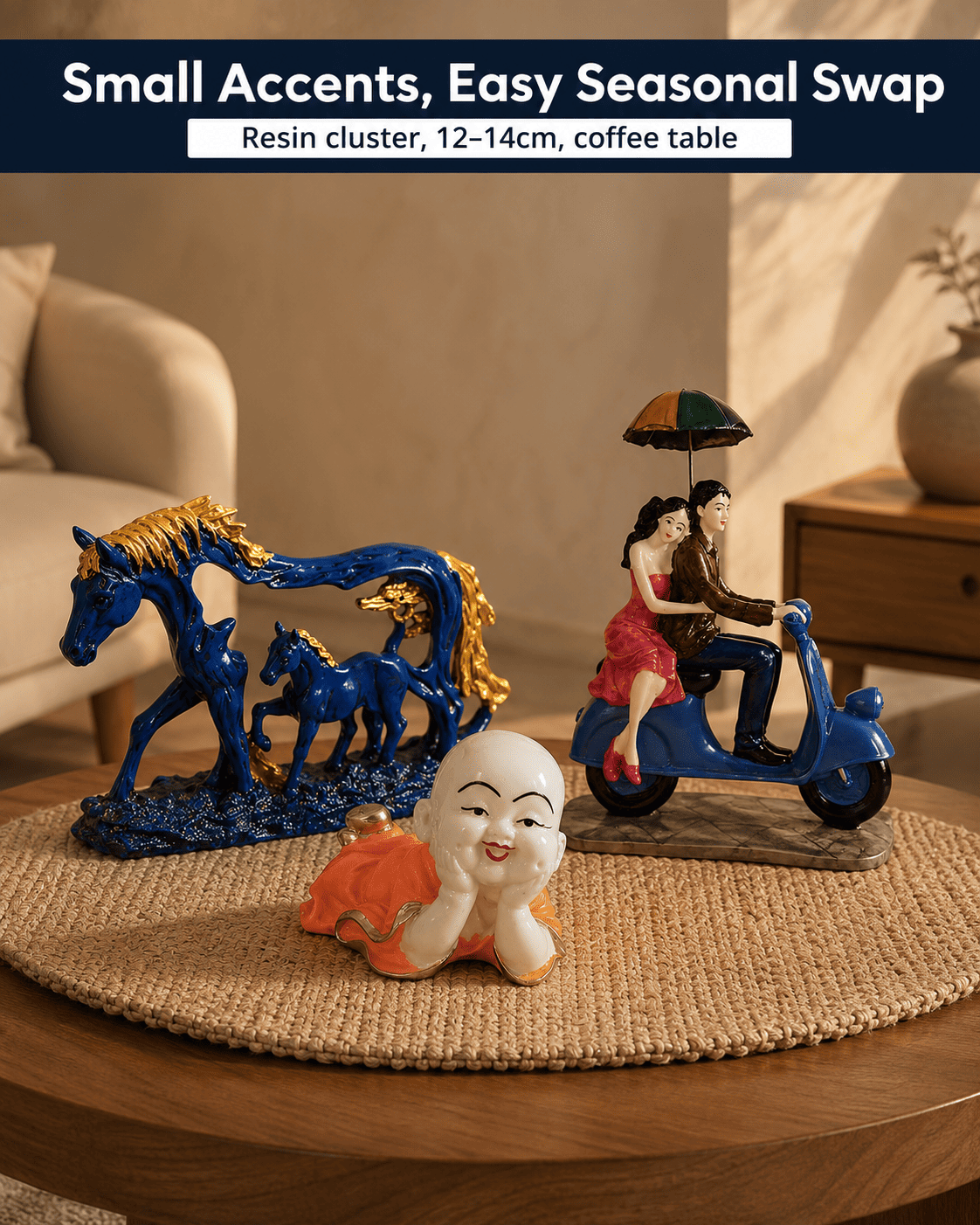
| Trend accent (rotate often) | Resin, 94% epoxy purity | 10–16 cm (Small) | 3H hardness, 60% RH tolerant — built to be swapped without waste |
| Mixed anchor (semi-permanent) | Ceramic, 92% clay | 16–21 cm (Medium) | 60°C heat resistant, 15 cm drop resistance |
| Timeless anchor (long-term) | Ceramic, 92% clay | 25–34 cm (Large) | 85% RH tolerant — holds finish through multiple monsoon cycles |
Because room footprint, surface size, and material tolerance all shift the right size-and-material combination, browse the full material and size-band selection in Moolwan's living room décor collection to match a piece to your own space.
Design Rule
Living rooms that mix trend and timeless pieces without looking cluttered follow Moolwan's 70/30 Trend-Timeless Rule: 70% of visible décor should be durable, neutral-toned anchor pieces that stay in place for years, while the remaining 30% is left open for smaller, swappable trend accents that can be rotated each season.
How do I decide what to keep and what to rotate?
Start by identifying the two or three largest visible surfaces in the room — a console, a coffee table, a bookshelf — and commit those to timeless anchor pieces first. Anything smaller than 16 cm sitting on a side table or shelf is low-risk to rotate seasonally, since replacing a small resin accent costs far less over five years than replacing a large piece that's gone out of style.
Because a durable anchor piece is a one-time cost spread across 5+ years of use, it works out cheaper per year than repeatedly buying and discarding trend pieces that don't survive a single humid season — a core focus of Moolwan's climate-rated design philosophy.
Want to build your living room around a piece that's engineered to outlast Indian humidity and heat, not just this season's trend? Shop the full Moolwan living room décor collection now.
Does mixing trends and timeless pieces actually work visually?
Yes, as long as the anchor pieces stay neutral enough to not compete with whatever trend accent sits near them. A matte, earth-toned ceramic anchor absorbs attention gradually because its micro-texture scatters light evenly, so it doesn't visually clash with a bright resin accent placed nearby the way two glossy, high-saturation pieces would.
The failure mode isn't mixing styles — it's mixing two loud pieces at the same visual weight. Keeping the large anchor neutral and letting only the small rotating piece carry colour or pattern is what keeps a mixed room looking curated instead of cluttered.
Frequently Asked Questions
How do I mix trendy décor with timeless pieces in a small living room?
In sub-150 sq ft living rooms, keep timeless anchor pieces to one per major surface and limit trend accents to small-format pieces under 16 cm. Moolwan's size guide reserves large pieces (25–34 cm) for rooms with at least one dedicated console or focal surface, since oversized anchors in small rooms visually compress the space rather than defining it.
What décor materials hold up best over multiple redecorating cycles?
High-fired ceramic (92% clay composition) and high-purity resin (94% epoxy) hold up best because both resist the two forces that age décor fastest in India: humidity swings and UV-driven fading. Lower-grade materials without a stated RH tolerance typically show visible warping or discolouration within a single monsoon season.
How much of my living room should be trend-driven vs timeless?
Following Moolwan's 70/30 Trend-Timeless Rule, roughly 70% of visible décor should be durable, neutral anchor pieces, leaving 30% open for rotating trend accents. This ratio keeps the room from feeling dated after one season while still leaving room to update the look each year.
Does timeless décor cost more than trend-led pieces?
Per-piece, a large durable anchor often costs more upfront, but amortised across a 5+ year lifespan it typically costs less per year than repeatedly replacing lower-durability trend pieces that degrade within a season or two.
Ready to build a living room that still looks intentional two years from now, not just this season? Bring home a climate-rated anchor piece from the Moolwan living room décor collection — and if you're still exploring options, also see the statement pieces in Moolwan's unique décor accents for elegant living rooms or the mixed-era pairings in Moolwan's modern-vintage décor collection for contemporary interiors.


