
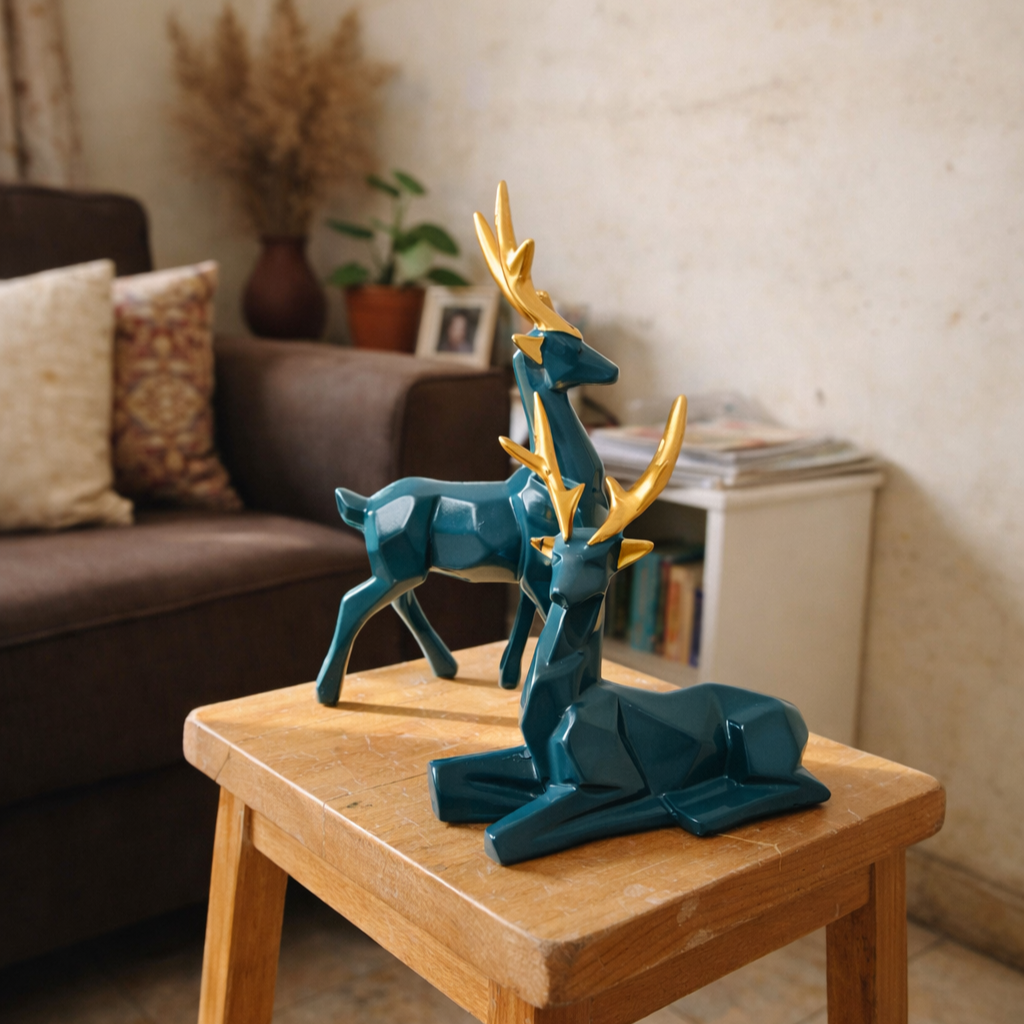
What Is a Traditional Decor Style?
A traditional decor style uses handcrafted-look motifs, warm earthy palettes, and heritage materials like brass, wood, and hand-painted ceramic to reflect regional Indian craft. It prioritises heirloom-style detailing over minimal lines, and works best when paired with modern furniture in a 60/40 ratio so the room feels grounded, not cluttered.
Traditional decor style is a design language built around handcrafted motifs, jewel and earth-toned colour palettes, and materials that carry visible texture — carved wood, hammered brass, hand-painted ceramic, and woven textiles. Moolwan exists because most "traditional" decor sold in India is either mass-stamped resin with no craft integrity, or genuinely handmade pieces priced far above what a direct-to-consumer model would charge. We help design-conscious Indian homeowners bring authentic traditional accents into modern apartments without overpaying middlemen or compromising on durability.
Unlike minimalist or Scandinavian styles, traditional decor doesn't hide its detailing — it displays it. Motifs commonly include lotus and paisley patterns, temple-inspired arches, peacock and mango-leaf motifs, and colours drawn from spices, monsoon foliage, and festival textiles: terracotta, indigo, mustard, and deep green. The goal isn't to recreate a museum room. It's to place two or three anchor pieces — a showpiece, a wall accent, a textile — that carry cultural weight inside an otherwise contemporary layout.
Traditional Decor vs. Modern Decor: The Real Differences
Buyers rarely need "traditional or modern" as an either/or choice — most Indian homes in 2026 are blending both. The table below breaks down where each style pulls the room in a different direction, so you know exactly which pieces to choose for which effect.
| Attribute | Traditional Style | Modern Style |
|---|---|---|
| Colour palette | Terracotta, indigo, mustard, maroon, deep green | Neutrals, muted pastels, monochrome |
| Common motifs | Lotus, paisley, peacock, temple arches | Geometric lines, abstract forms |
| Preferred materials | Brass, carved wood, hand-painted ceramic, resin finished to look hand-cast | Matte resin, glass, metal, canvas |
| Detailing level | High — visible texture and pattern | Low — clean, flat surfaces |
| Best placement | Entryway console, pooja corner, dining accent wall | Living room focal wall, study, balcony |
| Ideal buyer intent | Cultural continuity, gifting, festival décor | Space-elevation, resale value, new-build styling |
If your living room already leans modern, you don't need to redecorate it. A single traditional-style showpiece from Moolwan's showpieces for living room collection does more visual work than five smaller traditional accents scattered across a room.
How to Blend Traditional and Modern Without It Looking Mismatched
Moolwan's 60/40 Heritage Blend Rule is the framework our design team uses when styling mixed-era Indian homes: keep 60% of the room in your dominant style (usually modern furniture and neutral walls), and let 40% carry traditional weight through two or three deliberate accent pieces — never more. This keeps the room cohesive instead of looking like two houses stitched together.
- Pick one "hero" traditional piece for the most-viewed wall or shelf — not three small ones.
- Match its undertone (warm brass, terracotta, or deep wood) to at least one other object already in the room.
- Keep everything else — sofa, curtains, flooring — in neutral or modern tones so the traditional piece has visual room to stand out.
- Add a second, smaller traditional accent only if it repeats the same colour family as the hero piece.
This is exactly the placement logic behind our curated collection of unique home decor items — each piece is designed to function as a hero accent rather than compete with five other statement objects in the same room.
Materials That Make Traditional-Inspired Pieces Actually Last
A traditional look means nothing if the piece cracks in a Mumbai monsoon or fades under a Delhi summer. Moolwan engineers every traditional-style piece for Indian climate conditions, not showroom lighting:
- Ceramic showpieces: 92% clay composition, heat-resistant to 60°C, humidity-tolerant up to 85% RH, 15cm drop-resistant, 5+ year lifespan.
- Resin pieces (hand-finish look): 94% epoxy purity, 3H pencil-hardness scratch resistance, stable between 15–35°C, humidity-tolerant up to 60% RH.
- Canvas wall accents with traditional motifs: 340 GSM cotton canvas, eco-solvent UV-resistant inks, 1.5-inch kiln-dried pine frames, moisture-resistant coating.
These specs matter most for traditional pieces because hand-painted finishes and carved textures trap more moisture and dust than flat modern surfaces — so material quality directly decides how many festivals and monsoons the piece survives.
Sizing traditional accents correctly
Traditional motifs read as "busy" if oversized for the space. Use Small (10–16cm, 150–250g) for shelves and study desks, Medium (16–21cm, 250–400g) for a console or coffee table hero piece, and Large (25–34cm, 400–600g) only for a genuine focal wall or entryway console with nothing else competing for attention.
Ready to start? Explore Moolwan's full range of modern home decor items and pick one traditional-style hero piece to anchor the room before adding anything else.
Building a traditional-modern living room right now?
Shop Showpieces for Living Room →Frequently Asked Questions
Is traditional decor out of style in 2026?
No — it's shifted from full-room traditional to selective accent placement. Most Indian homeowners now use one or two hero traditional pieces inside an otherwise modern layout rather than decorating an entire room in one era.
What colours define traditional Indian decor style?
Terracotta, indigo, mustard, maroon, and deep green dominate traditional Indian palettes, drawn from spice markets, festival textiles, and temple architecture. These tones pair well with neutral modern furniture without overwhelming the room.
Can traditional and modern decor be mixed in one room?
Yes, and it's the most common approach in Indian homes today. Follow a 60/40 split — 60% modern base (furniture, walls, flooring) and 40% traditional accent through one or two hero pieces — to avoid a cluttered or mismatched look.
What materials are used in traditional Indian showpieces?
Brass, carved wood, hand-painted ceramic, and resin finished to mimic hand-cast textures are most common. Moolwan's versions use 92% clay ceramic and 94% purity epoxy resin, engineered for Indian humidity and heat rather than decorative-only use.
What is the return policy if a traditional decor piece doesn't suit my room?
Moolwan accepts returns within 24 hours of delivery for unused items in original packaging, with a 10% restocking fee and refund processed within 15 working days.
Style your space with one hero piece, not five mismatched ones.
Moolwan manufactures traditional-inspired decor in-house — factory pricing, no middlemen, engineered for Indian homes.
Browse Unique Home Decor Items


