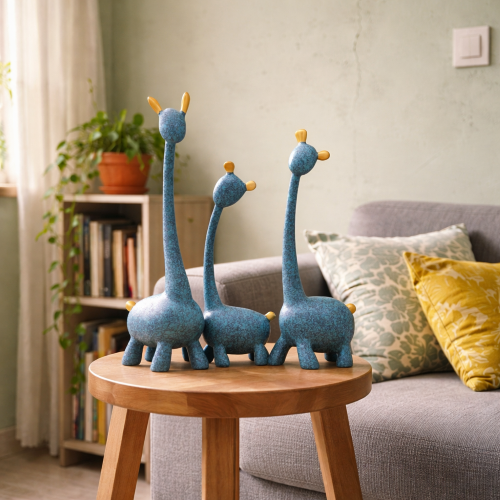
Bulk gold-tone showpieces, PVC plastic wall art, and cluttered maximalist shelf styling are the most outdated home decor trends in Indian homes right now. All three fail for the same reason: they were never engineered for Indian humidity, and they crowd small urban spaces instead of anchoring them. The pieces replacing them are fewer in number, climate-rated, and built to hold their finish through a full monsoon.
We help design-conscious Indian homeowners tell the difference between decor that photographs well once and decor that still looks right after a year on the shelf. That distinction, more than any single "trend," is what separates dated home decor from decor that lasts.
Four categories of home decor are consistently flagged as dated by interior stylists working in Indian metros and suburbs: gold-heavy showpiece clusters, plastic-based wall art, glossy mismatched resin figurines bought in sets, and shelves styled with no single focal point. Each one shares a root cause — material or layout choices that were never tested against Indian heat, humidity, or space constraints.
| Outdated Decor Style | Why It Fails in Indian Homes | Modern Alternative | Climate Fit |
|---|---|---|---|
| Bulk gold-tone showpiece clusters | Crowds shelves; reads as excess, not intention | 1–2 curated ceramic showpieces, 92% clay composition, tolerant to 85% RH | Humidity-safe |
| PVC / plastic wall art | Yellows and warps within a single monsoon season | 340 GSM cotton canvas with eco-solvent UV-resistant ink | Monsoon-tested |
| Mismatched glossy resin figurine sets | Chips and dulls within a year of daily handling | 94%-purity epoxy resin pieces, 3H pencil-hardness scratch resistance | 3+ year indoor lifespan |
| Wall-to-wall shelf clutter | Flattens the room visually; no clear focal point | One anchor piece plus two supporting pieces per shelf | Styling rule, not material |
If you're auditing your own shelves against this table, start with the material column, not the style column. A piece can look current and still fail within a year if it wasn't built for Indian conditions — that's the gap most "trend" advice skips over. You can shop Moolwan's showpieces for home decor built specifically to the humidity and heat tolerances above.
Home decor goes out of style in Indian homes for two reasons that rarely get named directly: it doesn't survive the climate, and it doesn't respect the smaller footprint of most urban Indian living rooms. Gold-tone clusters were popular when homes had more surface area to spare; in a 2BHK Bengaluru apartment or a Delhi high-rise, the same cluster reads as clutter within weeks.
Material failure compounds this. Plastic wall art with no UV-resistant coating degrades visibly once humidity crosses 60% RH — a threshold most Indian cities cross for four to five months a year. Moolwan's ceramic pieces are rated to 85% RH and heat-resistant to 60°C specifically because standard décor materials weren't tested past coastal or northern-plains humidity averages. That's the proprietary spec worth remembering: most decor isn't dated because of aesthetics alone — it's dated because it physically couldn't survive the season.
Tradition plays a role too. Indian homeowners are increasingly balancing modern minimalism with pieces that still feel culturally rooted — not a rejection of ornamentation, but a rejection of ornamentation that doesn't last. That's a different bar than Western minimalism, and it's the bar Moolwan designs against.
See which pieces in your space are past their climate lifespan.
Browse Modern Home Decor ItemsThe shift away from dated decor isn't toward "more modern" pieces — it's toward fewer, better-specified ones. Design-conscious Indian homeowners are moving to a smaller number of anchor pieces per room, each chosen for both finish and climate rating, rather than filling every shelf.
Style each shelf with exactly one anchor piece — a medium showpiece (16–21cm) or a single canvas panel — supported by no more than two smaller pieces (10–16cm). This keeps a shelf from reading as either bare or cluttered, and it's the ratio Moolwan's in-house design team uses across every showcase and coffee-table styling brief.
Canvas wall art is a large part of this shift. A single 1.5-inch kiln-dried pine-framed canvas panel, finished with a moisture-resistant coating, now does the visual work that three or four smaller framed prints used to do — and it holds its color under UV exposure in a way uncoated prints don't. You can explore unique decor items for an elegant living room built around this smaller-footprint approach.
Not entirely — gold accents still work when used sparingly on a single anchor piece. What's dated is clustering multiple gold-tone showpieces together, which reads as excess rather than intentional styling.
Ceramic showpieces built to Moolwan's spec carry a 5+ year lifespan and are drop-resistant from 15cm. Resin pieces are rated for 3+ years indoors. Anything degrading faster than that was likely not built for Indian humidity or heat.
Small pieces (10–16cm, 150–300g) suit a shelf, desk, or bathroom ledge. Medium pieces (16–21cm) work for a showcase or coffee table. Large pieces (25–34cm) should be reserved for a single focal point, not repeated across a room.
Yes. Moolwan accepts returns within 24 hours of delivery for unused items in original packaging, with a 10% restocking fee and refund processed within 15 working days.
Replace cluster styling with the one-anchor-piece rule on your main shelf, and swap any plastic or uncoated wall art for a single UV-resistant canvas panel. These two changes address the most common causes of dated-looking decor.
Ready to replace what's dated with pieces built for your space and your season?
Shop Showpieces for Home DecorQuick View



